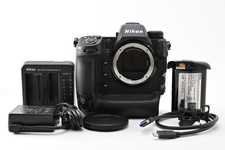
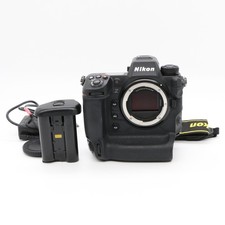
Compare · 2 products compared
Nikon Z9vsNikon ZR: Which Nikon Mirrorless to Buy
Both are full-frame Nikon Z cameras with 20 fps electronic shooting, in-body power delivery over USB and the same subject-detection list. The decision comes down to two things: the Z9 is a heavy, viewfinder-equipped stills flagship with more pixels and 8K, while the ZR is a much lighter, screen-first body built around video.
eBay prices refresh hourly — check the listing before you buy. We may earn a commission.
 Nikon
NikonBest for Stills-first sports, wildlife and high-resolution shooters who want a viewfinder and pre-burst capture
8of 17 specs better- MOST WINSNikon
Best for Video shooters and travelers who want a light, screen-first full-frame body with 6K and more log range
9of 17 specs better
Biggest differences
Weight
Nikon ZR leads
2.13×
lower is better
- Nikon Z91,340 g
- Nikon ZR630 g
Effective pixels
Nikon Z9 leads
+87%
higher is better
- Nikon Z945.7 MP
- Nikon ZR24.5 MP
Native ISO maximum
Nikon ZR leads
2×
higher is better
- Nikon Z925,600 ISO
- Nikon ZR51,200 ISO
Height
Nikon ZR leads
−46%
lower is better
- Nikon Z9149.5 mm
- Nikon ZR80.5 mm
Features not all of them have
High resolution pixel-shift mode
- Nikon Z9✕
- Nikon ZR✓
Where each one wins
Nikon Z9
- Effective pixels
- Sensor type
- Pre-burst capture duration
- Max video resolution
- 4K max frame rate
- Viewfinder resolution
- Minimum operating temperature
- HDMI port type
Nikon ZR
- High resolution pixel-shift mode
- Native ISO maximum
- Screen size
- Screen articulation
- Rear screen resolution
- Weight
- Width
- Height
- Depth
What both have
- Lens mountNikon Z
- Sensor formatFull-frame
- Continuous shooting (electronic)20 fps
- AF subject detectionHuman, animal, bird, car, train, airplane, motorcycle
- Raw video recordingInternal
- Video bit depth10 bit
- Log profile support✓
- Memory card slots2 slots
- Weather sealingDust and drip resistant
- USB charging & power delivery✓
- Headphone port✓
Every spec
Red marks the better value in each row.
| Spec | Nikon Z9 | Nikon ZR |
|---|---|---|
| Overview | ||
| Release date | 2021-12 | Not published |
| Launch price | 5,500 USD | Not published |
| Lens mount | Nikon Z | Nikon Z |
| High resolution pixel-shift mode | No | Yes |
| Sensor & Image | ||
| Effective pixels | 45.7 MP | 24.5 MP |
| Sensor format | Full-frame | Full-frame |
| Native ISO maximum | 25,600 ISO | 51,200 ISO |
| In-body image stabilization | 6 stops1 | Not published |
| Sensor readout speed | Not published | Not published |
| Sensor type | Stacked CMOS | CMOS |
| Aspect ratios | — | 3:2, 4:3, 1:1, 16:9 |
| Lens & Autofocus | ||
| Continuous shooting (mechanical) | Not published | Not published |
| Continuous shooting (electronic) | 20 fps | 20 fps |
| Max mechanical shutter speed | 32,000 1/s | Not published |
| Pre-burst capture duration | 1 s2 | 0 s |
| AF subject detection | Human, animal, bird, car, train, airplane, motorcycle | Human, animal, bird, car, train, airplane, motorcycle |
| Video | ||
| Max video resolution | 8K | 6K |
| 4K max frame rate | 120 fps | 119.88 fps |
| Video codecs | H.264, HEVC, ProRes 422 HQ, ProRes RAW, N-RAW | HEVC, ProRes 422 HQ, ProRes RAW, N-RAW |
| 4K max frame rate (full width) | 30 fps | Not published |
| Raw video recording | Internal | Internal |
| Video bit depth | 10 bit | 10 bit |
| Log profile support | Yes | Yes |
| Video dynamic range (log) | Not published | 15 stops |
| Viewfinder & Screen | ||
| Viewfinder resolution | 3.69 M dots | 0 M dots |
| Viewfinder magnification | 0.8 x | Not published |
| Screen size | 3.2 in | 4 in |
| Screen articulation | Tilting | Fully articulated |
| Rear screen resolution | 2.1 M dots | 3.07 M dots |
| Handling & Power | ||
| Battery life | 740 shots | Not published |
| Memory card slots | 2 slots | 2 slots |
| Weather sealing | Dust and drip resistant | Dust and drip resistant |
| Weight | 1,340 g | 630 g |
| Width | 149 mm | 134 mm |
| Height | 149.5 mm | 80.5 mm |
| Depth | 90.5 mm | 49 mm |
| USB charging & power delivery | Yes | Yes |
| Minimum operating temperature | -10 °C | 0 °C |
| Headphone port | Yes | Yes |
| HDMI port type | Full-size | Micro |
Notes on 2 values — test conditions and caveats
- 1Nikon Z9, In-body image stabilization: The 6.0-stop rating requires Synchro VR, combining in-body 5-axis VR with 2-axis lens VR on compatible lenses.
- 2Nikon Z9, Pre-burst capture duration: Pre-Release Capture is only available in the C30 and C120 high-speed frame capture modes.
Resolution and stills
The Nikon Z9 nearly doubles the pixel count of the Nikon ZR, 45.7 MP against 24.5 MP. That headroom matters if you crop heavily, print large, or sell detail — a 24.5 MP file runs out of room fast when a bird fills a third of the frame. The Z9's stacked sensor also reads out fast enough to keep blackout and rolling distortion down in electronic shooting, which is why it can be a flagship without a mechanical shutter.
The ZR fights back with a high-resolution pixel-shift mode, which composites multiple frames into a much larger file. It only works on static subjects, so it suits product, architecture and copy work rather than anything that moves. For moving subjects, the Z9's native resolution advantage stands.
Low light and stabilization
The Nikon ZR reaches 51,200 ISO natively, double the Z9's 25,600. That is roughly one extra stop of headroom before you lean on push processing, useful for event work and dim interiors where you cannot add light.
On stabilization, the Z9's 6-stop figure depends on Synchro VR — in-body 5-axis VR paired with 2-axis lens VR on compatible lenses. Mount a lens without that cooperation and you get less than the headline number. Nikon has not published a stabilization rating for the ZR, so there is no honest comparison to make; treat the Z9 as the known quantity and the ZR as unverified.
Video
The Z9 tops out at 8K, the ZR at 6K, and the Z9 also shoots 4K at 120 fps versus the ZR's 119.88 fps — a nominal difference, not a practical one. The meaningful gap is Nikon's published 15 stops of dynamic range in log for the ZR, against no published figure for the Z9. More log range means more room to hold sky and shadow in the same shot before it breaks.
The ZR is the more video-focused body overall: a 4-inch fully articulated screen, a 3.07 M-dot panel and a lighter chassis. The Z9 counters with a full-size HDMI port instead of micro, which is the difference between a cable that stays put on a rig and one that needs a cage and a clamp.
Handling, size and power
The Nikon Z9 weighs 1,340 g; the ZR weighs 630 g and is dramatically smaller in every dimension, including height. That is the difference between a camera you plan around and one you carry without thinking. If you hike, travel or shoot handheld all day, the ZR's 630 g is a real advantage.
The Z9 gives back a 3.69 M-dot viewfinder and 740 shots per charge. The ZR has no viewfinder at all and Nikon has not published a battery rating, so you are composing on the rear screen and guessing at endurance. The Z9 also keeps working down to -10 °C, while the ZR is rated only to 0 °C — relevant if you shoot winter sports or cold-weather wildlife. Both take two cards.
Which is best for sports and wildlife?
The Nikon Z9. Both cameras shoot 20 fps electronically and detect the same subjects — humans, animals, birds, cars, trains, airplanes and motorcycles — so the autofocus list does not separate them. What does is Pre-Release Capture: the Z9 buffers one second of frames before you press the shutter, and only in the C30 and C120 high-speed capture modes. The ZR records none. That pre-burst is how you catch a bird launching or a batter swinging.
Add the higher pixel count for cropping distant subjects and the viewfinder for tracking them, and the Z9 is the action body. The ZR's lighter weight helps at the end of a long day, but it will not save the shot you did not know was coming.
The Verdict
Buy the Nikon Z9 if you shoot stills seriously, need 45.7 MP, a viewfinder, pre-burst capture and work in the cold. Buy the Nikon ZR if video is the priority and you want a 630 g body with a 4-inch articulated screen, 6K, 15 stops of log range and a native 51,200 ISO ceiling. Choose the ZR for travel and hybrid work; choose the Z9 for sports, wildlife and high-resolution stills.
Where to buy
Nikon Z9
Best for Stills-first sports, wildlife and high-resolution shooters who want a viewfinder and pre-burst capture
Nikon ZR
Best for Video shooters and travelers who want a light, screen-first full-frame body with 6K and more log range
FAQ
Does the Nikon Z9 have a viewfinder and the Nikon ZR does not?
Correct. The Z9 has a 3.69 M-dot electronic viewfinder with 0.8x magnification; the ZR's viewfinder resolution is listed as 0 M dots, meaning it has none. On the ZR you compose on the rear screen.
Can both cameras record raw video internally?
Yes. Both record raw video internally at 10-bit depth and both support log profiles. The Z9 adds H.264 alongside HEVC, ProRes 422 HQ, ProRes RAW and N-RAW; the ZR omits H.264.
Which one is easier to carry all day?
The Nikon ZR. At 630 g it is less than half the Z9's 1,340 g and much smaller in height and depth. The trade-off is losing the viewfinder and the published battery rating.
Do both have in-body image stabilization?
The Z9 has it, rated at 6 stops when Synchro VR pairs in-body and lens VR on compatible lenses. Nikon has not published a stabilization figure for the ZR.
Which camera is better in cold weather?
The Nikon Z9, rated to -10 °C. The Nikon ZR is rated only to 0 °C, so it is the less suitable choice for winter sports and cold-weather field work.
Spotted something wrong? Tap the next to any section or spec group to let us know. Every report is read.