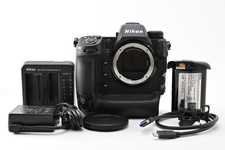
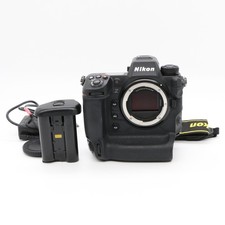
Compare · 2 products compared
Nikon Z9vsSony a7 IV: Which Camera Should You Buy?
Both are full-frame mirrorless bodies with in-body stabilization, dual card slots, dust-and-drip sealing and 10-bit log video. The Z9 is a flagship built for speed and 8K capture, while the a7 IV is a smaller, cheaper all-rounder. Your budget and whether you shoot action or video decide this.
eBay prices refresh hourly — check the listing before you buy. We may earn a commission.
- MOST WINS
 Nikon
NikonBest for Sports, wildlife and pro video shooters who need speed and raw capture
13of 20 specs better - Sony
Best for Hybrid shooters and travelers who want full-frame on a budget
7of 20 specs better
Biggest differences
Launch price
Sony a7 IV leads
2.2×
lower is better
- Nikon Z95,500 USD
- Sony a7 IV2,499.99 USD
Weight
Sony a7 IV leads
2.04×
lower is better
- Nikon Z91,340 g
- Sony a7 IV658 g
Continuous shooting (electronic)
Nikon Z9 leads
2×
higher is better
- Nikon Z920 fps
- Sony a7 IV10 fps
Max mechanical shutter speed
Nikon Z9 leads
4×
higher is better
- Nikon Z932,000 1/s
- Sony a7 IV8,000 1/s
Where each one wins
Nikon Z9
- Effective pixels
- In-body image stabilization
- Sensor type
- Continuous shooting (electronic)
- Max mechanical shutter speed
- Max video resolution
- 4K max frame rate
- Raw video recording
- Viewfinder magnification
- Screen size
- Rear screen resolution
- Battery life
- Minimum operating temperature
Sony a7 IV
- Launch price
- Native ISO maximum
- Screen articulation
- Weight
- Width
- Height
- Depth
What both have
- Sensor formatFull-frame
- 4K max frame rate (full width)30 fps
- Video bit depth10 bit
- Log profile support✓
- Viewfinder resolution3.69 M dots
- Memory card slots2 slots
- Weather sealingDust and drip resistant
- USB charging & power delivery✓
- Headphone port✓
- HDMI port typeFull-size
Every spec
Red marks the better value in each row.
| Spec | Nikon Z9 | Sony a7 IV |
|---|---|---|
| Overview | ||
| Release date | 2021-12 | 2021-10 |
| Launch price | 5,500 USD | 2,499.99 USD |
| Lens mount | Nikon Z | Sony E |
| High resolution pixel-shift mode | No | No |
| Sensor & Image | ||
| Effective pixels | 45.7 MP | 33 MP |
| Sensor format | Full-frame | Full-frame |
| Native ISO maximum | 25,600 ISO | 51,200 ISO1 |
| In-body image stabilization | 6 stops2 | 5.5 stops3 |
| Sensor readout speed | Not published | Not published |
| Sensor type | Stacked CMOS | CMOS |
| Aspect ratios | — | 3:2 |
| Lens & Autofocus | ||
| Continuous shooting (mechanical) | Not published | 10 fps4 |
| Continuous shooting (electronic) | 20 fps | 10 fps |
| Max mechanical shutter speed | 32,000 1/s | 8,000 1/s |
| Pre-burst capture duration | 1 s5 | Not published |
| AF subject detection | Human, animal, bird, car, train, airplane, motorcycle | Human, animal, bird |
| Video | ||
| Max video resolution | 8K | 4K |
| 4K max frame rate | 120 fps | 60 fps6 |
| Video codecs | H.264, HEVC, ProRes 422 HQ, ProRes RAW, N-RAW | H.264, HEVC |
| 4K max frame rate (full width) | 30 fps | 30 fps7 |
| Raw video recording | Internal | None8 |
| Video bit depth | 10 bit | 10 bit |
| Log profile support | Yes | Yes |
| Video dynamic range (log) | Not published | 15 stops9 |
| Viewfinder & Screen | ||
| Viewfinder resolution | 3.69 M dots | 3.69 M dots |
| Viewfinder magnification | 0.8 x | 0.78 x |
| Screen size | 3.2 in | 2.95 in10 |
| Screen articulation | Tilting | Fully articulated |
| Rear screen resolution | 2.1 M dots | 1.04 M dots11 |
| Handling & Power | ||
| Battery life | 740 shots | 580 shots12 |
| Memory card slots | 2 slots | 2 slots |
| Weather sealing | Dust and drip resistant | Dust and drip resistant13 |
| Weight | 1,340 g | 658 g |
| Width | 149 mm | 131.3 mm |
| Height | 149.5 mm | 96.4 mm |
| Depth | 90.5 mm | 69.7 mm14 |
| USB charging & power delivery | Yes | Yes15 |
| Minimum operating temperature | -10 °C | 0 °C |
| Headphone port | Yes | Yes |
| HDMI port type | Full-size | Full-size |
Notes on 15 values — test conditions and caveats
- 1Sony a7 IV, Native ISO maximum: Native range tops out at ISO 51200; 50-204800 requires expanded ISO settings.
- 2Nikon Z9, In-body image stabilization: The 6.0-stop rating requires Synchro VR, combining in-body 5-axis VR with 2-axis lens VR on compatible lenses.
- 3Sony a7 IV, In-body image stabilization: CIPA rating measured with the 50mm F1.4 ZA test lens attached.
- 4Sony a7 IV, Continuous shooting (mechanical): 10 fps applies to compressed RAW/JPEG/HEIF; drops to 6 fps for lossless or uncompressed RAW.
- 5Nikon Z9, Pre-burst capture duration: Pre-Release Capture is only available in the C30 and C120 high-speed frame capture modes.
- 6Sony a7 IV, 4K max frame rate: 4K 60p is only available in Super35mm crop; full-frame 4K tops out at 30p.
- 7Sony a7 IV, 4K max frame rate (full width): 4K 60p requires the Super35mm crop; full-width 4K is limited to 30p.
- 8Sony a7 IV, Raw video recording: No internal or external raw recording; HDMI output tops out at 10-bit 4:2:2.
- 9Sony a7 IV, Video dynamic range (log): Sony's claim for S-Log3 per internal tests; stated as 15+ stops.
- 10Sony a7 IV, Screen size: Sony rates the panel at 2.95in (3.0-type); most sources round to 3in.
- 11Sony a7 IV, Rear screen resolution: 1,036,800 dots; Sony's retail pages round this to 1.03 megadots.
- 12Sony a7 IV, Battery life: 580 shots per charge with the rear LCD; 520 with the EVF.
- 13Sony a7 IV, Weather sealing: Dust and moisture resistant but not IP-rated; Sony does not guarantee 100% sealing.
- 14Sony a7 IV, Depth: Sony lists 79.8mm total depth; 69.7mm is measured from front grip to rear monitor.
- 15Sony a7 IV, USB charging & power delivery: Charging and USB power delivery work only through the USB Type-C port.
Sensor and low-light
The Nikon Z9 resolves 45.7 MP against the Sony a7 IV's 33 MP, so the Z9 leaves more room to crop or print large — useful for wildlife and commercial work where reframing is common. The a7 IV answers with a higher native ISO ceiling of 51,200, so it holds up better in dim rooms without touching expanded settings.
The Z9's stacked CMOS sensor reads out fast, which keeps the electronic viewfinder free of blackout and reduces rolling shutter. That design is a big part of why the Z9 handles motion so cleanly. Neither camera publishes a readout-speed figure, so buyer decisions here rest on the stacked-versus-standard sensor difference.
Video
The Z9 shoots 8K and reaches 120 fps in 4K, and it records raw internally — ProRes RAW and N-RAW — which gives colourists far more latitude in post. The a7 IV tops out at 4K and has no raw recording at all. That gap matters if video is a paid deliverable rather than a hobby.
The Sony's 4K 60p comes with a catch: it only works in Super35mm crop, so full-frame 4K is limited to 30p. If you shoot full-frame video, the a7 IV is effectively a 30p camera. Both offer 10-bit depth and log profiles, and Sony claims 15 stops of dynamic range from S-Log3, but the Z9's raw pipeline is the bigger creative advantage.
Speed and autofocus
The Z9 fires at 20 fps electronically and offers a 1-second pre-burst capture in its C30 and C120 high-speed modes — that buffer of frames before you press the shutter is a genuine edge for unpredictable action. Its subject detection also covers cars, trains, airplanes and motorcycles, where the a7 IV stops at human, animal and bird.
The Sony's mechanical shutter tops out at 10 fps and drops to 6 fps for lossless or uncompressed RAW. The Z9's electronic-only design reaches a maximum shutter speed of 32,000 1/s, letting you shoot wide open in bright sun without a neutral-density filter. For sports and wildlife, the Z9 wins clearly.
Battery and size
The Z9 rates 740 shots per charge, well ahead of the a7 IV's 580 on the rear LCD and 520 through the EVF. It also keeps working down to -10 °C, while the Sony is rated to 0 °C — a real difference if you shoot winter sports or in cold climates.
That endurance comes at a cost in bulk. The Z9 weighs 1,340 g against 658 g for the Sony, and it is wider, taller and deeper in every dimension. Carrying the Nikon all day is a commitment; the Sony is the camera you actually bring along.
Handling and screen
Both use a 3.69 M-dot viewfinder and offer two card slots, a headphone port and a full-size HDMI connection. The Z9's finder magnifies slightly more at 0.8x, and its rear screen is larger and denser at 2.1 M dots against 1.04 M dots — easier to judge focus and framing in the field.
The a7 IV's screen is fully articulated, so it flips forward for vlogging and around for odd angles. The Z9 only tilts. If you shoot yourself or work at extreme angles, that articulation is the Sony's clearest handling win.
The Verdict
Buy the Nikon Z9 if you shoot fast action or paid video and need 8K, internal raw, pre-burst capture and all-day battery life. Buy the Sony a7 IV if you want a lighter, far cheaper full-frame body with a screen that flips forward. The Z9 is the professional tool; the a7 IV is the camera most people will carry more often.
Where to buy
Nikon Z9
Best for Sports, wildlife and pro video shooters who need speed and raw capture
Sony a7 IV
Best for Hybrid shooters and travelers who want full-frame on a budget
FAQ
Does the Nikon Z9 have a mechanical shutter?
No. The Z9 relies entirely on its electronic shutter, which reaches 32,000 1/s and avoids the shutter-shock issues mechanical systems can introduce.
Can the Sony a7 IV record 4K at 60p in full frame?
No. 4K 60p is only available in Super35mm crop mode, so full-frame 4K is limited to 30p on the a7 IV.
Which camera is better in cold weather?
The Nikon Z9, which is rated down to -10 °C. The Sony a7 IV has a minimum operating temperature of 0 °C.
Do both cameras have in-body image stabilization?
Yes, but the Z9 is rated higher at 6 stops when used with Synchro VR and a compatible lens, against 5.5 stops for the a7 IV under CIPA conditions.
Is the a7 IV's screen better for vlogging?
Yes. The a7 IV has a fully articulated screen that flips forward, while the Z9's screen only tilts.
Spotted something wrong? Tap the next to any section or spec group to let us know. Every report is read.