Compare · 2 products compared
Canon EOS R6 Mark IIIvsNikon Z9: Which to Buy?
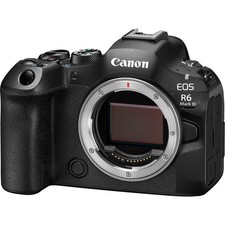
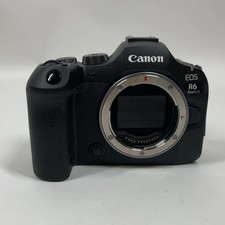
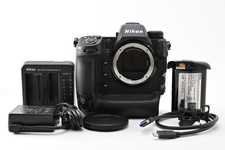
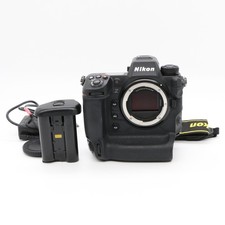
Both are full-frame mirrorless bodies with in-body stabilization, dual card slots and internal raw video, so the choice comes down to how you shoot. The Nikon Z9 is a heavier, more expensive flagship with more resolution and a stacked sensor. The Canon EOS R6 Mark III is smaller, cheaper and faster in burst shooting.
eBay prices refresh hourly — check the listing before you buy. We may earn a commission.
 Canon
CanonBest for Hybrid shooters and travelers who want speed, a flippy screen and a low price in a light body
10of 21 specs better- MOST WINSNikon
Best for Professionals who need 45 MP, extreme shutter speeds and cold-weather reliability
11of 21 specs better
Biggest differences
Continuous shooting (electronic)
Canon EOS R6 Mark III leads
2×
higher is better
- Canon EOS R6 Mark III40 fps
- Nikon Z920 fps
Max mechanical shutter speed
Nikon Z9 leads
4×
higher is better
- Canon EOS R6 Mark III8,000 1/s
- Nikon Z932,000 1/s
4K max frame rate (full width)
Canon EOS R6 Mark III leads
4×
higher is better
- Canon EOS R6 Mark III120 fps
- Nikon Z930 fps
Launch price
Canon EOS R6 Mark III leads
1.96×
lower is better
- Canon EOS R6 Mark III2,799 USD
- Nikon Z95,500 USD
Where each one wins
Canon EOS R6 Mark III
- Launch price
- Native ISO maximum
- In-body image stabilization
- Continuous shooting (electronic)
- 4K max frame rate (full width)
- Screen articulation
- Weight
- Width
- Height
- Depth
Nikon Z9
- Effective pixels
- Sensor type
- Max mechanical shutter speed
- Pre-burst capture duration
- Max video resolution
- 4K max frame rate
- Viewfinder magnification
- Screen size
- Rear screen resolution
- Battery life
- Minimum operating temperature
What both have
- Sensor formatFull-frame
- AF subject detectionHuman, animal, bird, car, train, airplane, motorcycle
- Raw video recordingInternal
- Video bit depth10 bit
- Log profile support✓
- Viewfinder resolution3.69 M dots
- Memory card slots2 slots
- Weather sealingDust and drip resistant
- USB charging & power delivery✓
- Headphone port✓
- HDMI port typeFull-size
Every spec
Red marks the better value in each row.
| Spec | Canon EOS R6 Mark III | Nikon Z9 |
|---|---|---|
| Overview | ||
| Release date | 2025-11 | 2021-12 |
| Launch price | 2,799 USD | 5,500 USD |
| Lens mount | Canon RF | Nikon Z |
| High resolution pixel-shift mode | No | No |
| Sensor & Image | ||
| Effective pixels | 32.5 MP | 45.7 MP |
| Sensor format | Full-frame | Full-frame |
| Native ISO maximum | 64,000 ISO | 25,600 ISO |
| In-body image stabilization | 8.5 stops1 | 6 stops2 |
| Sensor readout speed | 13.2 ms | Not published |
| Sensor type | CMOS | Stacked CMOS |
| Aspect ratios | 3:2 | — |
| Lens & Autofocus | ||
| Continuous shooting (mechanical) | 12 fps | Not published |
| Continuous shooting (electronic) | 40 fps | 20 fps |
| Max mechanical shutter speed | 8,000 1/s | 32,000 1/s |
| Pre-burst capture duration | 0.5 s3 | 1 s4 |
| AF subject detection | Human, animal, bird, car, train, airplane, motorcycle5 | Human, animal, bird, car, train, airplane, motorcycle |
| Video | ||
| Max video resolution | 7K6 | 8K |
| 4K max frame rate | 119.9 fps | 120 fps |
| Video codecs | H.264, HEVC, XF-AVC, XF-HEVC | H.264, HEVC, ProRes 422 HQ, ProRes RAW, N-RAW |
| 4K max frame rate (full width) | 120 fps7 | 30 fps |
| Raw video recording | Internal | Internal |
| Video bit depth | 10 bit | 10 bit |
| Log profile support | Yes | Yes |
| Video dynamic range (log) | 15 stops8 | Not published |
| Viewfinder & Screen | ||
| Viewfinder resolution | 3.69 M dots | 3.69 M dots |
| Viewfinder magnification | 0.76 x | 0.8 x |
| Screen size | 3 in | 3.2 in |
| Screen articulation | Fully articulated | Tilting |
| Rear screen resolution | 1.6 M dots | 2.1 M dots |
| Handling & Power | ||
| Battery life | 620 shots9 | 740 shots |
| Memory card slots | 2 slots | 2 slots |
| Weather sealing | Dust and drip resistant | Dust and drip resistant |
| Weight | 699 g | 1,340 g |
| Width | 138.4 mm | 149 mm |
| Height | 98.4 mm | 149.5 mm |
| Depth | 88.4 mm | 90.5 mm |
| USB charging & power delivery | Yes10 | Yes |
| Minimum operating temperature | 0 °C | -10 °C |
| Headphone port | Yes | Yes |
| HDMI port type | Full-size | Full-size |
Notes on 10 values — test conditions and caveats
- 1Canon EOS R6 Mark III, In-body image stabilization: 8.5 stops is Canon's best-case center rating with certain RF lenses; peripheral and other lenses see less, down to 7.5 stops.
- 2Nikon Z9, In-body image stabilization: The 6.0-stop rating requires Synchro VR, combining in-body 5-axis VR with 2-axis lens VR on compatible lenses.
- 3Canon EOS R6 Mark III, Pre-burst capture duration: Works only in the 40 fps electronic-shutter mode; Canon states it as up to 20 frames.
- 4Nikon Z9, Pre-burst capture duration: Pre-Release Capture is only available in the C30 and C120 high-speed frame capture modes.
- 5Canon EOS R6 Mark III, AF subject detection: Car detection is tuned for racing cars, per Canon.
- 6Canon EOS R6 Mark III, Max video resolution: 7K is available only in RAW Video mode; standard MP4 recording tops out at 4K.
- 7Canon EOS R6 Mark III, 4K max frame rate (full width): 4K 120p uses the full width but is not oversampled; oversampled 4K tops out at 60p.
- 8Canon EOS R6 Mark III, Video dynamic range (log): Canon's claim of 15+ stops in its Canon Log profiles, not a lab measurement.
- 9Canon EOS R6 Mark III, Battery life: 620 shots is CIPA's rating using the rear LCD (not the viewfinder) at 23°C; real-world results vary.
- 10Canon EOS R6 Mark III, USB charging & power delivery: USB-C charging and power need a capable USB-PD source such as Canon's PD-E2; not every power bank works.
Resolution and image quality
The Nikon Z9's 45.7 MP sensor gives you roughly 40 percent more pixels than the Canon EOS R6 Mark III's 32.5 MP. That headroom matters if you crop heavily or print large, and it is the single biggest reason to pay the Z9's premium.
The Canon counters with a higher native ISO ceiling of 64,000, which helps in dim venues where you would rather not push exposure in editing. Neither body offers a pixel-shift mode, so resolution is fixed at what the sensor captures.
Speed and autofocus
The Canon EOS R6 Mark III shoots 40 fps with the electronic shutter versus 20 fps on the Nikon Z9, and both cover the same subject types: people, animals, birds, cars, trains, planes and motorcycles. For fast action where you want the widest choice of keepers, the Canon simply captures more frames per second.
The Z9 stretches its pre-burst window to a full second, double the Canon's half-second, and its 1/32,000 s maximum shutter speed beats the Canon's 1/8,000 s for freezing motion in bright light.
Video
The Nikon Z9 records 8K and reaches 120 fps in 4K, but that 120 fps mode is not full-width. The Canon EOS R6 Mark III tops out at 7K and only in RAW Video mode, since its standard MP4 recording stops at 4K. Its advantage is that 4K 120p uses the full sensor width, though it is not oversampled.
Codec support favors the Z9 if you want ProRes or N-RAW in-camera. Both record 10-bit internally and both offer log profiles, so color grading headroom is comparable.
Handling, battery and size
The Canon EOS R6 Mark III weighs 699 g against the Nikon Z9's 1,340 g, and it is narrower and shorter in every dimension. That difference decides whether a body goes in your bag every day or only on planned shoots.
The Z9 lasts longer per charge at 740 shots versus 620 for the Canon, and it keeps working down to -10 °C where the Canon stops at 0 °C. Cold-weather and all-day shooters get a real margin from the Z9; everyone else pays for it in weight.
Viewfinder and screen
The Nikon Z9 has a larger viewfinder image at 0.8x versus 0.76x on the Canon EOS R6 Mark III, plus a bigger 3.2-inch rear screen at higher resolution. Manual focus and fine framing are easier on the Z9.
The Canon's screen is fully articulated, so it flips to face you for vlogging or odd angles. The Z9's tilts only. If you shoot yourself or work at extreme angles, that articulation matters more than the extra resolution.
Price and value
At $2,799 the Canon EOS R6 Mark III costs roughly half the Nikon Z9's $5,500 launch price. For that saving you give up resolution, the stacked sensor, and some battery life, while gaining weight savings, faster bursts and a fully articulated screen.
The Z9's higher price buys flagship build and speed for professionals; the Canon buys most of that capability for shooters who do not need 45 MP.
The Verdict
Buy the Canon EOS R6 Mark III if you want a light, affordable full-frame body with fast bursts, a fully articulated screen and full-width 4K 120p. Buy the Nikon Z9 if you need maximum resolution, the fastest shutter and the longest battery life in a flagship body that works below freezing. The Canon wins on value and portability; the Nikon wins on raw capability.
Where to buy
Canon EOS R6 Mark III
Best for Hybrid shooters and travelers who want speed, a flippy screen and a low price in a light body
Nikon Z9
Best for Professionals who need 45 MP, extreme shutter speeds and cold-weather reliability
FAQ
Does the Canon EOS R6 Mark III have a stacked sensor?
No. Its sensor is conventional CMOS, while the Nikon Z9 uses a stacked CMOS design. A stacked sensor typically reads out faster, which reduces rolling shutter artifacts in electronic-shutter shooting.
Can both cameras record raw video internally?
Yes. Both the Canon EOS R6 Mark III and the Nikon Z9 record raw video internally, and both capture 10-bit footage with log profiles for grading.
Which camera is better for cold weather?
The Nikon Z9. Its minimum operating temperature is -10 °C, while the Canon EOS R6 Mark III is rated only to 0 °C.
Which has the higher-resolution rear screen?
The Nikon Z9 at 2.1 M dots versus 1.6 M dots on the Canon EOS R6 Mark III. The Z9's screen is also larger at 3.2 inches, but it only tilts rather than fully articulating.
Do both cameras have in-body image stabilization?
Yes, but the Canon EOS R6 Mark III is rated higher at 8.5 stops in Canon's best-case test with certain RF lenses, dropping to 7.5 stops in other setups. The Nikon Z9 reaches 6 stops when Synchro VR pairs body and lens stabilization on compatible lenses.
Spotted something wrong? Tap the next to any section or spec group to let us know. Every report is read.