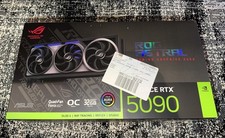
Compare · 2 products compared
AMD Radeon RX 9060 XT 16GBvsNVIDIA GeForce RTX 5090
The AMD Radeon RX 9060 XT 16GB and NVIDIA GeForce RTX 5090 are desktop graphics cards utilizing PCIe 5.0 interfaces and supporting modern hardware video encoding. They differ drastically in price, power requirements, and compute capability, determining whether they fit a modest budget or an ultra-enthusiast build.
eBay prices refresh hourly — check the listing before you buy. We may earn a commission.
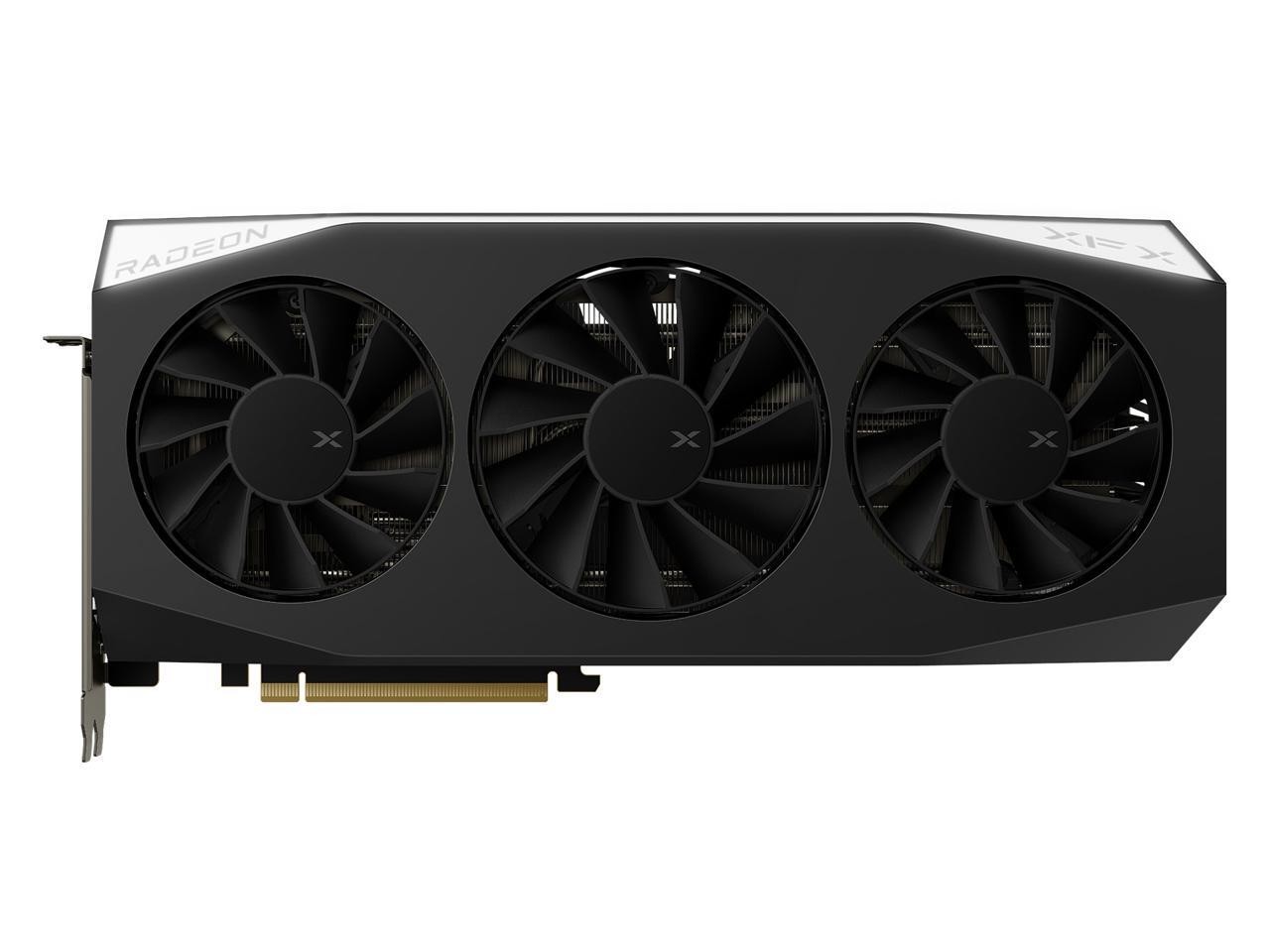
Best for Budget-conscious gamers seeking high energy efficiency
Wins4 / 15- MOST WINS

Best for Enthusiasts requiring maximum compute power and memory bandwidth
Wins11 / 15
Biggest differences
Shader cores
NVIDIA GeForce RTX 5090 leads
10.6×
higher is better
- AMD Radeon RX 9060 XT 16GB2,048 cores
- NVIDIA GeForce RTX 509021,760 cores
Launch price
AMD Radeon RX 9060 XT 16GB leads
5.73×
lower is better
- AMD Radeon RX 9060 XT 16GB349 USD
- NVIDIA GeForce RTX 50901,999 USD
Memory bandwidth
NVIDIA GeForce RTX 5090 leads
5.6×
higher is better
- AMD Radeon RX 9060 XT 16GB320 GB/s
- NVIDIA GeForce RTX 50901,792 GB/s
Memory bus width
NVIDIA GeForce RTX 5090 leads
4×
higher is better
- AMD Radeon RX 9060 XT 16GB128 bit
- NVIDIA GeForce RTX 5090512 bit
Where each one wins
AMD Radeon RX 9060 XT 16GB
- Launch price
- Boost clock
- Board power
- Recommended PSU
NVIDIA GeForce RTX 5090
- Shader cores
- FP32 compute
- Video memory
- Memory type
- Memory bus width
- Memory bandwidth
- Memory speed
- Last-level cache
- DisplayPort version
- DisplayPort outputs
- Max displays
What both have
- PCIe version5.0
- PCIe lanes16 lanes
- HDMI version2.1b
- HDMI outputs1 ports
- Hardware encodeH.264, HEVC, AV1
Every spec
Red marks the better value in each row.
| Spec | AMD Radeon RX 9060 XT 16GB | NVIDIA GeForce RTX 5090 |
|---|---|---|
| Overview | ||
| Release date | 2025-06 | 2025-01 |
| Launch price | 349 USD1 | 1,999 USD |
| Graphics chip | ||
| Architecture | Rdna 4 | Blackwell |
| Shader cores | 2,048 cores | 21,760 cores |
| Boost clock | 3,130 MHz | 2,410 MHz |
| Base clock | Not published | 2,010 MHz |
| FP32 compute | 25.6 TFLOPS | 104.8 TFLOPS |
| Memory | ||
| Video memory | 16 GB | 32 GB |
| Memory type | Gddr6 | Gddr7 |
| Memory bus width | 128 bit | 512 bit |
| Memory bandwidth | 320 GB/s | 1,792 GB/s |
| Memory speed | 20 Gbps | 28 Gbps |
| Last-level cache | 32 MB | 96 MB |
| Power | ||
| Board power | 160 W | 575 W |
| Recommended PSU | 450 W | 1,000 W2 |
| Power connectors | 8-pin | 12V-2x6 |
| Interface | ||
| PCIe version | 5.0 | 5.0 |
| PCIe lanes | 16 lanes | 16 lanes |
| Display outputs | ||
| HDMI version | 2.1b | 2.1b |
| DisplayPort version | 2.1a | 2.1b3 |
| HDMI outputs | 1 ports4 | 1 ports |
| DisplayPort outputs | 2 ports5 | 3 ports |
| Max displays | 3 displays | 4 displays |
| Video engine | ||
| Hardware encode | H.264, HEVC, AV1 | H.264, HEVC, AV1 |
| Video encoders | Not published | 3 encoders |
| Size | ||
| Card length | Not published | 304 mm |
| Card height | Not published | 137 mm |
| Slot width | Not published | 2 slots6 |
Notes on 6 values — test conditions and caveats
- 1AMD Radeon RX 9060 XT 16GB, Launch price: Launch MSRP was $349, but most 16GB models initially sold higher; Tom's Hardware saw them starting at $389.
- 2NVIDIA GeForce RTX 5090, Recommended PSU: NVIDIA's minimum for a PC with a Ryzen 9 9950X; it recommends a PCIe CEM 5.1 compliant PSU.
- 3NVIDIA GeForce RTX 5090, DisplayPort version: DisplayPort 2.1b at UHBR20 on all three DP outputs.
- 4AMD Radeon RX 9060 XT 16GB, HDMI outputs: AMD sells no reference card; this is the reference-design I/O. Partner cards can differ (Sapphire Pulse: 2 HDMI, 1 DP).
- 5AMD Radeon RX 9060 XT 16GB, DisplayPort outputs: AMD sells no reference card; this is the reference-design I/O. Partner cards can differ (Sapphire Pulse: 2 HDMI, 1 DP).
- 6NVIDIA GeForce RTX 5090, Slot width: The card is 2-slot, but NVIDIA's install guide asks for 3-slot (61 mm) case clearance.
Performance and Compute
The NVIDIA GeForce RTX 5090 dominates raw performance metrics with 21,760 shader cores and 104.8 TFLOPS of FP32 compute power. This massive engine handles extreme rendering and heavy workloads effortlessly.
In contrast, the AMD Radeon RX 9060 XT 16GB relies on 2,048 cores and 25.6 TFLOPS. However, it achieves a higher 3,130 MHz boost clock, delivering capable performance for standard gaming setups without the extreme overhead.
Memory and Architecture
NVIDIA equips its flagship with 32 GB of GDDR7 memory running on a 512-bit bus, generating 1,792 GB/s of bandwidth alongside a 96 MB last-level cache. This massive memory pipeline suits heavy professional tasks and ultra-high-resolution textures.
The AMD card features 16 GB of GDDR6 memory across a 128-bit bus, offering 320 GB/s of bandwidth and a 32 MB last-level cache. While more modest, the 16 GB capacity remains adequate for standard modern titles.
Power and System Requirements
The RTX 5090 demands serious infrastructure with a 575 W board power and a recommended 1,000 W power supply utilizing a 12V-2x6 connector. Buyers must ensure their system cases and power supplies can handle the heavy thermal and electrical load.
The Radeon RX 9060 XT 16GB prioritizes efficiency with a 160 W board power rating and a modest 450 W recommended PSU requirement. It connects easily using a single traditional 8-pin power connector.
The Verdict
Buy the AMD Radeon RX 9060 XT 16GB if you need a budget-friendly, power-efficient card for standard gaming. Buy the NVIDIA GeForce RTX 5090 if you demand uncompromising processing power and have the budget for a high-end power supply and system setup.
Where to buy
AMD Radeon RX 9060 XT 16GB
Best for Budget-conscious gamers seeking high energy efficiency
NVIDIA GeForce RTX 5090
Best for Enthusiasts requiring maximum compute power and memory bandwidth
FAQ
What power supply do I need for these graphics cards?
The AMD card requires a 450 W power supply, while the NVIDIA flagship requires a 1,000 W power supply.
How much video memory do they have?
The AMD model features 16 GB of GDDR6 memory, whereas the NVIDIA model includes 32 GB of GDDR7 memory.
What are the launch prices?
The AMD Radeon RX 9060 XT 16GB launched at $349, while the NVIDIA GeForce RTX 5090 launched at $1,999.
What video encoding formats do they support?
Both graphics cards support hardware encoding for H.264, HEVC, and AV1 formats.
Spotted something wrong? Tap the next to any section or spec group to let us know. Every report is read.