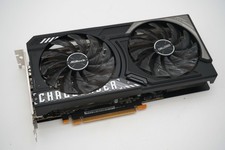
Compare · 2 products compared
AMD Radeon RX 9060 XT 16GBvsIntel Arc B570
The AMD Radeon RX 9060 XT 16GB and the Intel Arc B570 both utilize GDDR6 memory types and share common video encoding features like H.264, HEVC, and AV1. However, they differ significantly in price, memory capacity, and architectural design, shaping distinct choices for your build.
eBay prices refresh hourly — check the listing before you buy. We may earn a commission.
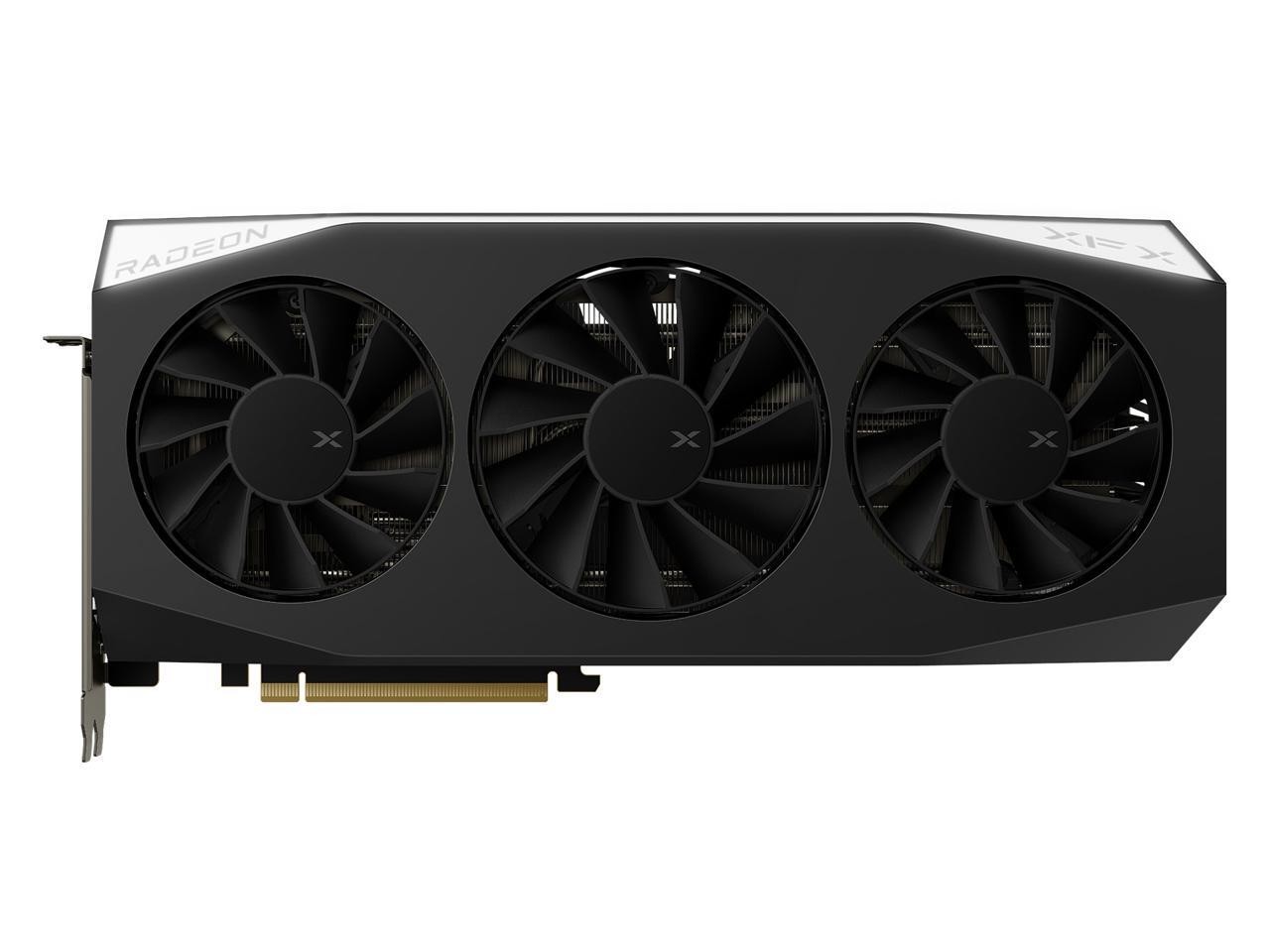
Best for Gamers wanting high VRAM and fast clock speeds
Wins7 / 14
Best for Budget-conscious buyers needing multi-display outputs
Wins7 / 14
Biggest differences
PCIe lanes
AMD Radeon RX 9060 XT 16GB leads
2×
higher is better
- AMD Radeon RX 9060 XT 16GB16 lanes
- Intel Arc B5708 lanes
Video memory
AMD Radeon RX 9060 XT 16GB leads
+60%
higher is better
- AMD Radeon RX 9060 XT 16GB16 GB
- Intel Arc B57010 GB
Launch price
Intel Arc B570 leads
−37%
lower is better
- AMD Radeon RX 9060 XT 16GB349 USD
- Intel Arc B570219 USD
DisplayPort outputs
Intel Arc B570 leads
+50%
higher is better
- AMD Radeon RX 9060 XT 16GB2 ports
- Intel Arc B5703 ports
Where each one wins
AMD Radeon RX 9060 XT 16GB
- Boost clock
- Video memory
- Memory speed
- PCIe version
- PCIe lanes
- HDMI version
- DisplayPort version
Intel Arc B570
- Launch price
- Shader cores
- Memory bus width
- Memory bandwidth
- Board power
- DisplayPort outputs
- Max displays
What both have
- Memory typeGddr6
- Power connectors8-pin
- HDMI outputs1 ports
- Hardware encodeH.264, HEVC, AV1
Every spec
Red marks the better value in each row.
| Spec | AMD Radeon RX 9060 XT 16GB | Intel Arc B570 |
|---|---|---|
| Overview | ||
| Release date | 2025-06 | 2025-011 |
| Launch price | 349 USD2 | 219 USD3 |
| Graphics chip | ||
| Architecture | Rdna 4 | Xe2 |
| Shader cores | 2,048 cores | 2,304 cores4 |
| Boost clock | 3,130 MHz | 2,500 MHz5 |
| Base clock | Not published | Not published |
| FP32 compute | 25.6 TFLOPS | Not published |
| Memory | ||
| Video memory | 16 GB | 10 GB |
| Memory type | Gddr6 | Gddr6 |
| Memory bus width | 128 bit | 160 bit |
| Memory bandwidth | 320 GB/s | 380 GB/s |
| Memory speed | 20 Gbps | 19 Gbps |
| Last-level cache | 32 MB | Not published |
| Power | ||
| Board power | 160 W | 150 W |
| Recommended PSU | 450 W | Not published |
| Power connectors | 8-pin | 8-pin6 |
| Interface | ||
| PCIe version | 5.0 | 4.0 |
| PCIe lanes | 16 lanes | 8 lanes7 |
| Display outputs | ||
| HDMI version | 2.1b | 2.1 |
| DisplayPort version | 2.1a | 2.18 |
| HDMI outputs | 1 ports9 | 1 ports10 |
| DisplayPort outputs | 2 ports11 | 3 ports |
| Max displays | 3 displays | 4 displays |
| Video engine | ||
| Hardware encode | H.264, HEVC, AV1 | H.264, HEVC, AV112 |
| Video encoders | Not published | 2 encoders |
| Size | ||
| Card length | Not published | Not published |
| Card height | Not published | Not published |
| Slot width | Not published | Not published |
Notes on 12 values — test conditions and caveats
- 1Intel Arc B570, Release date: All three launch-day reviews are dated 16 Jan 2025; Intel's page gives only the quarter 'Q4'24.
- 2AMD Radeon RX 9060 XT 16GB, Launch price: Launch MSRP was $349, but most 16GB models initially sold higher; Tom's Hardware saw them starting at $389.
- 3Intel Arc B570, Launch price: Launch MSRP; Ars Technica notes it only counts if you can actually get one at that price.
- 4Intel Arc B570, Shader cores: Derived per definition: 18 Xe-cores x 128 shading units = 2,304.
- 5Intel Arc B570, Boost clock: Intel publishes only a 'Graphics Clock'; per the key's definition it is recorded as the boost clock.
- 6Intel Arc B570, Power connectors: Intel sells no first-party card; partner B570 cards use a single 8-pin connector.
- 7Intel Arc B570, PCIe lanes: Eight electrical lanes; Ars Technica notes Arc relies on Resizable BAR to perform optimally.
- 8Intel Arc B570, DisplayPort version: Maker caps DisplayPort 2.1 at UHBR 13.5.
- 9AMD Radeon RX 9060 XT 16GB, HDMI outputs: AMD sells no reference card; this is the reference-design I/O. Partner cards can differ (Sapphire Pulse: 2 HDMI, 1 DP).
- 10Intel Arc B570, HDMI outputs: Intel sells no first-party B570; this is the standard partner-card port layout.
- 11AMD Radeon RX 9060 XT 16GB, DisplayPort outputs: AMD sells no reference card; this is the reference-design I/O. Partner cards can differ (Sapphire Pulse: 2 HDMI, 1 DP).
- 12Intel Arc B570, Hardware encode: Maker also lists 'H.265 (HEVC) Hardware Encode/Decode: Yes' and 'AV1 Encode/Decode: Yes'.
Performance and Architecture
The Radeon card features 2,048 shader cores paired with an Rdna 4 architecture, while the Arc B570 uses Xe2 cores totaling 2,304 shader units. When pushing graphics workloads, the AMD option achieves a much higher boost clock of 3,130 MHz compared to the Intel card's 2,500 MHz speed. This higher clock speed yields 25.6 TFLOPS of FP32 compute power, giving the Radeon more raw computational muscle for demanding games.
For motherboard connectivity, the Radeon utilizes PCIe 5.0 across 16 lanes, whereas the Arc B570 relies on a PCIe 4.0 connection restricted to 8 electrical lanes. Intel's card requires Resizable BAR to operate at its optimal level, meaning older motherboards might handicap its potential. The AMD setup offers a much more modern interface standard out of the box.
Memory and Capabilities
Video memory is a major dividing line between these two graphics processors. The AMD Radeon RX 9060 XT equips 16 GB of memory running at 20 Gbps over a 128-bit bus, creating a 320 GB/s bandwidth. In contrast, the Intel Arc B570 provides only 10 GB of video memory on a 160-bit bus, reaching a faster 380 GB/s memory bandwidth and 19 Gbps memory speed.
That larger 16 GB frame buffer on the Radeon card gives it significantly more headroom for high-resolution textures and modern titles that exhaust smaller pools of VRAM. The Intel option manages wider data paths locally, but its lower capacity limits long-term future-proofing for heavy asset streaming.
Power and Connectivity
Power requirements remain close, with the AMD model drawing 160 W against the Intel card's 150 W board power. The Radeon requires a recommended 450 W PSU, and both options draw power through a single 8-pin connector, though partner card layouts for the Intel option depend on third-party designs.
Display outputs favor the Intel card for multi-monitor setups, supporting up to 4 displays via 1 HDMI and 3 DisplayPort outputs. The AMD alternative caps out at 3 displays through 1 HDMI 2.1b port and 2 DisplayPort 2.1a connections, though specific partner cards may alter these physical port arrays.
The Verdict
Buy the AMD Radeon RX 9060 XT 16GB if you want superior VRAM capacity, higher boost clocks, and modern PCIe 5.0 connectivity. Buy the Intel Arc B570 if you need a budget-friendly option with strong multi-display support.
Where to buy
AMD Radeon RX 9060 XT 16GB
Best for Gamers wanting high VRAM and fast clock speeds
Intel Arc B570
Best for Budget-conscious buyers needing multi-display outputs
FAQ
What power supply do I need for these graphics cards?
The AMD card requires a recommended 450 W power supply, while Intel does not publish an official PSU wattage recommendation.
How many displays can each card connect to simultaneously?
The Intel card supports up to 4 displays, whereas the AMD option maxes out at 3 displays.
Do both cards support AV1 video encoding?
Yes, both graphics processors feature hardware-accelerated H.264, HEVC, and AV1 encoding capabilities.
Spotted something wrong? Tap the next to any section or spec group to let us know. Every report is read.