
Compare · 2 products compared
AMD Radeon RX 9060 XT 16GBvsNVIDIA GeForce RTX 5070
The AMD Radeon RX 9060 XT 16GB and NVIDIA GeForce RTX 5070 are current-generation graphics cards built on different architectures. Deciding between them comes down to balancing video memory capacity against raw processing compute and memory bandwidth.
eBay prices refresh hourly — check the listing before you buy. We may earn a commission.
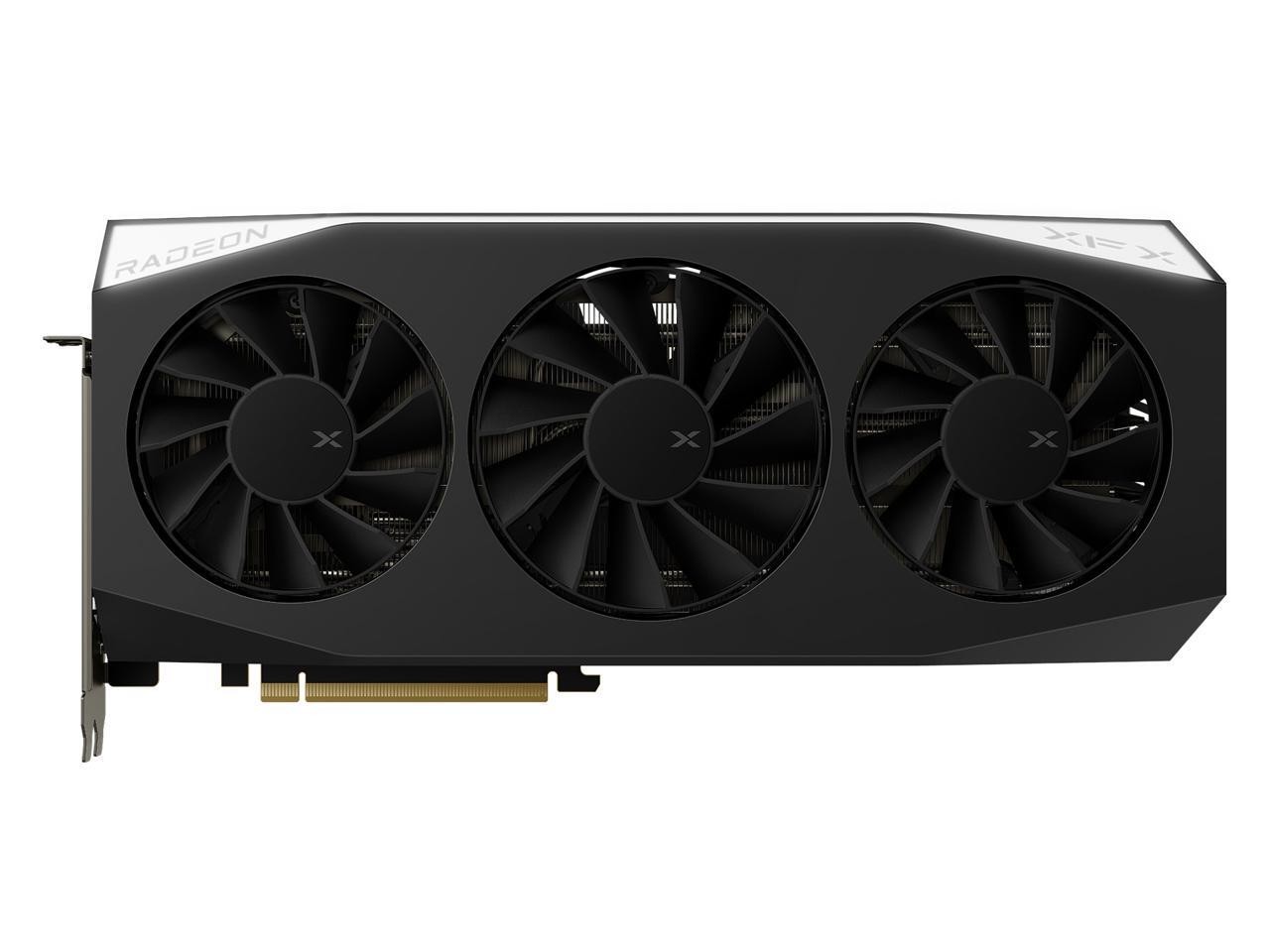
Best for Budget-focused builders wanting 16GB of VRAM and lower power draw
Wins5 / 15- MOST WINSNVIDIAGeForce RTX 5070
Best for Users needing higher compute performance and faster memory bandwidth
Wins10 / 15
Biggest differences
Shader cores
NVIDIA GeForce RTX 5070 leads
3×
higher is better
- AMD Radeon RX 9060 XT 16GB2,048 cores
- NVIDIA GeForce RTX 50706,144 cores
Memory bandwidth
NVIDIA GeForce RTX 5070 leads
2.1×
higher is better
- AMD Radeon RX 9060 XT 16GB320 GB/s
- NVIDIA GeForce RTX 5070672 GB/s
Launch price
AMD Radeon RX 9060 XT 16GB leads
−36%
lower is better
- AMD Radeon RX 9060 XT 16GB349 USD
- NVIDIA GeForce RTX 5070549 USD
Board power
AMD Radeon RX 9060 XT 16GB leads
−36%
lower is better
- AMD Radeon RX 9060 XT 16GB160 W
- NVIDIA GeForce RTX 5070250 W
Where each one wins
AMD Radeon RX 9060 XT 16GB
- Launch price
- Boost clock
- Video memory
- Board power
- Recommended PSU
NVIDIA GeForce RTX 5070
- Shader cores
- FP32 compute
- Memory type
- Memory bus width
- Memory bandwidth
- Memory speed
- Last-level cache
- DisplayPort version
- DisplayPort outputs
- Max displays
What both have
- PCIe version5.0
- PCIe lanes16 lanes
- HDMI version2.1b
- HDMI outputs1 ports
- Hardware encodeH.264, HEVC, AV1
Every spec
Red marks the better value in each row.
| Spec | AMD Radeon RX 9060 XT 16GB | NVIDIA GeForce RTX 5070 |
|---|---|---|
| Overview | ||
| Release date | 2025-06 | 2025-03 |
| Launch price | 349 USD1 | 549 USD |
| Graphics chip | ||
| Architecture | Rdna 4 | Blackwell |
| Shader cores | 2,048 cores | 6,144 cores |
| Boost clock | 3,130 MHz | 2,512 MHz |
| Base clock | Not published | 2,330 MHz |
| FP32 compute | 25.6 TFLOPS | 30.9 TFLOPS |
| Memory | ||
| Video memory | 16 GB | 12 GB |
| Memory type | Gddr6 | Gddr7 |
| Memory bus width | 128 bit | 192 bit |
| Memory bandwidth | 320 GB/s | 672 GB/s |
| Memory speed | 20 Gbps | 28 Gbps |
| Last-level cache | 32 MB | 48 MB |
| Power | ||
| Board power | 160 W | 250 W |
| Recommended PSU | 450 W | 650 W2 |
| Power connectors | 8-pin | 12V-2x63 |
| Interface | ||
| PCIe version | 5.0 | 5.0 |
| PCIe lanes | 16 lanes | 16 lanes |
| Display outputs | ||
| HDMI version | 2.1b | 2.1b |
| DisplayPort version | 2.1a | 2.1b4 |
| HDMI outputs | 1 ports5 | 1 ports |
| DisplayPort outputs | 2 ports6 | 3 ports |
| Max displays | 3 displays | 4 displays |
| Video engine | ||
| Hardware encode | H.264, HEVC, AV1 | H.264, HEVC, AV1 |
| Video encoders | Not published | 1 encoders |
| Size | ||
| Card length | Not published | 242 mm |
| Card height | Not published | 112 mm |
| Slot width | Not published | 2 slots |
Notes on 6 values — test conditions and caveats
- 1AMD Radeon RX 9060 XT 16GB, Launch price: Launch MSRP was $349, but most 16GB models initially sold higher; Tom's Hardware saw them starting at $389.
- 2NVIDIA GeForce RTX 5070, Recommended PSU: NVIDIA's minimum for a PC with a Ryzen 9 9950X; other systems may need a different PSU.
- 3NVIDIA GeForce RTX 5070, Power connectors: One 16-pin 12V-2x6 socket; an adapter for two 8-pin cables comes in the box.
- 4NVIDIA GeForce RTX 5070, DisplayPort version: DisplayPort 2.1b at the full UHBR20 rate.
- 5AMD Radeon RX 9060 XT 16GB, HDMI outputs: AMD sells no reference card; this is the reference-design I/O. Partner cards can differ (Sapphire Pulse: 2 HDMI, 1 DP).
- 6AMD Radeon RX 9060 XT 16GB, DisplayPort outputs: AMD sells no reference card; this is the reference-design I/O. Partner cards can differ (Sapphire Pulse: 2 HDMI, 1 DP).
Price and Value
The AMD Radeon RX 9060 XT 16GB starts at $349, though launch MSRP figures saw most models initially selling higher around $389. This lower entry point makes it a more accessible option for budget-conscious builders.
In comparison, the NVIDIA GeForce RTX 5070 is priced at $549. Buyers pay a higher upfront cost for NVIDIA's hardware package, which impacts overall system budget planning.
Performance and Compute
The NVIDIA card features 6,144 shader cores and delivers 30.9 TFLOPS of FP32 compute power, outpacing the AMD competitor in raw processing capability. This higher compute throughput helps handle demanding rendering and calculation tasks efficiently.
Meanwhile, the AMD card counters with a higher boost clock of 3,130 MHz, alongside 2,048 cores and 25.6 TFLOPS of compute. This configuration provides strong clock speeds for gaming workloads.
Memory and Bandwidth
For memory capacity, the AMD option provides 16 GB of GDDR6 video memory on a 128-bit bus, paired with 32 MB of last-level cache. This larger buffer handles high-resolution textures and modern game assets comfortably.
The NVIDIA alternative equips 12 GB of GDDR7 memory utilizing a 192-bit bus, yielding a faster memory bandwidth of 672 GB/s alongside a 48 MB last-level cache. Its GDDR7 memory and 28 Gbps speed deliver faster data transfer rates despite the smaller capacity.
Power and System Requirements
Energy efficiency favors the AMD card, which operates at a board power of 160 W and requires a modest 450 W power supply unit. It uses a standard 8-pin power connector for straightforward installation.
The NVIDIA competitor demands a higher board power of 250 W and a 650 W recommended PSU minimum for systems with a Ryzen 9 9950X. It requires a 12V-2x6 power connector, though an adapter for two 8-pin cables is included in the box.
Display Outputs and Connectivity
Both cards support PCIe 5.0 across 16 lanes and include HDMI 2.1b ports. The NVIDIA card supports up to 4 displays, featuring three DisplayPort 2.1b outputs running at the full UHBR20 rate and one HDMI port.
The AMD card drives up to 3 displays, configured with two DisplayPort 2.1a ports and one HDMI 2.1b port on reference-design layouts, though partner card configurations like the Sapphire Pulse can vary.
The Verdict
Buy the AMD Radeon RX 9060 XT 16GB if you want a lower launch price, lower power consumption, and more video memory. Buy the NVIDIA GeForce RTX 5070 if you need higher FP32 compute performance, faster GDDR7 memory bandwidth, and support for more displays.
Where to buy
AMD Radeon RX 9060 XT 16GB
Best for Budget-focused builders wanting 16GB of VRAM and lower power draw
NVIDIA GeForce RTX 5070
Best for Users needing higher compute performance and faster memory bandwidth
FAQ
What video memory do these cards have?
The AMD card features 16 GB of GDDR6 memory, while the NVIDIA card has 12 GB of GDDR7 memory.
What are the power supply requirements?
The AMD card recommends a 450 W PSU, whereas the NVIDIA card recommends a 650 W PSU when paired with a Ryzen 9 9950X.
Which card has higher compute performance?
The NVIDIA card delivers 30.9 TFLOPS of FP32 compute, compared to 25.6 TFLOPS on the AMD card.
What video encoding formats are supported?
Both graphics cards support H.264, HEVC, and AV1 hardware encoding.
Spotted something wrong? Tap the next to any section or spec group to let us know. Every report is read.


