NVIDIA
NVIDIA GeForce RTX 5090
Released in January 2025 at a launch price of $1,999 USD, the NVIDIA GeForce RTX 5090 is a powerhouse built for elite gamers and professionals who demand top-tier graphics performance. It leverages the Blackwell architecture to deliver massive computing capabilities for intensive workloads.
- Release date
- 2025-01
- Launch price
- 1,999 USD
- Shader cores
- 21,760 cores
- Video memory
- 32 GB
- Memory type
- Gddr7
- Memory bus width
- 512 bit
Performance and Architecture
Powered by 21,760 shader cores and a boost clock of 2,410 MHz, the card delivers 104.8 TFLOPS of FP32 compute. This massive processing power translates to exceptionally high frame rates in demanding games and faster rendering times in professional applications.
Working alongside the core compute is a massive 96 MB last-level cache. This helps reduce latency and keeps data closer to the processor for smoother execution during complex graphics tasks.
Memory and Bandwidth
The board features 32 GB of GDDR7 video memory connected via a 512-bit memory bus width. This massive capacity and type allow creators to handle enormous datasets, high-resolution textures, and complex 3D scenes without running out of buffer space.
Memory speed hits 28 Gbps, driving a staggering memory bandwidth of 1,792 GB/s. Such high bandwidth ensures that data moves swiftly between the frame buffer and the processor, preventing bottlenecks during heavy multi-display rendering.
Power and System Demands
Operating this hardware requires careful planning due to a board power draw of 575 W. NVIDIA's minimum recommendation is a 1,000 W power supply unit for a PC equipped with a Ryzen 9 9950X, paired with a PCIe CEM 5.1 compliant PSU using 12V-2x6 power connectors.
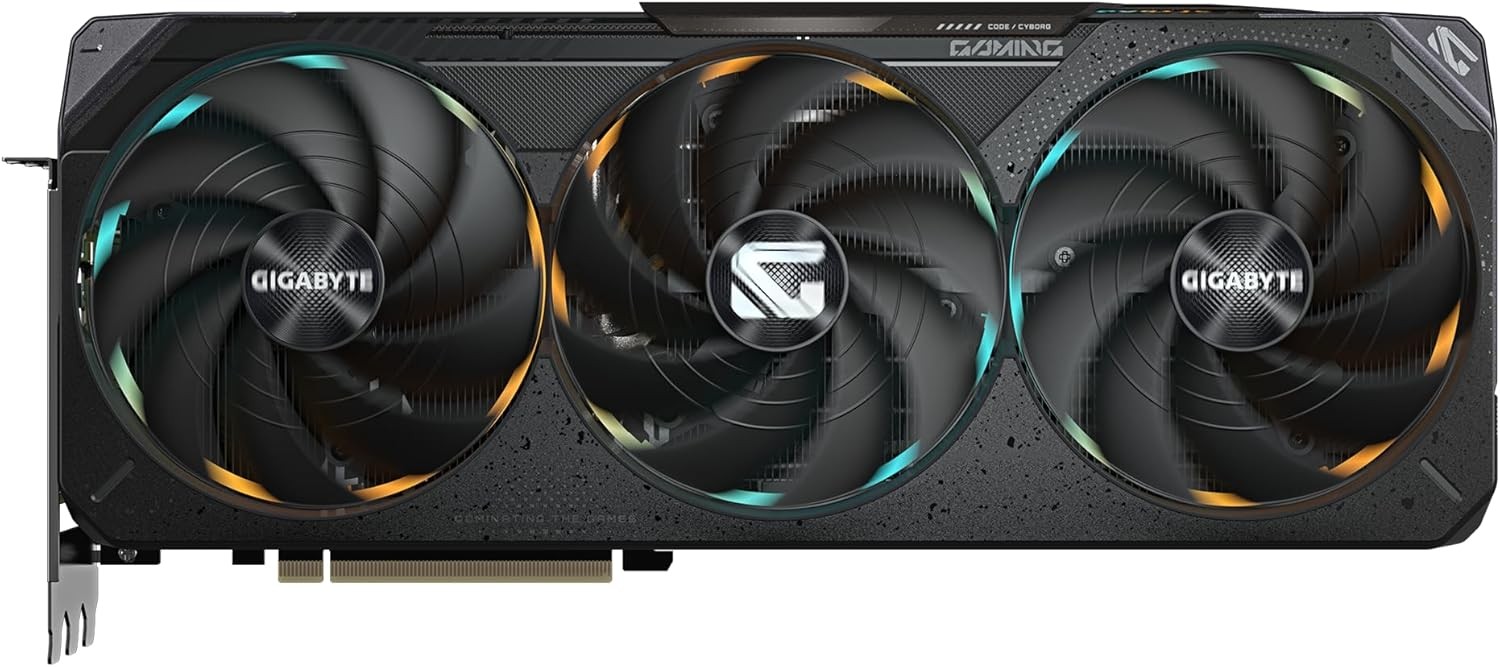
While the card features a 2-slot width with a card length of 304 mm and height of 137 mm, NVIDIA's installation guide asks for 3-slot case clearance of 61 mm. Buyers must verify that their chassis and power supply can physically and electrically support these demands.
Connectivity and Video Engine
Display options include one HDMI 2.1b port and three DisplayPort 2.1b ports supporting UHBR20 across all three outputs. You can drive up to four displays simultaneously for expansive multi-monitor setups.
For content creators, the hardware video engine includes three encoders with native hardware support for H.264, HEVC, and AV1 formats. This enables swift export times and efficient streaming workflows.
Full specs
Overview
- Release date
- 2025-01
- Launch price
- 1,999 USD
Graphics chip
- Architecture
- Blackwell
- Shader cores
- 21,760 cores
- Boost clock
- 2,410 MHz
- Base clock
- 2,010 MHz
- FP32 compute
- 104.8 TFLOPS
Memory
- Video memory
- 32 GB
- Memory type
- Gddr7
- Memory bus width
- 512 bit
- Memory bandwidth
- 1,792 GB/s
- Memory speed
- 28 Gbps
- Last-level cache
- 96 MB
Power
- Board power
- 575 W
- Recommended PSU
- 1,000 W
NVIDIA's minimum for a PC with a Ryzen 9 9950X; it recommends a PCIe CEM 5.1 compliant PSU.
- Power connectors
- 12V-2x6
Interface
- PCIe version
- 5.0
- PCIe lanes
- 16 lanes
Display outputs
- HDMI version
- 2.1b
- DisplayPort version
- 2.1b
DisplayPort 2.1b at UHBR20 on all three DP outputs.
- HDMI outputs
- 1 ports
- DisplayPort outputs
- 3 ports
- Max displays
- 4 displays
Video engine
- Hardware encode
- H.264, HEVC, AV1
- Video encoders
- 3 encoders
Size
- Card length
- 304 mm
- Card height
- 137 mm
- Slot width
- 2 slots
The card is 2-slot, but NVIDIA's install guide asks for 3-slot (61 mm) case clearance.
The Verdict
The NVIDIA GeForce RTX 5090 is built for enthusiasts and professionals who need absolute cutting-edge graphics performance and massive video memory for 4K gaming or heavy content creation. Casual gamers and users with standard power supplies should look elsewhere due to the steep $1,999 USD price tag and high electrical and physical space requirements.
FAQ
What is the launch price of the NVIDIA GeForce RTX 5090?
It launched at a price of $1,999 USD in January 2025.
How much video memory does it have?
It comes equipped with 32 GB of GDDR7 video memory.
What power supply is recommended?
NVIDIA recommends a minimum of a 1,000 W PSU for a PC with a Ryzen 9 9950X, along with a PCIe CEM 5.1 compliant unit.
How many displays can be connected at once?
It supports a maximum of four displays through its single HDMI port and three DisplayPort outputs.
Spotted something wrong? Tap the next to any section or spec group to let us know. Every report is read.