Compare · 2 products compared
Sony ZV-E10 IIvsNikon Z9: Which Camera to Buy
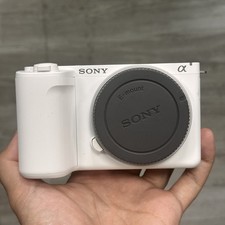
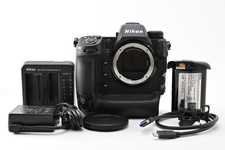
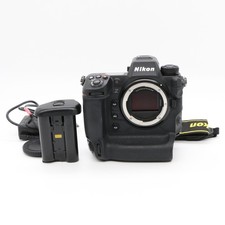
These are two mirrorless cameras that share almost nothing else: one is a compact APS-C body built for solo creators, the other a full-frame flagship built for working professionals. The deciding factors are sensor size, burst and video capability, and how much weight and money you are willing to carry.
eBay prices refresh hourly — check the listing before you buy. We may earn a commission.
 Sony
SonyBest for Vloggers and casual creators who want light, affordable 4K
8of 23 specs better- MOST WINSNikon
Best for Working professionals shooting sport, wildlife and high-end video
15of 23 specs better
Biggest differences
Launch price
Sony ZV-E10 II leads
5.51×
lower is better
- Sony ZV-E10 II999 USD
- Nikon Z95,500 USD
Weight
Sony ZV-E10 II leads
3.55×
lower is better
- Sony ZV-E10 II377 g
- Nikon Z91,340 g
Max mechanical shutter speed
Nikon Z9 leads
4×
higher is better
- Sony ZV-E10 II8,000 1/s
- Nikon Z932,000 1/s
Memory card slots
Nikon Z9 leads
2×
higher is better
- Sony ZV-E10 II1 slots
- Nikon Z92 slots
Where each one wins
Sony ZV-E10 II
- Launch price
- Native ISO maximum
- 4K max frame rate (full width)
- Screen articulation
- Weight
- Width
- Height
- Depth
Nikon Z9
- Effective pixels
- Sensor format
- Sensor type
- Continuous shooting (electronic)
- Max mechanical shutter speed
- Max video resolution
- 4K max frame rate
- Raw video recording
- Viewfinder resolution
- Screen size
- Rear screen resolution
- Battery life
- Memory card slots
- Minimum operating temperature
- HDMI port type
What both have
- Video bit depth10 bit
- Log profile support✓
- USB charging & power delivery✓
- Headphone port✓
Every spec
Red marks the better value in each row.
| Spec | Sony ZV-E10 II | Nikon Z9 |
|---|---|---|
| Overview | ||
| Release date | 2024-07 | 2021-12 |
| Launch price | 999 USD | 5,500 USD |
| Lens mount | Sony E | Nikon Z |
| High resolution pixel-shift mode | No | No |
| Sensor & Image | ||
| Effective pixels | 26 MP | 45.7 MP |
| Sensor format | APS-C | Full-frame |
| Native ISO maximum | 32,000 ISO | 25,600 ISO |
| In-body image stabilization | Not published | 6 stops1 |
| Sensor readout speed | Not published | Not published |
| Sensor type | CMOS | Stacked CMOS |
| Aspect ratios | Not published | — |
| Lens & Autofocus | ||
| Continuous shooting (mechanical) | Not published | Not published |
| Continuous shooting (electronic) | 11 fps | 20 fps |
| Max mechanical shutter speed | 8,000 1/s | 32,000 1/s |
| Pre-burst capture duration | Not published | 1 s2 |
| AF subject detection | Human, animal, bird | Human, animal, bird, car, train, airplane, motorcycle |
| Video | ||
| Max video resolution | 4K | 8K |
| 4K max frame rate | 60 fps | 120 fps |
| Video codecs | H.264, HEVC | H.264, HEVC, ProRes 422 HQ, ProRes RAW, N-RAW |
| 4K max frame rate (full width) | 60 fps | 30 fps |
| Raw video recording | None | Internal |
| Video bit depth | 10 bit | 10 bit |
| Log profile support | Yes | Yes |
| Video dynamic range (log) | Not published | Not published |
| Viewfinder & Screen | ||
| Viewfinder resolution | 0 M dots | 3.69 M dots |
| Viewfinder magnification | Not published | 0.8 x |
| Screen size | 3 in | 3.2 in |
| Screen articulation | Fully articulated | Tilting |
| Rear screen resolution | 1.037 M dots | 2.1 M dots |
| Handling & Power | ||
| Battery life | 610 shots | 740 shots |
| Memory card slots | 1 slots | 2 slots |
| Weather sealing | Not published | Dust and drip resistant |
| Weight | 377 g | 1,340 g |
| Width | 114.8 mm | 149 mm |
| Height | 67.5 mm | 149.5 mm |
| Depth | 54.2 mm | 90.5 mm |
| USB charging & power delivery | Yes | Yes |
| Minimum operating temperature | 0 °C | -10 °C |
| Headphone port | Yes | Yes |
| HDMI port type | Micro | Full-size |
Notes on 2 values — test conditions and caveats
- 1Nikon Z9, In-body image stabilization: The 6.0-stop rating requires Synchro VR, combining in-body 5-axis VR with 2-axis lens VR on compatible lenses.
- 2Nikon Z9, Pre-burst capture duration: Pre-Release Capture is only available in the C30 and C120 high-speed frame capture modes.
Sensor and low light
The Nikon Z9's full-frame 45.7 MP sensor captures far more detail and gives you more room to crop before resolution suffers. Its stacked design also reads out faster, which is what lets the camera sustain high frame rates and keep autofocus locked on moving subjects.
The Sony ZV-E10 II's APS-C chip sits at 26 MP, so files are smaller and easier to handle, but you lose roughly a stop of light gathering and the cropping headroom that full-frame buyers pay for. The Sony does post a slightly higher native ISO ceiling, though that figure matters far less in practice than the sensor size difference.
Video
The Z9 shoots 8K and 4K at up to 120 fps, and records raw internally in ProRes RAW and N-RAW alongside ProRes 422 HQ. That is the workload of a professional production camera, and it comes with the storage and processing costs that implies.
The Sony ZV-E10 II tops out at 4K 60p in H.264 and HEVC, with no raw option. Its one edge is that it holds 4K 60p at full sensor width, where the Z9 drops to 30 fps for full-width 4K. For a solo creator uploading to YouTube, the Sony covers the job; for anyone grading or delivering to a client, the Nikon is in a different class.
Handling, viewfinder and screen
The Z9 has a 3.69 M-dot electronic viewfinder, a larger 3.2-inch rear screen at 2.1 M dots, two card slots, full-size HDMI and dust-and-drip sealing. It is built to be used all day in the field and to keep working when the weather turns.
The Sony ZV-E10 II has no viewfinder at all, which is a real limitation in bright sun, and only one card slot, with a Micro HDMI port that is easy to strain. Its compensation is a fully articulated screen that flips to face the shooter — the better choice for vlogging and self-recording, where the Z9's tilting panel cannot match it.
Battery, size and price
The Sony ZV-E10 II weighs 377 g and measures roughly 115 by 68 by 54 mm, so it disappears into a bag and works on a small gimbal. At $999 it also costs a fraction of the Nikon's $5,500 launch price, which leaves real budget for lenses.
The Z9 is 1,340 g before you mount anything and is a deliberately large, grip-integrated body. In exchange it runs longer per charge and keeps operating down to -10 °C, where the Sony is rated only to 0 °C. If you shoot in serious cold or need a camera that balances long telephoto glass, that difference decides it.
Speed and autofocus
The Z9 bursts at 20 fps electronically and offers Pre-Release Capture, which buffers a second of frames before you press the shutter, in its C30 and C120 modes. Its subject detection also recognizes cars, trains, airplanes and motorcycles on top of people, animals and birds.
The Sony ZV-E10 II manages 11 fps and detects only people, animals and birds. It is a capable everyday camera for portraits and travel, but for sport, wildlife or any subject that moves fast and unpredictably, the Nikon is the tool that gets the shot.
The Verdict
Buy the Sony ZV-E10 II if you are a solo creator on a budget who vlogs, shoots handheld 4K and needs a light, self-facing screen more than a viewfinder. Buy the Nikon Z9 if you shoot professionally and need full-frame detail, 8K and raw video, fast bursts and weather sealing, and can carry the weight and the price. Neither is a compromise for the other's buyer — they are simply built for different jobs.
Where to buy
Sony ZV-E10 II
Best for Vloggers and casual creators who want light, affordable 4K
Nikon Z9
Best for Working professionals shooting sport, wildlife and high-end video
FAQ
Does the Sony ZV-E10 II have image stabilization?
Sony has not published an in-body stabilization rating for the ZV-E10 II, so you should not count on it. The Nikon Z9 offers up to 6 stops, though that figure requires Synchro VR with a compatible lens.
Can the Sony ZV-E10 II shoot 8K or raw video?
No. It maxes out at 4K 60p with no raw recording option, while the Nikon Z9 shoots 8K and records ProRes RAW and N-RAW internally.
Do both cameras have a headphone port and USB charging?
Yes, both include a headphone jack and support USB charging and power delivery. The Nikon adds a full-size HDMI port, where the Sony uses the smaller, more fragile Micro HDMI.
Which camera has better autofocus for moving subjects?
The Nikon Z9, which tracks more subject types including cars, trains, airplanes and motorcycles, and pairs that with a 20 fps burst versus the Sony's 11 fps.
Can I use the same lenses on both cameras?
No. The Sony ZV-E10 II uses the Sony E mount and the Nikon Z9 uses the Nikon Z mount, so lenses are not interchangeable between them without an adapter.
Spotted something wrong? Tap the next to any section or spec group to let us know. Every report is read.