Compare · 2 products compared
Canon EOS R50 VvsCanon EOS R5 Mark II: Which to Buy
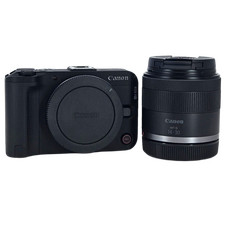
Both cameras use the Canon RF mount, shoot 10-bit log video and flip their screens out to the side, so the choice comes down to budget and workload. The Canon EOS R5 Mark II buys you a full-frame stacked sensor with in-body stabilization, while the Canon EOS R50 V stays small and light with no viewfinder at all.
eBay prices refresh hourly — check the listing before you buy. We may earn a commission.
 Canon
CanonBest for Beginners, travelers and vloggers who want small, light and affordable
4of 17 specs better- MOST WINSCanon
Best for Professionals and advanced enthusiasts shooting action, wildlife or client video
13of 17 specs better
Biggest differences
Weight
Canon EOS R50 V leads
2.02×
lower is better
- Canon EOS R50 V370 g
- Canon EOS R5 Mark II746 g
Continuous shooting (electronic)
Canon EOS R5 Mark II leads
2×
higher is better
- Canon EOS R50 V15 fps
- Canon EOS R5 Mark II30 fps
Memory card slots
Canon EOS R5 Mark II leads
2×
higher is better
- Canon EOS R50 V1 slots
- Canon EOS R5 Mark II2 slots
Effective pixels
Canon EOS R5 Mark II leads
+86%
higher is better
- Canon EOS R50 V24.2 MP
- Canon EOS R5 Mark II45 MP
Where each one wins
Canon EOS R50 V
- Weight
- Width
- Height
- Depth
Canon EOS R5 Mark II
- Effective pixels
- Sensor format
- Sensor type
- Continuous shooting (electronic)
- Max mechanical shutter speed
- Max video resolution
- 4K max frame rate (full width)
- Viewfinder resolution
- Rear screen resolution
- Battery life
- Memory card slots
- Weather sealing
- HDMI port type
What both have
- Lens mountCanon RF
- Aspect ratios3:2, 4:3, 1:1, 16:9
- Continuous shooting (mechanical)12 fps
- Video bit depth10 bit
- Log profile support✓
- Screen articulationFully articulated
- USB charging & power delivery✓
- Minimum operating temperature0 °C
- Headphone port✓
Every spec
Red marks the better value in each row.
| Spec | Canon EOS R50 V | Canon EOS R5 Mark II |
|---|---|---|
| Overview | ||
| Release date | 2025-04 | 2024-08 |
| Launch price | 649 USD | Not published |
| Lens mount | Canon RF | Canon RF |
| High resolution pixel-shift mode | Not published | Not published |
| Sensor & Image | ||
| Effective pixels | 24.2 MP | 45 MP |
| Sensor format | APS-C | Full-frame |
| Native ISO maximum | 32,000 ISO | Not published |
| In-body image stabilization | Not published | 8.5 stops |
| Sensor readout speed | Not published | Not published |
| Sensor type | CMOS | Stacked CMOS |
| Aspect ratios | 3:2, 4:3, 1:1, 16:9 | 3:2, 4:3, 1:1, 16:9 |
| Lens & Autofocus | ||
| Continuous shooting (mechanical) | 12 fps | 12 fps |
| Continuous shooting (electronic) | 15 fps | 30 fps |
| Max mechanical shutter speed | 4,000 1/s | 8,000 1/s |
| Pre-burst capture duration | Not published | 0.5 s1 |
| AF subject detection | Human, animal, vehicle | Human, animal, bird, car, train, airplane, motorcycle |
| Video | ||
| Max video resolution | 4K | 8K |
| 4K max frame rate | 59.94 fps | — |
| Video codecs | H.264, HEVC, XF-AVC, XF-HEVC | HEVC, ProRes RAW, Cinema RAW Light, XF-AVC2 |
| 4K max frame rate (full width) | 29.97 fps3 | 59.94 fps |
| Raw video recording | Not published | Internal |
| Video bit depth | 10 bit | 10 bit |
| Log profile support | Yes | Yes |
| Video dynamic range (log) | Not published | Not published |
| Viewfinder & Screen | ||
| Viewfinder resolution | 0 M dots4 | 5.76 M dots |
| Viewfinder magnification | Not published | 0.76 x |
| Screen size | 3 in | Not published |
| Screen articulation | Fully articulated | Fully articulated |
| Rear screen resolution | 1.04 M dots | 2.1 M dots |
| Handling & Power | ||
| Battery life | 480 shots5 | 630 shots |
| Memory card slots | 1 slots | 2 slots |
| Weather sealing | None | Dust and drip resistant |
| Weight | 370 g | 746 g |
| Width | 119.3 mm | 138.5 mm |
| Height | 73.7 mm | 101.2 mm |
| Depth | 45.2 mm | 93.5 mm |
| USB charging & power delivery | Yes6 | Yes |
| Minimum operating temperature | 0 °C | 0 °C |
| Headphone port | Yes | Yes |
| HDMI port type | Micro | Full-size |
Notes on 6 values — test conditions and caveats
- 1Canon EOS R5 Mark II, Pre-burst capture duration: Up to 15 shots can be buffered before you fully press the shutter, which is about half a second at 30 fps.
- 2Canon EOS R5 Mark II, Video codecs: Internal codecs are XF-HEVC S, XF-AVC S and H.264 MP4; ProRes RAW is recorded via HDMI to an external recorder.
- 3Canon EOS R50 V, 4K max frame rate (full width): Full-width 4K tops out at 29.97 fps; 4K 50p/60p uses a crop to 64% of the sensor's horizontal area.
- 4Canon EOS R50 V, Viewfinder resolution: The EOS R50 V has no built-in electronic viewfinder; framing is done on the rear screen only.
- 5Canon EOS R50 V, Battery life: Canon's CIPA rating uses the supplied LP-E17 battery with the LCD in power-saving mode.
- 6Canon EOS R50 V, USB charging & power delivery: USB charging requires a genuine (authenticated) Canon battery; unauthenticated batteries will not charge over USB.
Image quality and low light
The Canon EOS R5 Mark II's 45 MP full-frame stacked sensor is the single biggest reason to pay more. Full-frame gathers more light at the same aperture, so indoor and evening shots hold up better, and the extra pixels leave room to crop a sports or wildlife frame and still print large. Stacked design also means the sensor reads out faster, which enables the higher burst and reduced rolling shutter.
The Canon EOS R50 V's 24.2 MP APS-C sensor is the same format most beginners and hobbyists already shoot. It is plenty for social media and 12x18 prints, and APS-C lets you use smaller, cheaper RF-S lenses. But in dim rooms it will hit noise sooner, and there is no in-body stabilization to lean on — an unstabilized lens means more blur at slow shutter speeds.
Video
The R5 Mark II shoots up to 8K and can record raw video internally, which is what you want if you grade heavily or deliver to clients who ask for raw. It also does full-width 4K at 59.94 fps, so you get smooth 60p without losing field of view.
The Canon EOS R50 V tops out at 4K, and full-width 4K only reaches 29.97 fps. The 59.94 fps mode uses a crop to 64% of the sensor's horizontal area, so your wide lens suddenly looks much tighter — a real problem for vlogging or real estate. Both cameras record 10-bit log, so the R50 V is not crippled for color work, just for resolution and slow motion.
Autofocus and speed
Both cameras do 12 fps with the mechanical shutter, so single-shot action is a tie. The split appears in electronic shutter and subject recognition: the Canon EOS R5 Mark II reaches 30 fps and adds bird, train, airplane and motorcycle detection on top of people, animals and vehicles.
The R50 V's 15 fps electronic burst and narrower subject list are still fine for kids, pets and everyday cars. If you shoot birds, motorsport or any fast, unpredictable subject, the R5 II's extra frame rate and subject modes are the difference between getting the frame and missing it.
Handling, battery and size
The Canon EOS R5 Mark II is the working camera: two card slots, dust- and drip-resistant sealing, a 5.76 M-dot viewfinder and a 630-shot battery rating. It also takes a full-size HDMI cable, which matters if you record to an external monitor or recorder. The cost is 746 g and much deeper dimensions.
The Canon EOS R50 V weighs 370 g and has no built-in electronic viewfinder at all, so you frame everything on the rear screen. One card slot and no weather sealing mean you should not plan on a rainy shoot or a backup-card workflow. For travel, walking around and casual video, the small size is worth giving those up.
Which is best for sports and wildlife?
The Canon EOS R5 Mark II, clearly. Its 8.5-stop in-body stabilization steadies long telephoto lenses, its 30 fps electronic burst catches peak action, and bird detection locks on to subjects the R50 V's AF list does not cover. The 45 MP sensor also gives you cropping headroom when the subject is far away.
The R50 V is the better choice only if sport is occasional and you mostly want a light camera. Its 15 fps and human/animal/vehicle detection handle a school game or a dog park fine, but it will struggle with distant, fast-moving subjects.
The Verdict
Buy the Canon EOS R5 Mark II if you shoot professionally or seriously, need full-frame low-light performance, 8K or raw video, stabilization, dual cards and weather sealing. Buy the Canon EOS R50 V if you want the lightest, cheapest way into RF-mount photography and video and can live without a viewfinder.
Where to buy
Canon EOS R50 V
Best for Beginners, travelers and vloggers who want small, light and affordable
Canon EOS R5 Mark II
Best for Professionals and advanced enthusiasts shooting action, wildlife or client video
FAQ
Does the Canon EOS R50 V have a viewfinder?
No. It has no built-in electronic viewfinder, so all framing is done on the 3-inch fully articulated rear screen. That is a real drawback in bright sunlight, where an EVF is easier to see.
Is the Canon EOS R50 V good for vlogging?
Yes, with one caveat. It is light, has a flip-out screen and a headphone port, but 4K 59.94 fps uses a crop to 64% of the sensor's horizontal area, so 60p footage looks much tighter than 30p. For talking-head vlogging at 30p it is fine.
Can the Canon EOS R50 V record raw video?
No raw video recording value is published for the R50 V. The Canon EOS R5 Mark II, by contrast, records raw video internally.
Which camera has better battery life?
The Canon EOS R5 Mark II, at a 630-shot CIPA rating versus 480 shots on the R50 V. The R50 V figure is measured with the supplied LP-E17 battery and the LCD in power-saving mode.
Do both cameras have in-body image stabilization?
No. Only the Canon EOS R5 Mark II has it, rated at 8.5 stops. The R50 V has no published in-body stabilization, so you rely on stabilized lenses or a tripod.
Spotted something wrong? Tap the next to any section or spec group to let us know. Every report is read.