NVIDIA
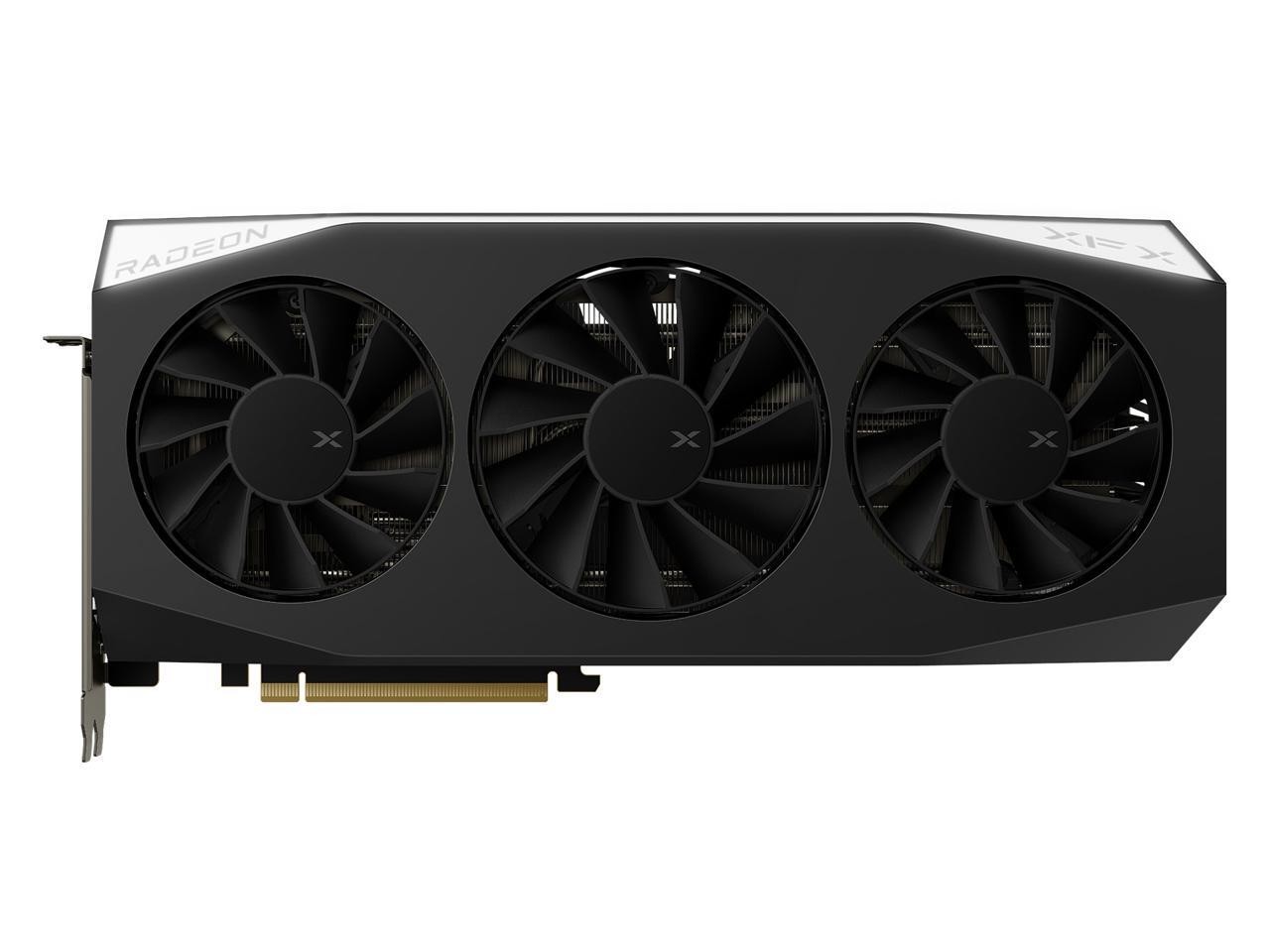
NVIDIA GeForce RTX 5050
Released in July 2025 at a launch price of $249, the NVIDIA GeForce RTX 5050 is a graphics card built on the Blackwell architecture. It is designed for gamers and creators seeking modern video encoding and display connectivity on a budget.
- Release date
- 2025-07
- Launch price
- 249 USD
- Shader cores
- 2,560 cores
- Video memory
- 8 GB
- Memory type
- Gddr6
- Memory bus width
- 128 bit
Performance and Compute
Driven by 2,560 shader cores and a base clock of 2,310 MHz, the card handles standard gaming and rendering workloads efficiently. It reaches a boost clock of 2,570 MHz alongside 13.2 TFLOPS of FP32 compute power.
For buyers, these figures mean smooth execution in everyday graphical applications and moderate titles without demanding excessive overhead from your system.
Memory and Bandwidth
The hardware relies on 8 GB of GDDR6 video memory paired with a 128-bit memory bus width. This configuration delivers a memory speed of 20 Gbps and a total memory bandwidth of 320 GB/s.
This bandwidth supports texture loading and asset streaming effectively for 1080p gaming, though high-resolution texture packs in modern titles may push past the capacity limit.
Power and System Requirements
Operating at a board power of 130 W, the RTX 5050 connects using a native 8-pin power input or via an in-box adapter for compatible PCIe Gen 5 cables. The recommended power supply unit is 550 W, though NVIDIA notes this minimum assumes a high-end Ryzen 9 9950X system.
Buyers should evaluate their current power supply configuration, as actual power requirements vary depending on the rest of their hardware setup.
Connectivity and Display
Modern display output options include three DisplayPort 2.1b ports supporting UHBR20, alongside a single HDMI 2.1b port. The interface leverages PCIe 5.0 running across 8 lanes to communicate with the motherboard.
Users can drive up to 4 displays simultaneously, and the inclusion of AV1 hardware encode via a single encoder makes the hardware well-suited for efficient video streaming and recording.
Full specs
Overview
- Release date
- 2025-07
- Launch price
- 249 USD
Graphics chip
- Architecture
- Blackwell
- Shader cores
- 2,560 cores
- Boost clock
- 2,570 MHz
- Base clock
- 2,310 MHz
- FP32 compute
- 13.2 TFLOPS
Memory
- Video memory
- 8 GB
- Memory type
- Gddr6
- Memory bus width
- 128 bit
- Memory bandwidth
- 320 GB/s
- Memory speed
- 20 Gbps
- Last-level cache
- Not published
Power
- Board power
- 130 W
- Recommended PSU
- 550 W
NVIDIA's 550 W minimum assumes a Ryzen 9 9950X system; requirements vary with your configuration.
- Power connectors
- 8-pin
Native input is one 8-pin; NVIDIA's 300 W+ PCIe Gen 5 PSU-cable option works via the in-box adapter.
Interface
- PCIe version
- 5.0
- PCIe lanes
- 8 lanes
Display outputs
- HDMI version
- 2.1b
- DisplayPort version
- 2.1b
NVIDIA specifies UHBR20 on these DisplayPort 2.1b outputs.
- HDMI outputs
- 1 ports
- DisplayPort outputs
- 3 ports
- Max displays
- 4 displays
Video engine
- Hardware encode
- AV1
- Video encoders
- 1 encoders
Size
- Card length
- Not published
- Card height
- Not published
- Slot width
- Not published
The Verdict
The RTX 5050 suits budget-conscious builders who want modern Blackwell architecture, AV1 encoding, and DisplayPort 2.1b connectivity at an accessible price point. Anyone pursuing high-refresh-rate 1440p gaming or heavy professional rendering should look toward higher-tier alternatives with wider memory busses and greater core counts.
FAQ
What is the launch price of the RTX 5050?
It launched at $249.
How much video memory does it include?
It features 8 GB of GDDR6 memory.
What power supply is recommended for this card?
A 550 W power supply is recommended, though requirements vary by your specific configuration.
What video encoding formats does it support?
It supports AV1 hardware encoding.
Spotted something wrong? Tap the next to any section or spec group to let us know. Every report is read.
More Video Cards & Adapters
- NVIDIAGeForce RTX 5060