
Compare · 2 products compared
NVIDIA GeForce RTX 5050vsAMD Radeon RX 9060 XT 16GB
These graphics cards offer modern architectures and GDDR6 memory on a 128-bit bus, but differ significantly in price and memory capacity. Your choice depends on whether you prioritize a lower budget and lower power consumption or double the video memory.
eBay prices refresh hourly — check the listing before you buy. We may earn a commission.
- MOST WINS

NVIDIA GeForce RTX 5050
Best for Budget-conscious buyers seeking lower power consumption
Wins6 / 11 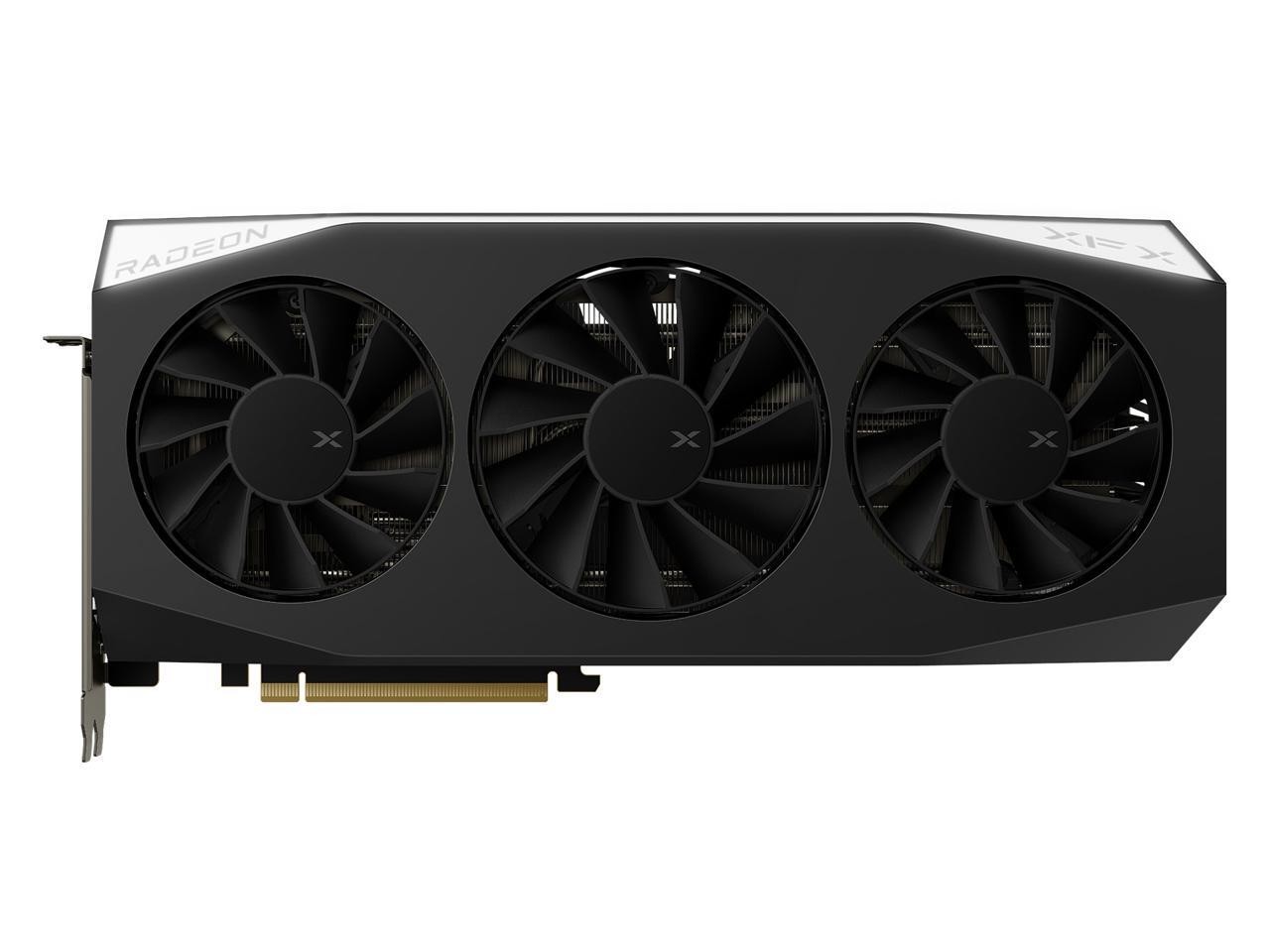
Best for Gamers needing 16 GB video memory and higher compute power
Wins5 / 11
Biggest differences
Video memory
AMD Radeon RX 9060 XT 16GB leads
2×
higher is better
- NVIDIA GeForce RTX 50508 GB
- AMD Radeon RX 9060 XT 16GB16 GB
PCIe lanes
AMD Radeon RX 9060 XT 16GB leads
2×
higher is better
- NVIDIA GeForce RTX 50508 lanes
- AMD Radeon RX 9060 XT 16GB16 lanes
FP32 compute
AMD Radeon RX 9060 XT 16GB leads
+94%
higher is better
- NVIDIA GeForce RTX 505013.2 TFLOPS
- AMD Radeon RX 9060 XT 16GB25.6 TFLOPS
Launch price
NVIDIA GeForce RTX 5050 leads
−29%
lower is better
- NVIDIA GeForce RTX 5050249 USD
- AMD Radeon RX 9060 XT 16GB349 USD
Where each one wins
NVIDIA GeForce RTX 5050
- Launch price
- Shader cores
- Board power
- DisplayPort version
- DisplayPort outputs
- Max displays
AMD Radeon RX 9060 XT 16GB
- Boost clock
- FP32 compute
- Video memory
- Recommended PSU
- PCIe lanes
What both have
- Memory typeGddr6
- Memory bus width128 bit
- Memory bandwidth320 GB/s
- Memory speed20 Gbps
- Power connectors8-pin
- PCIe version5.0
- HDMI version2.1b
- HDMI outputs1 ports
Every spec
Red marks the better value in each row.
| Spec | NVIDIA GeForce RTX 5050 | AMD Radeon RX 9060 XT 16GB |
|---|---|---|
| Overview | ||
| Release date | 2025-07 | 2025-06 |
| Launch price | 249 USD | 349 USD1 |
| Graphics chip | ||
| Architecture | Blackwell | Rdna 4 |
| Shader cores | 2,560 cores | 2,048 cores |
| Boost clock | 2,570 MHz | 3,130 MHz |
| Base clock | 2,310 MHz | Not published |
| FP32 compute | 13.2 TFLOPS | 25.6 TFLOPS |
| Memory | ||
| Video memory | 8 GB | 16 GB |
| Memory type | Gddr6 | Gddr6 |
| Memory bus width | 128 bit | 128 bit |
| Memory bandwidth | 320 GB/s | 320 GB/s |
| Memory speed | 20 Gbps | 20 Gbps |
| Last-level cache | Not published | 32 MB |
| Power | ||
| Board power | 130 W | 160 W |
| Recommended PSU | 550 W2 | 450 W |
| Power connectors | 8-pin3 | 8-pin |
| Interface | ||
| PCIe version | 5.0 | 5.0 |
| PCIe lanes | 8 lanes | 16 lanes |
| Display outputs | ||
| HDMI version | 2.1b | 2.1b |
| DisplayPort version | 2.1b4 | 2.1a |
| HDMI outputs | 1 ports | 1 ports5 |
| DisplayPort outputs | 3 ports | 2 ports6 |
| Max displays | 4 displays | 3 displays |
| Video engine | ||
| Hardware encode | AV1 | H.264, HEVC, AV1 |
| Video encoders | 1 encoders | Not published |
| Size | ||
| Card length | Not published | Not published |
| Card height | Not published | Not published |
| Slot width | Not published | Not published |
Notes on 6 values — test conditions and caveats
- 1AMD Radeon RX 9060 XT 16GB, Launch price: Launch MSRP was $349, but most 16GB models initially sold higher; Tom's Hardware saw them starting at $389.
- 2NVIDIA GeForce RTX 5050, Recommended PSU: NVIDIA's 550 W minimum assumes a Ryzen 9 9950X system; requirements vary with your configuration.
- 3NVIDIA GeForce RTX 5050, Power connectors: Native input is one 8-pin; NVIDIA's 300 W+ PCIe Gen 5 PSU-cable option works via the in-box adapter.
- 4NVIDIA GeForce RTX 5050, DisplayPort version: NVIDIA specifies UHBR20 on these DisplayPort 2.1b outputs.
- 5AMD Radeon RX 9060 XT 16GB, HDMI outputs: AMD sells no reference card; this is the reference-design I/O. Partner cards can differ (Sapphire Pulse: 2 HDMI, 1 DP).
- 6AMD Radeon RX 9060 XT 16GB, DisplayPort outputs: AMD sells no reference card; this is the reference-design I/O. Partner cards can differ (Sapphire Pulse: 2 HDMI, 1 DP).
Performance and Gaming Power
The AMD Radeon RX 9060 XT 16GB pulls ahead in raw compute capability with 25.6 TFLOPS and a higher boost clock of 3,130 MHz, compared to the 13.2 TFLOPS of the NVIDIA GeForce RTX 5050. This means smoother frame rates in demanding titles and faster rendering for compute-heavy tasks.
However, the NVIDIA features 2,560 shader cores against the 2,048 cores on the AMD. The AMD card counters with a 32 MB last-level cache to help maintain performance across heavy loads.
Memory and Resolution
Video memory sets these cards far apart, with the AMD providing 16 GB compared to 8 GB on the NVIDIA. That larger buffer helps immensely with high-resolution textures and future-proofing against modern game demands.
Despite the difference in capacity, both options share a 128-bit memory bus width and 20 Gbps memory speed, delivering an identical 320 GB/s of memory bandwidth.
Power and Efficiency
The NVIDIA requires less energy, pulling 130 W under load compared to the 160 W draw of the AMD. This lower power draw helps keep system temperatures down and reduces the strain on your power supply.
When building your system, note that NVIDIA recommends a 550 W minimum power supply unit assuming a Ryzen 9 9950X system, while AMD suggests a 450 W PSU. Both GPUs rely on standard 8-pin power connectors.
Display Connectivity
The NVIDIA offers superior multi-monitor support by driving up to 4 displays through three DisplayPort 2.1b ports and one HDMI 2.1b port. The AMD manages up to 3 displays using two DisplayPort 2.1a outputs and one HDMI 2.1b port.
Both cards connect via PCIe 5.0, but the AMD utilizes a full 16 PCIe lanes compared to the 8 lanes on the NVIDIA.
The Verdict
Buy the NVIDIA GeForce RTX 5050 if you want a lower launch price of $249 and a lower power draw of 130 W. Buy the AMD Radeon RX 9060 XT 16GB if you need 16 GB of video memory and higher compute performance.
Where to buy
NVIDIA GeForce RTX 5050
Best for Budget-conscious buyers seeking lower power consumption
AMD Radeon RX 9060 XT 16GB
Best for Gamers needing 16 GB video memory and higher compute power
FAQ
What power supply do I need for these graphics cards?
NVIDIA recommends a 550 W minimum power supply for the RTX 5050 based on a Ryzen 9 9950X system, while AMD recommends a 450 W PSU for the RX 9060 XT 16GB.
Do both cards support AV1 hardware encoding?
The RTX 5050 supports AV1 hardware encoding, while the RX 9060 XT 16GB supports H.264, HEVC, and AV1.
How many displays can each graphics card connect to at once?
The RTX 5050 supports up to 4 displays, whereas the RX 9060 XT 16GB supports up to 3 displays.
Spotted something wrong? Tap the next to any section or spec group to let us know. Every report is read.


