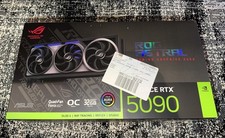
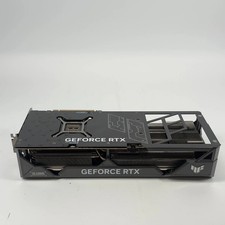
Compare · 2 products compared
NVIDIA GeForce RTX 5090vsNVIDIA GeForce RTX 4080 Super
These high-end graphics cards share identical physical dimensions and display output layouts. The choice between them comes down to a massive leap in processing power and memory capacity versus a much lower power draw and price tag.
eBay prices refresh hourly — check the listing before you buy. We may earn a commission.
- MOST WINS
 NVIDIA
Best for Extreme 8K gaming and professional rendering
13of 18 specs better - NVIDIA
Best for High-end 4K gaming on a standard power supply
5of 18 specs better
+ Add a product to compare
Biggest differences
Memory bandwidth
NVIDIA GeForce RTX 5090 leads
2.43×
higher is better
- NVIDIA GeForce RTX 50901,792 GB/s
- NVIDIA GeForce RTX 4080 Super736 GB/s
Shader cores
NVIDIA GeForce RTX 5090 leads
2.13×
higher is better
- NVIDIA GeForce RTX 509021,760 cores
- NVIDIA GeForce RTX 4080 Super10,240 cores
Launch price
NVIDIA GeForce RTX 4080 Super leads
2×
lower is better
- NVIDIA GeForce RTX 50901,999 USD
- NVIDIA GeForce RTX 4080 Super999 USD
Video memory
NVIDIA GeForce RTX 5090 leads
2×
higher is better
- NVIDIA GeForce RTX 509032 GB
- NVIDIA GeForce RTX 4080 Super16 GB
Where each one wins
NVIDIA GeForce RTX 5090
- Shader cores
- FP32 compute
- Video memory
- Memory type
- Memory bus width
- Memory bandwidth
- Memory speed
- Last-level cache
- PCIe version
- HDMI version
- DisplayPort version
- Video encoders
- Slot width
NVIDIA GeForce RTX 4080 Super
- Launch price
- Boost clock
- Base clock
- Board power
- Recommended PSU
What both have
- Power connectors12V-2x6
- HDMI outputs1 ports
- DisplayPort outputs3 ports
- Max displays4 displays
- Card length304 mm
- Card height137 mm
Every spec
Red marks the better value in each row.
| Spec | NVIDIA GeForce RTX 5090 | NVIDIA GeForce RTX 4080 Super |
|---|---|---|
| Overview | ||
| Release date | 2025-01 | 2024-01 |
| Launch price | 1,999 USD | 999 USD |
| Graphics chip | ||
| Architecture | Blackwell | Ada lovelace |
| Shader cores | 21,760 cores | 10,240 cores |
| Boost clock | 2,410 MHz | 2,550 MHz |
| Base clock | 2,010 MHz | 2,290 MHz |
| FP32 compute | 104.8 TFLOPS | 52 TFLOPS |
| Memory | ||
| Video memory | 32 GB | 16 GB |
| Memory type | Gddr7 | Gddr6x |
| Memory bus width | 512 bit | 256 bit |
| Memory bandwidth | 1,792 GB/s | 736 GB/s |
| Memory speed | 28 Gbps | 23 Gbps |
| Last-level cache | 96 MB | 64 MB |
| Power | ||
| Board power | 575 W | 320 W |
| Recommended PSU | 1,000 W1 | 750 W2 |
| Power connectors | 12V-2x6 | 12V-2x63 |
| Interface | ||
| PCIe version | 5.0 | 4.0 |
| PCIe lanes | 16 lanes | Not published |
| Display outputs | ||
| HDMI version | 2.1b | 2.1a |
| DisplayPort version | 2.1b4 | 1.4a |
| HDMI outputs | 1 ports | 1 ports |
| DisplayPort outputs | 3 ports | 3 ports |
| Max displays | 4 displays | 4 displays |
| Video engine | ||
| Hardware encode | H.264, HEVC, AV1 | AV1 |
| Video encoders | 3 encoders | 2 encoders |
| Size | ||
| Card length | 304 mm | 304 mm |
| Card height | 137 mm | 137 mm |
| Slot width | 2 slots5 | 3 slots |
Notes on 5 values — test conditions and caveats
- 1NVIDIA GeForce RTX 5090, Recommended PSU: NVIDIA's minimum for a PC with a Ryzen 9 9950X; it recommends a PCIe CEM 5.1 compliant PSU.
- 2NVIDIA GeForce RTX 4080 Super, Recommended PSU: NVIDIA's 750 W minimum assumes a PC with a Ryzen 9 5900X; needs vary by configuration.
- 3NVIDIA GeForce RTX 4080 Super, Power connectors: Card takes a 16-pin 12V-2x6 connector; a 3x PCIe 8-pin adapter ships in the box for PSUs without a PCIe Gen 5 cable.
- 4NVIDIA GeForce RTX 5090, DisplayPort version: DisplayPort 2.1b at UHBR20 on all three DP outputs.
- 5NVIDIA GeForce RTX 5090, Slot width: The card is 2-slot, but NVIDIA's install guide asks for 3-slot (61 mm) case clearance.
Performance and Architecture
The NVIDIA GeForce RTX 5090 introduces the Blackwell architecture, packing 21,760 shader cores and delivering 104.8 TFLOPS of FP32 compute. This massive generational hardware advantage handles extreme rendering loads far faster than the NVIDIA GeForce RTX 4080 Super.
Buyers stepping up to the 5090 gain superior ray tracing and compute capabilities, though the RTX 4080 Super maintains slightly higher base and boost clock speeds out of the box.
Memory and Video Engine
The RTX 5090 equips 32 GB of GDDR7 video memory across a 512-bit bus, achieving a staggering 1,792 GB/s of memory bandwidth. By comparison, the RTX 4080 Super relies on 16 GB of GDDR6X on a 256-bit bus.
For heavy video production and 8K workflows, the 5090 adds a third hardware encoder and supports H.264 encoding alongside HEVC and AV1, doubling the encoding flexibility over the two encoders found on the RTX 4080 Super.
Power and System Requirements
Running the flagship RTX 5090 demands a massive 575 W board power and a minimum 1,000 W power supply unit. The RTX 4080 Super proves much easier to power with a modest 320 W board power and a 750 W minimum PSU requirement.
Both cards utilize the 12V-2x6 power connector, but the higher electrical demands of the 5090 require much more robust system infrastructure and cooling clearance.
The Verdict
Buy the NVIDIA GeForce RTX 5090 if you need absolute top-tier rendering performance and 32 GB of memory. Buy the NVIDIA GeForce RTX 4080 Super if you want high-end gaming performance with a much lower power draw and price.
Where to buy
NVIDIA GeForce RTX 5090
Best for Extreme 8K gaming and professional rendering
NVIDIA GeForce RTX 4080 Super
Best for High-end 4K gaming on a standard power supply
FAQ
What power supply do I need for these graphics cards?
The RTX 5090 requires a minimum 1,000 W power supply, while the RTX 4080 Super requires a 750 W minimum.
Do both cards support AV1 hardware encoding?
Yes, both GPUs support AV1 encoding, but the RTX 5090 features three total hardware encoders and adds H.264 and HEVC support.
What is the difference in video memory capacity?
The RTX 5090 features 32 GB of GDDR7 memory, whereas the RTX 4080 Super has 16 GB of GDDR6X memory.
What PCIe version do they use?
The RTX 5090 supports PCIe 5.0, while the RTX 4080 Super supports PCIe 4.0.
Spotted something wrong? Tap the next to any section or spec group to let us know. Every report is read.