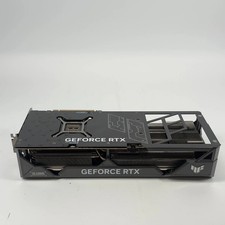
Compare · 2 products compared
NVIDIA GeForce RTX 5080vsNVIDIA GeForce RTX 4080 Super
The NVIDIA GeForce RTX 5080 and the NVIDIA GeForce RTX 4080 Super share the same launch price and video memory capacity. However, they diverge significantly in graphics architecture, memory speed, and power requirements, which dictates your choice between raw graphics throughput and power efficiency.
eBay prices refresh hourly — check the listing before you buy. We may earn a commission.
- MOST WINS
 NVIDIA
Best for Maximum memory bandwidth and PCIe 5.0 connectivity
11of 13 specs better - NVIDIA
Best for Lower power consumption and 3-slot cooling layouts
2of 13 specs better
+ Add a product to compare
Biggest differences
Slot width
NVIDIA GeForce RTX 5080 leads
−33%
lower is better
- NVIDIA GeForce RTX 50802 slots
- NVIDIA GeForce RTX 4080 Super3 slots
Memory bandwidth
NVIDIA GeForce RTX 5080 leads
+30%
higher is better
- NVIDIA GeForce RTX 5080960 GB/s
- NVIDIA GeForce RTX 4080 Super736 GB/s
Memory speed
NVIDIA GeForce RTX 5080 leads
+30%
higher is better
- NVIDIA GeForce RTX 508030 Gbps
- NVIDIA GeForce RTX 4080 Super23 Gbps
Recommended PSU
NVIDIA GeForce RTX 4080 Super leads
−12%
lower is better
- NVIDIA GeForce RTX 5080850 W
- NVIDIA GeForce RTX 4080 Super750 W
Where each one wins
NVIDIA GeForce RTX 5080
- Shader cores
- Boost clock
- Base clock
- FP32 compute
- Memory type
- Memory bandwidth
- Memory speed
- PCIe version
- HDMI version
- DisplayPort version
- Slot width
NVIDIA GeForce RTX 4080 Super
- Board power
- Recommended PSU
What both have
- Launch price999 USD
- Video memory16 GB
- Memory bus width256 bit
- Last-level cache64 MB
- Power connectors12V-2x6
- HDMI outputs1 ports
- DisplayPort outputs3 ports
- Max displays4 displays
- Video encoders2 encoders
- Card length304 mm
- Card height137 mm
Every spec
Red marks the better value in each row.
| Spec | NVIDIA GeForce RTX 5080 | NVIDIA GeForce RTX 4080 Super |
|---|---|---|
| Overview | ||
| Release date | 2025-01 | 2024-01 |
| Launch price | 999 USD | 999 USD |
| Graphics chip | ||
| Architecture | Blackwell | Ada lovelace |
| Shader cores | 10,752 cores | 10,240 cores |
| Boost clock | 2,620 MHz | 2,550 MHz |
| Base clock | 2,300 MHz | 2,290 MHz |
| FP32 compute | 56.3 TFLOPS | 52 TFLOPS |
| Memory | ||
| Video memory | 16 GB | 16 GB |
| Memory type | Gddr7 | Gddr6x |
| Memory bus width | 256 bit | 256 bit |
| Memory bandwidth | 960 GB/s | 736 GB/s |
| Memory speed | 30 Gbps | 23 Gbps |
| Last-level cache | 64 MB | 64 MB |
| Power | ||
| Board power | 360 W | 320 W |
| Recommended PSU | 850 W1 | 750 W2 |
| Power connectors | 12V-2x6 | 12V-2x63 |
| Interface | ||
| PCIe version | 5.0 | 4.0 |
| PCIe lanes | 16 lanes | Not published |
| Display outputs | ||
| HDMI version | 2.1b | 2.1a |
| DisplayPort version | 2.1b4 | 1.4a |
| HDMI outputs | 1 ports | 1 ports |
| DisplayPort outputs | 3 ports | 3 ports |
| Max displays | 4 displays | 4 displays |
| Video engine | ||
| Hardware encode | H.264, HEVC, AV1 | AV1 |
| Video encoders | 2 encoders | 2 encoders |
| Size | ||
| Card length | 304 mm | 304 mm |
| Card height | 137 mm | 137 mm |
| Slot width | 2 slots5 | 3 slots |
Notes on 5 values — test conditions and caveats
- 1NVIDIA GeForce RTX 5080, Recommended PSU: NVIDIA's minimum for a PC with a Ryzen 9 9950X; it recommends a PCIe CEM 5.1 compliant PSU.
- 2NVIDIA GeForce RTX 4080 Super, Recommended PSU: NVIDIA's 750 W minimum assumes a PC with a Ryzen 9 5900X; needs vary by configuration.
- 3NVIDIA GeForce RTX 4080 Super, Power connectors: Card takes a 16-pin 12V-2x6 connector; a 3x PCIe 8-pin adapter ships in the box for PSUs without a PCIe Gen 5 cable.
- 4NVIDIA GeForce RTX 5080, DisplayPort version: DisplayPort 2.1b at UHBR20 on all three DP outputs.
- 5NVIDIA GeForce RTX 5080, Slot width: The card is 2-slot (40 mm thick), but NVIDIA's install guide asks for 3-slot (61 mm) case clearance.
Performance and Architecture
The RTX 5080 introduces the Blackwell architecture, yielding more shader cores and a higher boost clock than the Ada Lovelace design in the RTX 4080 Super. This translates to higher FP32 compute capability, giving the newer card an edge in heavy rendering tasks.
Buyers focused on maximum frame rates and faster compute processing will find the RTX 5080 provides a noticeable upgrade in raw computational capacity.
Memory and Interface
While both cards feature 16 GB of video memory on a 256-bit bus, the RTX 5080 upgrades to Gddr7 memory. This pushes memory speed to 30 Gbps and bandwidth to 960 GB/s, vastly outpacing the older GDDR6X standard.
Furthermore, the RTX 5080 supports PCIe 5.0, doubling the interface bandwidth potential compared to the PCIe 4.0 standard found on the RTX 4080 Super.
Power and Physical Design
Power consumption increases on the newer model, with the RTX 5080 demanding 360 W and an 850 W recommended PSU, compared to 320 W and a 750 W PSU for the RTX 4080 Super. Both units rely on the 12V-2x6 power connector.
In terms of physical space, both cards measure 304 mm in length and 137 mm in height. However, the RTX 5080 features a 2-slot width design, whereas the RTX 4080 Super takes up 3 slots.
Display and Video Features
For display connections, the RTX 5080 upgrades to DisplayPort 2.1b at UHBR20 and HDMI version 2.1b, offering superior display output standards over the DisplayPort 1.4a and HDMI 2.1a on the RTX 4080 Super.
In the video engine department, the RTX 5080 adds H.264 and HEVC hardware encoding alongside AV1, whereas the older model is limited to AV1 encoding, while both maintain 2 encoders.
The Verdict
Buy the NVIDIA GeForce RTX 5080 if you want faster Gddr7 memory, PCIe 5.0 support, and superior display outputs. Buy the NVIDIA GeForce RTX 4080 Super if you prefer a lower board power draw and a slightly less demanding power supply requirement.
Where to buy
NVIDIA GeForce RTX 5080
Best for Maximum memory bandwidth and PCIe 5.0 connectivity
NVIDIA GeForce RTX 4080 Super
Best for Lower power consumption and 3-slot cooling layouts
FAQ
Do both graphics cards cost the same at launch?
Yes, both cards launched at an identical price of $999 USD.
What power supply is recommended for the RTX 5080?
An 850 W power supply is recommended, based on NVIDIA's minimum for a PC with a Ryzen 9 9950X.
How much video memory do these cards have?
Both models are equipped with 16 GB of video memory on a 256-bit bus.
What type of power connectors do they use?
Both cards utilize a 12V-2x6 power connector.
Spotted something wrong? Tap the next to any section or spec group to let us know. Every report is read.