Compare · 2 products compared
Nikon Z9vsRicoh GR IV: FlagshipvsCompact
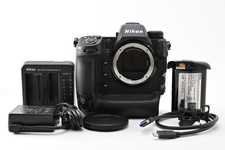
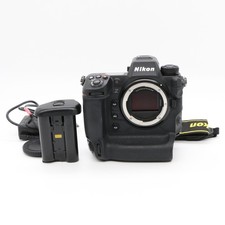
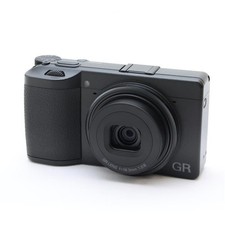
These two cameras share almost nothing except the ability to take a good photo. The Nikon Z9 is a full-frame flagship built for speed, video and interchangeable lenses; the Ricoh GR IV is an APS-C compact that fits in a pocket. The deciding factors are sensor size, lens flexibility and how much weight you will actually carry.
eBay prices refresh hourly — check the listing before you buy. We may earn a commission.
- MOST WINS
 Nikon
NikonBest for Professionals and serious enthusiasts who need speed, video and lens flexibility
14of 20 specs better - Ricoh
Best for Street, travel and everyday shooters who want the best camera that fits in a pocket
6of 20 specs better
Biggest differences
Weight
Ricoh GR IV leads
5.11×
lower is better
- Nikon Z91,340 g
- Ricoh GR IV262 g
Launch price
Ricoh GR IV leads
3.67×
lower is better
- Nikon Z95,500 USD
- Ricoh GR IV1,499 USD
Battery life
Nikon Z9 leads
2.96×
higher is better
- Nikon Z9740 shots
- Ricoh GR IV250 shots
Native ISO maximum
Ricoh GR IV leads
8×
higher is better
- Nikon Z925,600 ISO
- Ricoh GR IV204,800 ISO
Features not all of them have
Headphone port
- Nikon Z9✓
- Ricoh GR IV✕
Where each one wins
Nikon Z9
- Effective pixels
- Sensor format
- Sensor type
- Max mechanical shutter speed
- Max video resolution
- Raw video recording
- Viewfinder resolution
- Screen size
- Screen articulation
- Rear screen resolution
- Battery life
- Memory card slots
- Headphone port
- HDMI port type
Ricoh GR IV
- Launch price
- Native ISO maximum
- Weight
- Width
- Height
- Depth
What both have
- In-body image stabilization6 stops
- USB charging & power delivery✓
Every spec
Red marks the better value in each row.
| Spec | Nikon Z9 | Ricoh GR IV |
|---|---|---|
| Overview | ||
| Release date | 2021-12 | Not published |
| Launch price | 5,500 USD | 1,499 USD1 |
| Lens mount | Nikon Z | Fixed lens |
| High resolution pixel-shift mode | No | Not published |
| Sensor & Image | ||
| Effective pixels | 45.7 MP | 25.74 MP |
| Sensor format | Full-frame | APS-C |
| Native ISO maximum | 25,600 ISO | 204,800 ISO |
| In-body image stabilization | 6 stops2 | 6 stops3 |
| Sensor readout speed | Not published | Not published |
| Sensor type | Stacked CMOS | CMOS4 |
| Aspect ratios | — | 3:2, 4:3, 1:1, 16:95 |
| Lens & Autofocus | ||
| Continuous shooting (mechanical) | Not published | 4 fps6 |
| Continuous shooting (electronic) | 20 fps | Not published |
| Max mechanical shutter speed | 32,000 1/s | 4,000 1/s7 |
| Pre-burst capture duration | 1 s8 | Not published |
| AF subject detection | Human, animal, bird, car, train, airplane, motorcycle | Human9 |
| Video | ||
| Max video resolution | 8K | 1080p |
| 4K max frame rate | 120 fps | Not published |
| Video codecs | H.264, HEVC, ProRes 422 HQ, ProRes RAW, N-RAW | H.264 |
| 4K max frame rate (full width) | 30 fps | Not published |
| Raw video recording | Internal | None |
| Video bit depth | 10 bit | Not published |
| Log profile support | Yes | Not published |
| Video dynamic range (log) | Not published | Not published |
| Viewfinder & Screen | ||
| Viewfinder resolution | 3.69 M dots | 0 M dots |
| Viewfinder magnification | 0.8 x | Not published |
| Screen size | 3.2 in | 3 in |
| Screen articulation | Tilting | Fixed |
| Rear screen resolution | 2.1 M dots | 1.037 M dots |
| Handling & Power | ||
| Battery life | 740 shots | 250 shots10 |
| Memory card slots | 2 slots | 1 slots11 |
| Weather sealing | Dust and drip resistant | Not published |
| Weight | 1,340 g | 262 g |
| Width | 149 mm | 109.4 mm |
| Height | 149.5 mm | 61.1 mm |
| Depth | 90.5 mm | 32.7 mm |
| USB charging & power delivery | Yes | Yes12 |
| Minimum operating temperature | -10 °C | Not published |
| Headphone port | Yes | No |
| HDMI port type | Full-size | None13 |
Notes on 13 values — test conditions and caveats
- 1Ricoh GR IV, Launch price: Launch MSRP per the review; Ricoh's US store currently lists $1,599.95.
- 2Nikon Z9, In-body image stabilization: The 6.0-stop rating requires Synchro VR, combining in-body 5-axis VR with 2-axis lens VR on compatible lenses.
- 3Ricoh GR IV, In-body image stabilization: Ricoh's 6.0-stop rating applies at frame centre; periphery is rated 4.0 stops (CIPA 2024).
- 4Ricoh GR IV, Sensor type: The sensor is a back-illuminated (BSI) CMOS type; mapped to 'cmos' as no BSI option is listed.
- 5Ricoh GR IV, Aspect ratios: 3:2 is native to the 23.3 x 15.5 mm sensor; 4:3, 1:1 and 16:9 are in-camera crop modes.
- 6Ricoh GR IV, Continuous shooting (mechanical): The review cites 4 fps continuous without specifying shutter type.
- 7Ricoh GR IV, Max mechanical shutter speed: 1/4000 s requires F5.6 or a smaller aperture; at F2.8 the limit is 1/2500 s.
- 8Nikon Z9, Pre-burst capture duration: Pre-Release Capture is only available in the C30 and C120 high-speed frame capture modes.
- 9Ricoh GR IV, AF subject detection: Only face/eye detection is offered; no animal or vehicle subject recognition is listed.
- 10Ricoh GR IV, Battery life: CIPA-rated at 23°C with a fully charged DB-120 battery.
- 11Ricoh GR IV, Memory card slots: Single microSD slot, plus 53 GB internal memory that cannot record to both at once.
- 12Ricoh GR IV, USB charging & power delivery: Battery charges and camera draws power in-body over USB-C; fast charging needs a USB-PD adapter.
- 13Ricoh GR IV, HDMI port type: Video output is DisplayPort over USB-C; there is no HDMI connector.
Sensor and image quality
The Nikon Z9 uses a 45.7 MP full-frame stacked sensor, while the Ricoh GR IV uses a 25.74 MP APS-C CMOS chip. The larger sensor captures more light and gives shallower depth of field, which helps separate subjects from backgrounds in portraits and low light. The stacked design also enables the Z9's extremely fast electronic readout, reducing rolling shutter in video and silent shooting.
The Ricoh fights back with a native ISO ceiling of 204,800, far above the Z9's 25,600. That higher number does not mean cleaner files at the same brightness, but it does let the GR IV keep shooting in near-darkness without a tripod. For most buyers, the Z9's bigger sensor matters more for image quality; the GR IV's higher ISO matters more for convenience in dark settings.
Video
The Nikon Z9 records 8K internally and supports 4K at up to 120 fps, with 10-bit depth, log profiles and internal raw video in ProRes RAW and N-RAW. The Ricoh GR IV tops out at 1080p with H.264. That gap is enormous: the Z9 is a professional video tool, and the GR IV is a stills camera that happens to record clips.
If video is even a secondary priority, the Z9 wins without qualification. The GR IV's 1080p footage is fine for casual clips, but it cannot be graded heavily, cropped in post, or delivered in 4K. Buyers who only shoot stills can ignore this entire section.
Autofocus and speed
The Nikon Z9 tracks humans, animals, birds, cars, trains, airplanes and motorcycles, and shoots at 20 fps electronically with a 1-second pre-burst capture in its high-speed modes. The Ricoh GR IV detects faces and eyes only, and its only published burst rate is 4 fps.
For sports, wildlife or any moving subject, the Z9 is in a different league. The GR IV is built for slower, deliberate street and travel photography where the subject is not sprinting across the frame. Neither camera's sensor readout speed is published, so rolling-shutter behavior cannot be compared on paper.
Handling and battery
The Nikon Z9 weighs 1,340 g and measures 149 x 149.5 x 90.5 mm, with a tilting 3.2-inch screen, a 3.69 M-dot viewfinder, two card slots, a headphone port, a full-size HDMI port and dust/drip sealing. It is rated for 740 shots per charge. The Ricoh GR IV weighs 262 g, measures 109.4 x 61.1 x 32.7 mm, has a fixed 3-inch screen, no viewfinder, one microSD slot and a 250-shot battery rating.
The Z9 is a camera you carry deliberately; the GR IV is one you carry without thinking about it. The Ricoh's 4 fps mechanical shutter caps at 1/4000 s only at f/5.6 or smaller, dropping to 1/2500 s at f/2.8, so bright-light shooting is more limited. The Z9's viewfinder and articulated screen make framing easier in difficult positions.
Lens flexibility and system
The Nikon Z9 uses the Nikon Z mount, so you can change lenses for any focal length or aperture. The Ricoh GR IV has a fixed lens, which is the entire point of the GR series: one compact, sharp lens that retracts into the body.
That fixed lens is a limitation and a liberation. You never buy another lens, never carry one, and never worry about dust on the sensor. But you also cannot shoot a telephoto portrait or a wide landscape without moving your feet. For buyers who want one camera and one lens, the GR IV is simpler. For buyers who want a system, the Z9 is the only option here.
The Verdict
Buy the Nikon Z9 if you shoot sports, wildlife or professional video, need interchangeable lenses and can handle the size and price. Buy the Ricoh GR IV if you want a pocketable everyday camera with excellent image quality and do not need a viewfinder or lens changes. The Z9 is the better tool; the GR IV is the better companion. Choose based on which role you actually need filled.
Where to buy
Nikon Z9
Best for Professionals and serious enthusiasts who need speed, video and lens flexibility
Ricoh GR IV
Best for Street, travel and everyday shooters who want the best camera that fits in a pocket
FAQ
Does the Nikon Z9 have a mechanical shutter?
No. The Z9 is electronic-shutter only, which is why its mechanical continuous shooting figure is not published. The Ricoh GR IV has a mechanical shutter capped at 1/4000 s with aperture restrictions.
Can the Ricoh GR IV shoot 4K video?
No. Its maximum video resolution is 1080p, and it records in H.264 only. The Nikon Z9 records 8K internally and supports 4K at up to 120 fps.
Which camera has better battery life?
The Nikon Z9 is rated for 740 shots, roughly three times the Ricoh GR IV's 250-shot CIPA rating. Both charge over USB-C, and both support USB power delivery.
Does the Ricoh GR IV have a viewfinder?
No. The GR IV has a fixed 3-inch rear screen only. The Nikon Z9 has a 3.69 M-dot electronic viewfinder with 0.8x magnification.
How many memory card slots does each camera have?
The Nikon Z9 has two card slots; the Ricoh GR IV has one microSD slot plus 53 GB of internal memory, though it cannot record to both at once.
Spotted something wrong? Tap the next to any section or spec group to let us know. Every report is read.