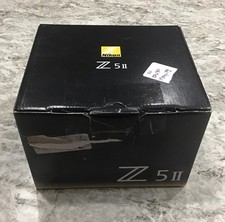
Compare · 2 products compared
Nikon Z5IIvsSony a7 IV: Which Full-Frame Camera Wins?
Both are full-frame mirrorless bodies with in-body stabilization, twin card slots and a 3.69M-dot viewfinder. The Z5II undercuts the Sony on price and adds internal raw video and faster electronic burst shooting, while the a7 IV answers with more resolution and roughly two-thirds more battery life. Your workflow decides it.
eBay prices refresh hourly — check the listing before you buy. We may earn a commission.
- MOST WINS
 Nikon
NikonBest for Hybrid shooters who want internal raw video, strong stabilization and a lower price
10of 18 specs better - Sony
Best for Stills-first photographers who need 33 MP and all-day battery life
8of 18 specs better
Biggest differences
Continuous shooting (electronic)
Nikon Z5II leads
3×
higher is better
- Nikon Z5II30 fps
- Sony a7 IV10 fps
Battery life
Sony a7 IV leads
+66%
higher is better
- Nikon Z5II350 shots
- Sony a7 IV580 shots
Rear screen resolution
Nikon Z5II leads
2.02×
higher is better
- Nikon Z5II2.1 M dots
- Sony a7 IV1.04 M dots
Launch price
Nikon Z5II leads
−32%
lower is better
- Nikon Z5II1,696.95 USD
- Sony a7 IV2,499.99 USD
Features not all of them have
High resolution pixel-shift mode
- Nikon Z5II✓
- Sony a7 IV✕
Where each one wins
Nikon Z5II
- Launch price
- High resolution pixel-shift mode
- Native ISO maximum
- In-body image stabilization
- Sensor type
- Continuous shooting (electronic)
- Raw video recording
- Viewfinder magnification
- Screen size
- Rear screen resolution
Sony a7 IV
- Effective pixels
- Continuous shooting (mechanical)
- Battery life
- Weight
- Width
- Height
- Depth
- HDMI port type
What both have
- Sensor formatFull-frame
- Max mechanical shutter speed8,000 1/s
- Max video resolution4K
- 4K max frame rate60 fps
- 4K max frame rate (full width)30 fps
- Video bit depth10 bit
- Log profile support✓
- Viewfinder resolution3.69 M dots
- Screen articulationFully articulated
- Memory card slots2 slots
- Weather sealingDust and drip resistant
- USB charging & power delivery✓
- Minimum operating temperature0 °C
- Headphone port✓
Every spec
Red marks the better value in each row.
| Spec | Nikon Z5II | Sony a7 IV |
|---|---|---|
| Overview | ||
| Release date | 2025-04 | 2021-10 |
| Launch price | 1,696.95 USD | 2,499.99 USD |
| Lens mount | Nikon Z | Sony E |
| High resolution pixel-shift mode | Yes1 | No |
| Sensor & Image | ||
| Effective pixels | 24.5 MP | 33 MP |
| Sensor format | Full-frame | Full-frame |
| Native ISO maximum | 64,000 ISO | 51,200 ISO2 |
| In-body image stabilization | 7.5 stops | 5.5 stops3 |
| Sensor readout speed | Not published | Not published |
| Sensor type | Partially-stacked CMOS | CMOS |
| Aspect ratios | — | 3:2 |
| Lens & Autofocus | ||
| Continuous shooting (mechanical) | 7.8 fps | 10 fps4 |
| Continuous shooting (electronic) | 30 fps | 10 fps |
| Max mechanical shutter speed | 8,000 1/s | 8,000 1/s |
| Pre-burst capture duration | Not published | Not published |
| AF subject detection | Human, animal, bird, car, train, airplane, motorcycle | Human, animal, bird |
| Video | ||
| Max video resolution | 4K | 4K |
| 4K max frame rate | 60 fps | 60 fps5 |
| Video codecs | H.264, HEVC, N-RAW | H.264, HEVC |
| 4K max frame rate (full width) | 30 fps | 30 fps6 |
| Raw video recording | Internal | None7 |
| Video bit depth | 10 bit | 10 bit |
| Log profile support | Yes | Yes |
| Video dynamic range (log) | Not published | 15 stops8 |
| Viewfinder & Screen | ||
| Viewfinder resolution | 3.69 M dots | 3.69 M dots |
| Viewfinder magnification | 0.8 x | 0.78 x |
| Screen size | 3.2 in | 2.95 in9 |
| Screen articulation | Fully articulated | Fully articulated |
| Rear screen resolution | 2.1 M dots | 1.04 M dots10 |
| Handling & Power | ||
| Battery life | 350 shots | 580 shots11 |
| Memory card slots | 2 slots | 2 slots |
| Weather sealing | Dust and drip resistant | Dust and drip resistant12 |
| Weight | 700 g | 658 g |
| Width | 134 mm | 131.3 mm |
| Height | 100.5 mm | 96.4 mm |
| Depth | 72 mm | 69.7 mm13 |
| USB charging & power delivery | Yes | Yes14 |
| Minimum operating temperature | 0 °C | 0 °C |
| Headphone port | Yes | Yes |
| HDMI port type | Micro | Full-size |
Notes on 14 values — test conditions and caveats
- 1Nikon Z5II, High resolution pixel-shift mode: Pixel-shift composite raises resolution to 96MP, but images must be combined in NX Studio on a computer.
- 2Sony a7 IV, Native ISO maximum: Native range tops out at ISO 51200; 50-204800 requires expanded ISO settings.
- 3Sony a7 IV, In-body image stabilization: CIPA rating measured with the 50mm F1.4 ZA test lens attached.
- 4Sony a7 IV, Continuous shooting (mechanical): 10 fps applies to compressed RAW/JPEG/HEIF; drops to 6 fps for lossless or uncompressed RAW.
- 5Sony a7 IV, 4K max frame rate: 4K 60p is only available in Super35mm crop; full-frame 4K tops out at 30p.
- 6Sony a7 IV, 4K max frame rate (full width): 4K 60p requires the Super35mm crop; full-width 4K is limited to 30p.
- 7Sony a7 IV, Raw video recording: No internal or external raw recording; HDMI output tops out at 10-bit 4:2:2.
- 8Sony a7 IV, Video dynamic range (log): Sony's claim for S-Log3 per internal tests; stated as 15+ stops.
- 9Sony a7 IV, Screen size: Sony rates the panel at 2.95in (3.0-type); most sources round to 3in.
- 10Sony a7 IV, Rear screen resolution: 1,036,800 dots; Sony's retail pages round this to 1.03 megadots.
- 11Sony a7 IV, Battery life: 580 shots per charge with the rear LCD; 520 with the EVF.
- 12Sony a7 IV, Weather sealing: Dust and moisture resistant but not IP-rated; Sony does not guarantee 100% sealing.
- 13Sony a7 IV, Depth: Sony lists 79.8mm total depth; 69.7mm is measured from front grip to rear monitor.
- 14Sony a7 IV, USB charging & power delivery: Charging and USB power delivery work only through the USB Type-C port.
Resolution and image quality
The Sony a7 IV carries 33 MP against 24.5 MP in the Nikon Z5II, which matters if you crop heavily or print large — you keep more pixels after a tight reframe. The Z5II counters with a pixel-shift mode that composites frames into a 96MP file, though that only works for static subjects and the frames must be merged in NX Studio on a computer.
Where the Z5II pulls ahead for handheld work is stabilization: 7.5 stops versus 5.5 stops on the Sony. That is roughly two stops of extra hand-holdability, useful for dim interiors and slow shutter speeds without a tripod. Nikon's partially-stacked sensor type is the other differentiator, aimed at faster readout, though neither maker publishes a readout figure.
Video
Both shoot 4K at 60 fps, but the Sony only reaches that in a Super35mm crop — full-width footage tops out at 30p. The Nikon Z5II also caps full-width 4K at 30p, so if you need wide 60p, neither gives it to you without a crop.
The real split is raw. The Z5II records N-RAW internally alongside H.264 and HEVC, which gives colorists far more latitude to adjust white balance and exposure after the fact. The a7 IV has no raw option at all, internal or external, and its HDMI feed tops out at 10-bit 4:2:2. For a solo shooter who wants the most grading headroom without an external recorder, the Nikon is the clear pick.
Autofocus and burst shooting
Subject detection is where the Nikon runs away with it. The Z5II recognizes humans, animals, birds, cars, trains, airplanes and motorcycles; the Sony handles humans, animals and birds only. If you shoot motorsport, aviation or rail, the Nikon tracks your subject without you having to babysit the AF point.
The burst numbers favor each camera differently. The Sony manages 10 fps mechanically, though that drops to 6 fps with lossless or uncompressed RAW — compressed files keep the full rate. The Nikon tops out at 7.8 fps mechanically but hits 30 fps electronically, which suits silent shooting of erratic subjects as long as you accept the rolling-shutter trade-off.
Battery and size
Battery life is the Sony's biggest practical win: 580 shots per charge compared with 350 on the Nikon, and that figure holds at 520 through the EVF. For a full day of event or wedding shooting, the a7 IV likely finishes on one battery where the Z5II needs a spare.
The Sony is also the smaller, lighter body across every dimension, by roughly 40 g and a few millimeters in each direction. That is a modest difference in hand, but it adds up over a long day on a strap. Both offer USB-C charging and power delivery, twin card slots, dust and drip resistance, and both are rated down to 0 °C.
Viewfinder, screen and ports
The Nikon Z5II has the better display package: a larger 3.2-inch screen at 2.1M dots versus the Sony's 2.95-inch panel at about 1.04M dots, and slightly higher viewfinder magnification at 0.8x against 0.78x. Chimping and manual focus are simply easier on the Nikon.
The Sony strikes back with a full-size HDMI port, where the Nikon uses a micro connector. That is the sort of difference you notice the first time a micro HDMI cable works loose mid-take during a tethered shoot or monitor session.
The Verdict
Buy the Nikon Z5II if you want the lower price, internal raw video, broader subject detection or stronger stabilization. Buy the Sony a7 IV if resolution and all-day battery life matter more than video flexibility. The Nikon suits hybrid shooters who grade their footage; the Sony suits stills-first photographers who need reach and endurance. Neither is a compromise on the fundamentals.
Where to buy
Nikon Z5II
Best for Hybrid shooters who want internal raw video, strong stabilization and a lower price
Sony a7 IV
Best for Stills-first photographers who need 33 MP and all-day battery life
FAQ
Does the Sony a7 IV shoot 4K 60p in full frame?
No. 4K 60p is only available in Super35mm crop mode; full-width 4K is limited to 30p.
Which camera has better in-body stabilization?
The Nikon Z5II, rated at 7.5 stops against 5.5 stops for the Sony a7 IV.
Can the Sony a7 IV record raw video?
No. It has no internal or external raw recording, and HDMI output tops out at 10-bit 4:2:2.
Which has more megapixels?
The Sony a7 IV at 33 MP versus 24.5 MP in the Nikon Z5II.
Do both cameras have two card slots?
Yes, both the Nikon Z5II and Sony a7 IV have two memory card slots.
Spotted something wrong? Tap the next to any section or spec group to let us know. Every report is read.