Compare · 2 products compared
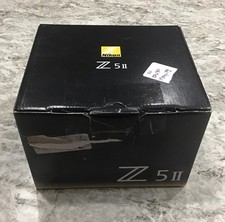
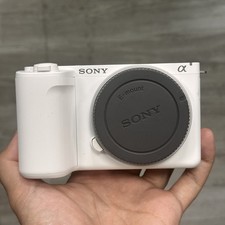
Nikon Z5IIvsSony ZV-E10 II: Full-Frame or Compact?
Both cameras shoot 4K at 60 fps, offer 10-bit log video, and use fully articulated screens. The Nikon Z5II is a full-frame body with a viewfinder and in-body stabilization; the Sony ZV-E10 II is a small APS-C camera built for vlogging. That split decides most purchases.
eBay prices refresh hourly — check the listing before you buy. We may earn a commission.
- MOST WINS
 Nikon
NikonBest for Stills and hybrid shooters who want full-frame quality, an EVF and speed
10of 18 specs better - Sony
Best for Vloggers and travelers who want a light, cheap, long-lasting camera
8of 18 specs better
Biggest differences
Continuous shooting (electronic)
Nikon Z5II leads
2.73×
higher is better
- Nikon Z5II30 fps
- Sony ZV-E10 II11 fps
Memory card slots
Nikon Z5II leads
2×
higher is better
- Nikon Z5II2 slots
- Sony ZV-E10 II1 slots
Weight
Sony ZV-E10 II leads
−46%
lower is better
- Nikon Z5II700 g
- Sony ZV-E10 II377 g
Battery life
Sony ZV-E10 II leads
+74%
higher is better
- Nikon Z5II350 shots
- Sony ZV-E10 II610 shots
Features not all of them have
High resolution pixel-shift mode
- Nikon Z5II✓
- Sony ZV-E10 II✕
Where each one wins
Nikon Z5II
- High resolution pixel-shift mode
- Sensor format
- Native ISO maximum
- Sensor type
- Continuous shooting (electronic)
- Raw video recording
- Viewfinder resolution
- Screen size
- Rear screen resolution
- Memory card slots
Sony ZV-E10 II
- Launch price
- Effective pixels
- 4K max frame rate (full width)
- Battery life
- Weight
- Width
- Height
- Depth
What both have
- Max mechanical shutter speed8,000 1/s
- Max video resolution4K
- 4K max frame rate60 fps
- Video bit depth10 bit
- Log profile support✓
- Screen articulationFully articulated
- USB charging & power delivery✓
- Minimum operating temperature0 °C
- Headphone port✓
- HDMI port typeMicro
Every spec
Red marks the better value in each row.
| Spec | Nikon Z5II | Sony ZV-E10 II |
|---|---|---|
| Overview | ||
| Release date | 2025-04 | 2024-07 |
| Launch price | 1,696.95 USD | 999 USD |
| Lens mount | Nikon Z | Sony E |
| High resolution pixel-shift mode | Yes1 | No |
| Sensor & Image | ||
| Effective pixels | 24.5 MP | 26 MP |
| Sensor format | Full-frame | APS-C |
| Native ISO maximum | 64,000 ISO | 32,000 ISO |
| In-body image stabilization | 7.5 stops | Not published |
| Sensor readout speed | Not published | Not published |
| Sensor type | Partially-stacked CMOS | CMOS |
| Aspect ratios | — | Not published |
| Lens & Autofocus | ||
| Continuous shooting (mechanical) | 7.8 fps | Not published |
| Continuous shooting (electronic) | 30 fps | 11 fps |
| Max mechanical shutter speed | 8,000 1/s | 8,000 1/s |
| Pre-burst capture duration | Not published | Not published |
| AF subject detection | Human, animal, bird, car, train, airplane, motorcycle | Human, animal, bird |
| Video | ||
| Max video resolution | 4K | 4K |
| 4K max frame rate | 60 fps | 60 fps |
| Video codecs | H.264, HEVC, N-RAW | H.264, HEVC |
| 4K max frame rate (full width) | 30 fps | 60 fps |
| Raw video recording | Internal | None |
| Video bit depth | 10 bit | 10 bit |
| Log profile support | Yes | Yes |
| Video dynamic range (log) | Not published | Not published |
| Viewfinder & Screen | ||
| Viewfinder resolution | 3.69 M dots | 0 M dots |
| Viewfinder magnification | 0.8 x | Not published |
| Screen size | 3.2 in | 3 in |
| Screen articulation | Fully articulated | Fully articulated |
| Rear screen resolution | 2.1 M dots | 1.037 M dots |
| Handling & Power | ||
| Battery life | 350 shots | 610 shots |
| Memory card slots | 2 slots | 1 slots |
| Weather sealing | Dust and drip resistant | Not published |
| Weight | 700 g | 377 g |
| Width | 134 mm | 114.8 mm |
| Height | 100.5 mm | 67.5 mm |
| Depth | 72 mm | 54.2 mm |
| USB charging & power delivery | Yes | Yes |
| Minimum operating temperature | 0 °C | 0 °C |
| Headphone port | Yes | Yes |
| HDMI port type | Micro | Micro |
Notes on 1 value — test conditions and caveats
- 1Nikon Z5II, High resolution pixel-shift mode: Pixel-shift composite raises resolution to 96MP, but images must be combined in NX Studio on a computer.
Sensor and low light
The Nikon Z5II's full-frame sensor is roughly twice the area of the Sony ZV-E10 II's APS-C chip, and it reaches a native ISO of 64,000 against 32,000 on the Sony. That headroom matters in dim rooms and at dusk, where the Nikon holds cleaner files before noise takes over.
The Nikon also carries a partially-stacked sensor design, which typically helps readout and autofocus. Autofocus subject detection is broader on the Nikon, covering cars, trains, airplanes and motorcycles on top of the human, animal and bird modes the Sony offers. If you shoot wildlife or motorsport, that list is a real advantage.
Video
Both hit 4K at 60 fps, but the Sony ZV-E10 II delivers that 60 fps across the full sensor width, while the Nikon Z5II drops to 30 fps at full width and needs a crop to reach 60. For vloggers who want wide framing at high frame rates, the Sony is the simpler camera.
The Nikon answers with internal N-RAW recording, which the Sony does not offer at all. N-RAW gives more latitude in post for color and exposure fixes, but it also means larger files and a heavier workflow. Casual shooters rarely need it; hybrid shooters who grade their footage often do.
Viewfinder and screen
The Nikon Z5II has a 3.69M-dot electronic viewfinder with 0.8x magnification. The Sony ZV-E10 II has none, relying entirely on its rear screen. Shooting in bright sun or holding a long lens steady is far easier through a viewfinder, so the Nikon suits stills photographers who frame carefully.
The Nikon's rear screen is also larger and denser, at 3.2 inches and 2.1M dots against 3 inches and 1.037M dots. Both flip out fully, so either works for self-recording. The screen edge goes to the Nikon, but the Sony's is serviceable for casual use.
Battery and size
The Sony ZV-E10 II is dramatically smaller and lighter, at 377 g versus 700 g for the Nikon Z5II. It also lasts much longer per charge, rated at 610 shots against 350. That combination is why the Sony travels well: less bulk in the bag and fewer spare batteries.
The Nikon counters with two memory card slots and dust-and-drip-resistant sealing, neither of which the Sony publishes. Two slots mean backup or overflow during a paid shoot; sealing means shooting in light rain without worry. Those are professional conveniences that the Sony's size advantage does not offset for working photographers.
Which is best for sports?
The Nikon Z5II shoots 30 fps electronically, well ahead of the Sony ZV-E10 II's 11 fps. It also has the deeper subject-detection list, including cars, trains and motorcycles. For fast action, the Nikon captures more decisive moments.
The Sony's electronic-only shutter is a design choice for silent, compact shooting rather than speed. If your subject moves quickly and you need a high hit rate, the Z5II is the clear pick.
The Verdict
Buy the Nikon Z5II if you want full-frame image quality, a viewfinder, stabilization and speed for stills and hybrid work. Buy the Sony ZV-E10 II if you want a light, affordable vlogging camera with long battery life.
Where to buy
Nikon Z5II
Best for Stills and hybrid shooters who want full-frame quality, an EVF and speed
Sony ZV-E10 II
Best for Vloggers and travelers who want a light, cheap, long-lasting camera
FAQ
Does the Nikon Z5II have in-body image stabilization?
Yes. The Z5II is rated at 7.5 stops of in-body stabilization. Sony does not publish an IBIS rating for the ZV-E10 II.
Can the Sony ZV-E10 II record raw video?
No. The ZV-E10 II records H.264 and HEVC only, while the Nikon Z5II records N-RAW internally.
Which camera has a viewfinder?
Only the Nikon Z5II. It has a 3.69M-dot EVF; the Sony ZV-E10 II has no viewfinder and relies on its rear screen.
How many memory card slots does each have?
The Nikon Z5II has two slots and the Sony ZV-E10 II has one. Two slots let you back up or overflow mid-shoot.
Does the Nikon Z5II have a pixel-shift mode?
Yes, it can build a 96MP composite, but the frames must be combined in NX Studio on a computer. The Sony ZV-E10 II has no pixel-shift mode.
Spotted something wrong? Tap the next to any section or spec group to let us know. Every report is read.