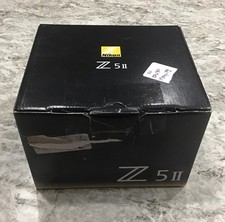
Compare · 2 products compared
Nikon Z5IIvsSony a1 II: Which Camera Should You Buy?
Both are full-frame mirrorless cameras with twin card slots, in-body stabilization, dust-and-drip sealing, 10-bit log video and 30 fps electronic bursts. The Sony a1 II is a flagship built for resolution and speed; the Nikon Z5II is a mid-range body that undercuts it by thousands and adds internal RAW recording.
eBay prices refresh hourly — check the listing before you buy. We may earn a commission.
 Nikon
NikonBest for Budget-conscious hybrid shooters who want internal RAW and a light body
6of 18 specs better- MOST WINSSony
Best for Pros and serious action shooters who need resolution, speed and 8K
12of 18 specs better
Biggest differences
Launch price
Nikon Z5II leads
3.83×
lower is better
- Nikon Z5II1,696.95 USD
- Sony a1 II6,499.99 USD
Viewfinder resolution
Sony a1 II leads
2.56×
higher is better
- Nikon Z5II3.69 M dots
- Sony a1 II9.44 M dots
Effective pixels
Sony a1 II leads
2.04×
higher is better
- Nikon Z5II24.5 MP
- Sony a1 II50.1 MP
Native ISO maximum
Nikon Z5II leads
2×
higher is better
- Nikon Z5II64,000 ISO
- Sony a1 II32,000 ISO
Where each one wins
Nikon Z5II
- Launch price
- Native ISO maximum
- Raw video recording
- Weight
- Width
- Depth
Sony a1 II
- Effective pixels
- In-body image stabilization
- Continuous shooting (mechanical)
- Max video resolution
- 4K max frame rate
- 4K max frame rate (full width)
- Viewfinder resolution
- Viewfinder magnification
- Screen articulation
- Battery life
- Height
- HDMI port type
What both have
- High resolution pixel-shift mode✓
- Sensor formatFull-frame
- Continuous shooting (electronic)30 fps
- Max mechanical shutter speed8,000 1/s
- Video bit depth10 bit
- Log profile support✓
- Screen size3.2 in
- Rear screen resolution2.1 M dots
- Memory card slots2 slots
- Weather sealingDust and drip resistant
- USB charging & power delivery✓
- Minimum operating temperature0 °C
- Headphone port✓
Every spec
Red marks the better value in each row.
| Spec | Nikon Z5II | Sony a1 II |
|---|---|---|
| Overview | ||
| Release date | 2025-04 | 2024-121 |
| Launch price | 1,696.95 USD | 6,499.99 USD |
| Lens mount | Nikon Z | Sony E |
| High resolution pixel-shift mode | Yes2 | Yes3 |
| Sensor & Image | ||
| Effective pixels | 24.5 MP | 50.1 MP |
| Sensor format | Full-frame | Full-frame |
| Native ISO maximum | 64,000 ISO | 32,000 ISO |
| In-body image stabilization | 7.5 stops | 8.5 stops4 |
| Sensor readout speed | Not published | Not published |
| Sensor type | Partially-stacked CMOS | — |
| Aspect ratios | — | 3:2 |
| Lens & Autofocus | ||
| Continuous shooting (mechanical) | 7.8 fps | 10 fps |
| Continuous shooting (electronic) | 30 fps | 30 fps |
| Max mechanical shutter speed | 8,000 1/s | 8,000 1/s |
| Pre-burst capture duration | Not published | 1 s5 |
| AF subject detection | Human, animal, bird, car, train, airplane, motorcycle | Human, animal, bird, insect, car, train, airplane |
| Video | ||
| Max video resolution | 4K | 8K |
| 4K max frame rate | 60 fps | 119.88 fps6 |
| Video codecs | H.264, HEVC, N-RAW | H.264, HEVC |
| 4K max frame rate (full width) | 30 fps | 59.94 fps7 |
| Raw video recording | Internal | External8 |
| Video bit depth | 10 bit | 10 bit |
| Log profile support | Yes | Yes |
| Video dynamic range (log) | Not published | Not published |
| Viewfinder & Screen | ||
| Viewfinder resolution | 3.69 M dots | 9.44 M dots |
| Viewfinder magnification | 0.8 x | 0.9 x |
| Screen size | 3.2 in | 3.2 in |
| Screen articulation | Fully articulated | Multi-angle |
| Rear screen resolution | 2.1 M dots | 2.1 M dots |
| Handling & Power | ||
| Battery life | 350 shots | 520 shots9 |
| Memory card slots | 2 slots | 2 slots |
| Weather sealing | Dust and drip resistant | Dust and drip resistant10 |
| Weight | 700 g | 743 g |
| Width | 134 mm | 136.1 mm |
| Height | 100.5 mm | 96.9 mm |
| Depth | 72 mm | 82.9 mm11 |
| USB charging & power delivery | Yes | Yes |
| Minimum operating temperature | 0 °C | 0 °C |
| Headphone port | Yes | Yes |
| HDMI port type | Micro | Full-size |
Notes on 11 values — test conditions and caveats
- 1Sony a1 II, Release date: Announced 19 November 2024; first retail availability was December 2024.
- 2Nikon Z5II, High resolution pixel-shift mode: Pixel-shift composite raises resolution to 96MP, but images must be combined in NX Studio on a computer.
- 3Sony a1 II, High resolution pixel-shift mode: 4- or 16-shot pixel shift composites are merged with Sony's Imaging Edge Desktop PC software.
- 4Sony a1 II, In-body image stabilization: 8.5 stops is the CIPA centre rating; 7.0 stops at the periphery.
- 5Sony a1 II, Pre-burst capture duration: Pre-capture buffers between 0.03 s and 1 s of frames before full shutter press.
- 6Sony a1 II, 4K max frame rate: 4K 100p/120p recording uses a 1.1x crop.
- 7Sony a1 II, 4K max frame rate (full width): Full-width 4K tops out at 59.94p; 4K 100/120p requires a 1.1x crop.
- 8Sony a1 II, Raw video recording: 16-bit RAW video can only be output over HDMI to an external recorder; no internal RAW recording.
- 9Sony a1 II, Battery life: CIPA rating is 520 shots per charge on the rear LCD; 420 shots with the viewfinder.
- 10Sony a1 II, Weather sealing: Sony specifies dust- and moisture-resistant sealing; no formal IP rating is published.
- 11Sony a1 II, Depth: Sony also lists 72.8 mm depth measured from grip to monitor, excluding the grip protrusion.
Resolution and low light
The Sony a1 II resolves 50.1 MP against the Nikon Z5II's 24.5 MP, so its files crop harder and print larger before detail breaks down. That matters most for wildlife, sports and landscape shooters who routinely throw away pixels.
The Z5II counters with a higher native ISO ceiling plus a partially-stacked sensor, which is the more forgiving choice in dim venues and for anyone who would rather nail exposure in-camera than push shadows later.
Speed and autofocus
Electronic bursts are a tie at 30 fps, but the Sony pulls ahead on mechanical continuous shooting at 10 fps versus 7.8 fps, and it alone offers a pre-burst buffer that holds up to a second of frames before you press the shutter. For timing-critical action, that head start is the difference between catching the peak and missing it.
Subject detection leans Sony's way with insect tracking added, though the Nikon matches it on cars, trains and planes and adds motorcycle recognition — a real edge for motorsport shooters.
Video
The a1 II shoots 8K, reaches 119.88 fps in 4K and holds full-width 4K at 59.94 fps; the Nikon tops out at 4K. Read the footnote before buying on specs alone: Sony's fastest 4K modes require a 1.1x crop. If you need full-sensor framing at high frame rates, the two narrow.
The Z5II records N-RAW internally, while the Sony can only output 16-bit RAW over HDMI to an external recorder. Runners-and-gunners who want the smallest possible kit get more flexibility from the Nikon; studio and rental-house shooters with recorders already in the bag will not care.
Viewfinder, screen and handling
Sony's 9.44M-dot finder and 0.9x magnification are a clear step up from the Nikon's 3.69M dots and 0.8x, which is worth real money to manual-focus and long-lens users. The a1 II also uses a multi-angle screen rather than the Z5II's fully articulated one.
The trade runs the other way once you pick the camera up. The Nikon is lighter, narrower and noticeably thinner, and its micro HDMI port is the main practical downside for tethered video work — the Sony's full-size port is more robust.
Battery and size
The a1 II rates 520 shots per charge on the rear LCD and 420 with the finder, against 350 shots for the Z5II. That gap means fewer spare batteries on a full day out, but it is bought with weight and bulk the Nikon simply does not carry.
The Z5II's lighter, more compact body suits travel and casual carry; the Sony's taller, heavier build is aimed at shooters already committed to a large lens kit. Both charge and run over USB, so either works as a desk-bound rig.
Which is best for sports?
The Sony a1 II is the sports answer, and not only for its higher frame rate. The 50.1 MP sensor keeps cropping options open when a play happens across the field, insect and human tracking covers most sideline needs, and the pre-burst buffer catches the instant before the moment you saw.
The Z5II is the sensible second choice. Its 30 fps electronic burst and full subject-detection list will handle most amateur action, and it costs a fraction of the Sony — the money left over buys better glass, which will do more for keeper rates than either body.
The Verdict
Buy the Sony a1 II if you shoot professionally, need 50.1 MP, 8K and pre-burst capture, and the price is a business expense. Buy the Nikon Z5II if you want a light full-frame body with internal RAW video and the best high-ISO ceiling of the two. Buy the Nikon if budget matters more than resolution. Buy the Sony if you already own E-mount glass.
Where to buy
Nikon Z5II
Best for Budget-conscious hybrid shooters who want internal RAW and a light body
Sony a1 II
Best for Pros and serious action shooters who need resolution, speed and 8K
FAQ
Which camera has the better viewfinder?
The Sony a1 II, by a wide margin. Its 9.44M-dot panel and 0.9x magnification beat the Nikon Z5II's 3.69M dots and 0.8x, which matters for manual focus and long-lens framing.
Can the Nikon Z5II shoot 8K video?
No. Its maximum video resolution is 4K, while the Sony a1 II reaches 8K.
Does either camera record RAW video internally?
Only the Nikon Z5II. It records N-RAW internally; the Sony a1 II can only output 16-bit RAW over HDMI to an external recorder.
Which has better battery life?
The Sony a1 II, rated 520 shots per charge on the rear LCD and 420 with the viewfinder, against 350 shots for the Nikon Z5II.
Which camera is lighter?
The Nikon Z5II at 700 g, versus 743 g for the Sony a1 II. The Nikon is also narrower and thinner.
Spotted something wrong? Tap the next to any section or spec group to let us know. Every report is read.