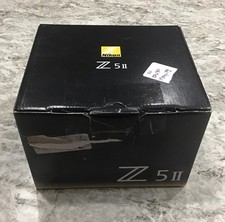
Compare · 2 products compared
Nikon Z5IIvsNikon Z8: Which Full-Frame Z Should You Buy?
Both are full-frame Nikon Z bodies with in-body stabilization, dual card slots, dust-and-drip sealing, a 3.69M-dot viewfinder and a 3.2-inch screen. The decision comes down to two things: the Z8's 45.7MP stacked sensor and 8K video, versus the Z5II's lower price, stronger stabilization and smaller body. Choose the feature set you will actually use, not the spec sheet.
eBay prices refresh hourly — check the listing before you buy. We may earn a commission.
 Nikon
NikonBest for Travel, event and handheld shooters who want full-frame quality without the Z8 price or weight
7of 15 specs better- MOST WINSNikon
Best for Action, wildlife and professional video shooters who need resolution, 8K and long pre-burst capture
8of 15 specs better
Biggest differences
Launch price
Nikon Z5II leads
2.36×
lower is better
- Nikon Z5II1,696.95 USD
- Nikon Z83,999.95 USD
4K max frame rate (full width)
Nikon Z8 leads
4×
higher is better
- Nikon Z5II30 fps
- Nikon Z8120 fps
Effective pixels
Nikon Z8 leads
+87%
higher is better
- Nikon Z5II24.5 MP
- Nikon Z845.7 MP
Native ISO maximum
Nikon Z5II leads
2.5×
higher is better
- Nikon Z5II64,000 ISO
- Nikon Z825,600 ISO
Where each one wins
Nikon Z5II
- Launch price
- Native ISO maximum
- In-body image stabilization
- Weight
- Width
- Height
- Depth
Nikon Z8
- Effective pixels
- Sensor type
- Max video resolution
- 4K max frame rate
- 4K max frame rate (full width)
- Screen articulation
- Minimum operating temperature
- HDMI port type
What both have
- Lens mountNikon Z
- High resolution pixel-shift mode✓
- Sensor formatFull-frame
- Continuous shooting (electronic)30 fps
- Raw video recordingInternal
- Video bit depth10 bit
- Log profile support✓
- Viewfinder resolution3.69 M dots
- Viewfinder magnification0.8 x
- Screen size3.2 in
- Rear screen resolution2.1 M dots
- Memory card slots2 slots
- Weather sealingDust and drip resistant
- USB charging & power delivery✓
- Headphone port✓
Every spec
Red marks the better value in each row.
| Spec | Nikon Z5II | Nikon Z8 |
|---|---|---|
| Overview | ||
| Release date | 2025-04 | 2023-05 |
| Launch price | 1,696.95 USD | 3,999.95 USD |
| Lens mount | Nikon Z | Nikon Z |
| High resolution pixel-shift mode | Yes1 | Yes |
| Sensor & Image | ||
| Effective pixels | 24.5 MP | 45.7 MP |
| Sensor format | Full-frame | Full-frame |
| Native ISO maximum | 64,000 ISO | 25,600 ISO |
| In-body image stabilization | 7.5 stops | 5.5 stops2 |
| Sensor readout speed | Not published | Not published |
| Sensor type | Partially-stacked CMOS | Stacked CMOS |
| Aspect ratios | — | 3:2, 1:1, 16:9 |
| Lens & Autofocus | ||
| Continuous shooting (mechanical) | 7.8 fps | Not published |
| Continuous shooting (electronic) | 30 fps | 30 fps3 |
| Max mechanical shutter speed | 8,000 1/s | Not published |
| Pre-burst capture duration | Not published | 300 s4 |
| AF subject detection | Human, animal, bird, car, train, airplane, motorcycle | Human, animal, bird, train, airplane, motorcycle, vehicle |
| Video | ||
| Max video resolution | 4K | 8K |
| 4K max frame rate | 60 fps | 120 fps |
| Video codecs | H.264, HEVC, N-RAW | H.264, HEVC, ProRes 422 HQ, ProRes RAW, N-RAW |
| 4K max frame rate (full width) | 30 fps | 120 fps |
| Raw video recording | Internal | Internal |
| Video bit depth | 10 bit | 10 bit |
| Log profile support | Yes | Yes |
| Video dynamic range (log) | Not published | Not published |
| Viewfinder & Screen | ||
| Viewfinder resolution | 3.69 M dots | 3.69 M dots |
| Viewfinder magnification | 0.8 x | 0.8 x |
| Screen size | 3.2 in | 3.2 in |
| Screen articulation | Fully articulated | Multi-angle5 |
| Rear screen resolution | 2.1 M dots | 2.1 M dots |
| Handling & Power | ||
| Battery life | 350 shots | Not published |
| Memory card slots | 2 slots | 2 slots |
| Weather sealing | Dust and drip resistant | Dust and drip resistant |
| Weight | 700 g | 910 g |
| Width | 134 mm | 144 mm |
| Height | 100.5 mm | 118.5 mm |
| Depth | 72 mm | 83 mm |
| USB charging & power delivery | Yes | Yes |
| Minimum operating temperature | 0 °C | -10 °C |
| Headphone port | Yes | Yes |
| HDMI port type | Micro | Full-size |
Notes on 5 values — test conditions and caveats
- 1Nikon Z5II, High resolution pixel-shift mode: Pixel-shift composite raises resolution to 96MP, but images must be combined in NX Studio on a computer.
- 2Nikon Z8, In-body image stabilization: The 6.0-stop figure applies only with Synchro VR-compatible Nikkor Z lenses; the standard body rating is 5.5 stops.
- 3Nikon Z8, Continuous shooting (electronic): Full-resolution JPEG bursts reach 30 fps; 14-bit RAW bursts top out at 20 fps.
- 4Nikon Z8, Pre-burst capture duration: The 300 s Pre-Release Capture buffer arrived with firmware 2.0; launch firmware allowed 30 s.
- 5Nikon Z8, Screen articulation: Nikon's 4-axis monitor tilts both vertically and horizontally but does not swing out like a fully articulated screen.
Sensor and low-light image quality
The Z8's 45.7MP stacked sensor is the headline advantage: roughly double the resolution of the Z5II's 24.5MP, which matters if you crop heavily or print large. A stacked design also reads out faster, which is why the Z8 can shoot at its highest frame rates and why its electronic shutter distorts less with fast motion. That makes it a better fit for action and wildlife than a purely resolution-driven upgrade would suggest.
The Z5II counters on a different axis. Its native ISO ceiling of 64,000 ISO is higher than the Z8's 25,600 ISO, and its in-body stabilization is rated 7.5 stops against the Z8's 5.5 stops. In practice, that combination favors handheld shooting at slow shutter speeds and in dim interiors. If you shoot landscapes or architecture on foot, the Z5II will often deliver sharper frames than its spec sheet suggests. Its 96MP pixel-shift mode adds resolution, but only as a composite you must merge later in NX Studio on a computer, so it is a tripod-and-patience tool, not a substitute for a 45.7MP sensor.
Video
The Z8 is the video tool here. It records up to 8K and hits 4K at 120 fps across the full sensor width, giving slow-motion flexibility the Z5II cannot match. The Z5II tops out at 4K and 60 fps, and its full-width 4K frame rate is 30 fps, so higher frame rates require a crop.
The Z8's codec list also goes further, adding ProRes 422 HQ and ProRes RAW alongside the H.264, HEVC and N-RAW both bodies share. Both record raw video internally and both offer 10-bit depth and a log profile. If your work is delivered in 1080p or standard 4K, the Z5II covers it; if you shoot for clients who ask for 8K or ProRes, the Z8 is the only option.
Autofocus and burst speed
Subject detection is close between the two. Both recognize humans, animals, birds, trains and airplanes. The Z5II adds a car category; the Z8's vehicle detection is broader, which helps motorsport and aviation shooters who point the camera at more than one kind of moving object.
Burst speed is more decisive. The Z8 reaches 30 fps with full-resolution JPEGs, but only 20 fps for 14-bit RAW, so plan around that limit if you shoot RAW. The Z5II also lists 30 fps electronically and 7.8 fps mechanically. The real Z8 advantage is its 300-second pre-burst capture buffer, which arrived via firmware 2.0 — that is five minutes of buffering before you press the shutter, something the Z5II does not document at all.
Handling, battery and size
The Z5II is the smaller, lighter camera: 700 g against 910 g, and narrower and shorter on every dimension. That difference shows up after a long day of carrying a body and a lens. The Z8 pushes back with a full-size HDMI port instead of the Z5II's micro connector, which is a meaningful reliability difference for anyone tethering to a monitor or recorder.
The Z8 also operates down to -10 °C versus the Z5II's 0 °C, which matters for winter field work. Nikon lists 350 shots per charge for the Z5II and no CIPA figure for the Z8, so treat that comparison as incomplete rather than as a Z5II win. Both charge and run over USB, both offer two card slots, both have headphone jacks, and both are dust-and-drip sealed.
Screen and viewfinder controls
Viewfinder and rear screen specs are identical, so they will not decide the purchase. The mount also matches, so any Nikkor Z lens works on either body.
The articulation differs. The Z5II has a fully articulated screen that swings out for vlogging and self-recording angles. The Z8 uses Nikon's multi-angle design, which tilts vertically and horizontally from the camera body rather than swinging out. That is sturdier and faster to adjust for stills in awkward positions, but it will not face forward, so solo shooters who film themselves should weigh this carefully.
The Verdict
Buy the Nikon Z5II if you want a lighter, more affordable full-frame body with better stabilization and a screen that faces you. Buy the Nikon Z8 if you need 45.7MP of detail, 8K or 120 fps video, or five minutes of pre-burst capture. The Z5II is the value pick for travel, events and handheld work. The Z8 is the professional tool for action, wildlife and high-end video.
Where to buy
Nikon Z5II
Best for Travel, event and handheld shooters who want full-frame quality without the Z8 price or weight
Nikon Z8
Best for Action, wildlife and professional video shooters who need resolution, 8K and long pre-burst capture
FAQ
Is the Nikon Z5II better in low light than the Z8?
On paper, yes for sensitivity and stabilization. The Z5II tops out at 64,000 ISO native versus 25,600 ISO on the Z8, and its IBIS is rated 7.5 stops against 5.5 stops. The Z8's larger pixels and stacked sensor may offset some of that in real use, but the Z5II holds the advantage on handheld stability.
Does the Nikon Z8 shoot 8K video?
Yes. The Z8 records up to 8K, while the Z5II is limited to 4K. The Z8 also reaches 120 fps in 4K at full sensor width, whereas the Z5II's full-width 4K tops out at 30 fps.
Can I use the same lenses on both cameras?
Yes. Both use the Nikon Z mount, so every Nikkor Z lens works on either body. The choice of body will not restrict your lens options.
Which one has a fully articulated screen?
The Nikon Z5II has a fully articulated screen that swings out, while the Z8 uses Nikon's multi-angle design that tilts but does not swing forward. If you film yourself or vlog, the Z5II's screen is the more useful design.
Do either of these cameras record raw video internally?
Both do. The Z5II and Z8 each record raw video internally, and both offer 10-bit depth and log profile support. The Z8 adds ProRes 422 HQ and ProRes RAW to its codec list.
Spotted something wrong? Tap the next to any section or spec group to let us know. Every report is read.