Compare · 2 products compared
Canon EOS R50 VvsNikon Z9: Which Camera Should You Buy?
These two mirrorless bodies share a lens-mount ecosystem approach and log-capable 10-bit video, but almost nothing else. The Nikon Z9 is a professional full-frame flagship built for speed and resolution; the Canon EOS R50 V is a small, inexpensive APS-C body. Price, size and sensor format decide this one long before the spec sheet does.
eBay prices refresh hourly — check the listing before you buy. We may earn a commission.
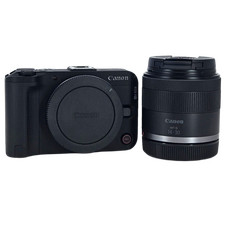
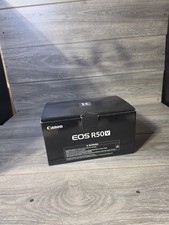
 Canon
CanonBest for Budget-conscious travelers, vloggers and casual shooters who want a small body with a flip screen.
7of 23 specs better- MOST WINSNikon
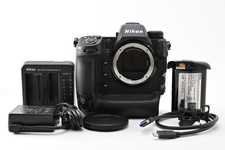
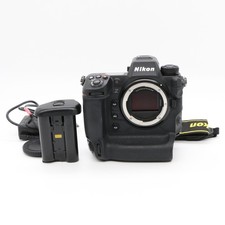
Best for Professional and serious hobbyist photographers shooting action, wildlife or high-end video.
16of 23 specs better
Biggest differences
Launch price
Canon EOS R50 V leads
8.47×
lower is better
- Canon EOS R50 V649 USD
- Nikon Z95,500 USD
Weight
Canon EOS R50 V leads
3.62×
lower is better
- Canon EOS R50 V370 g
- Nikon Z91,340 g
Max mechanical shutter speed
Nikon Z9 leads
8×
higher is better
- Canon EOS R50 V4,000 1/s
- Nikon Z932,000 1/s
Memory card slots
Nikon Z9 leads
2×
higher is better
- Canon EOS R50 V1 slots
- Nikon Z92 slots
Where each one wins
Canon EOS R50 V
- Launch price
- Native ISO maximum
- Screen articulation
- Weight
- Width
- Height
- Depth
Nikon Z9
- Effective pixels
- Sensor format
- Sensor type
- Continuous shooting (electronic)
- Max mechanical shutter speed
- Max video resolution
- 4K max frame rate
- 4K max frame rate (full width)
- Viewfinder resolution
- Screen size
- Rear screen resolution
- Battery life
- Memory card slots
- Weather sealing
- Minimum operating temperature
- HDMI port type
What both have
- Video bit depth10 bit
- Log profile support✓
- USB charging & power delivery✓
- Headphone port✓
Every spec
Red marks the better value in each row.
| Spec | Canon EOS R50 V | Nikon Z9 |
|---|---|---|
| Overview | ||
| Release date | 2025-04 | 2021-12 |
| Launch price | 649 USD | 5,500 USD |
| Lens mount | Canon RF | Nikon Z |
| High resolution pixel-shift mode | Not published | No |
| Sensor & Image | ||
| Effective pixels | 24.2 MP | 45.7 MP |
| Sensor format | APS-C | Full-frame |
| Native ISO maximum | 32,000 ISO | 25,600 ISO |
| In-body image stabilization | Not published | 6 stops1 |
| Sensor readout speed | Not published | Not published |
| Sensor type | CMOS | Stacked CMOS |
| Aspect ratios | 3:2, 4:3, 1:1, 16:9 | — |
| Lens & Autofocus | ||
| Continuous shooting (mechanical) | 12 fps | Not published |
| Continuous shooting (electronic) | 15 fps | 20 fps |
| Max mechanical shutter speed | 4,000 1/s | 32,000 1/s |
| Pre-burst capture duration | Not published | 1 s2 |
| AF subject detection | Human, animal, vehicle | Human, animal, bird, car, train, airplane, motorcycle |
| Video | ||
| Max video resolution | 4K | 8K |
| 4K max frame rate | 59.94 fps | 120 fps |
| Video codecs | H.264, HEVC, XF-AVC, XF-HEVC | H.264, HEVC, ProRes 422 HQ, ProRes RAW, N-RAW |
| 4K max frame rate (full width) | 29.97 fps3 | 30 fps |
| Raw video recording | Not published | Internal |
| Video bit depth | 10 bit | 10 bit |
| Log profile support | Yes | Yes |
| Video dynamic range (log) | Not published | Not published |
| Viewfinder & Screen | ||
| Viewfinder resolution | 0 M dots4 | 3.69 M dots |
| Viewfinder magnification | Not published | 0.8 x |
| Screen size | 3 in | 3.2 in |
| Screen articulation | Fully articulated | Tilting |
| Rear screen resolution | 1.04 M dots | 2.1 M dots |
| Handling & Power | ||
| Battery life | 480 shots5 | 740 shots |
| Memory card slots | 1 slots | 2 slots |
| Weather sealing | None | Dust and drip resistant |
| Weight | 370 g | 1,340 g |
| Width | 119.3 mm | 149 mm |
| Height | 73.7 mm | 149.5 mm |
| Depth | 45.2 mm | 90.5 mm |
| USB charging & power delivery | Yes6 | Yes |
| Minimum operating temperature | 0 °C | -10 °C |
| Headphone port | Yes | Yes |
| HDMI port type | Micro | Full-size |
Notes on 6 values — test conditions and caveats
- 1Nikon Z9, In-body image stabilization: The 6.0-stop rating requires Synchro VR, combining in-body 5-axis VR with 2-axis lens VR on compatible lenses.
- 2Nikon Z9, Pre-burst capture duration: Pre-Release Capture is only available in the C30 and C120 high-speed frame capture modes.
- 3Canon EOS R50 V, 4K max frame rate (full width): Full-width 4K tops out at 29.97 fps; 4K 50p/60p uses a crop to 64% of the sensor's horizontal area.
- 4Canon EOS R50 V, Viewfinder resolution: The EOS R50 V has no built-in electronic viewfinder; framing is done on the rear screen only.
- 5Canon EOS R50 V, Battery life: Canon's CIPA rating uses the supplied LP-E17 battery with the LCD in power-saving mode.
- 6Canon EOS R50 V, USB charging & power delivery: USB charging requires a genuine (authenticated) Canon battery; unauthenticated batteries will not charge over USB.
Sensor and low light
The Nikon Z9's full-frame sensor holds 45.7 MP against the Canon EOS R50 V's 24.2 MP APS-C chip. That extra surface area and pixel count mean cleaner high-ISO files, more room to crop, and noticeably finer detail in large prints. The Z9 also uses a stacked CMOS design, which reads out faster and reduces rolling shutter in both stills and video.
The R50 V answers with a slightly higher native ISO ceiling of 32,000, but that only goes so far on a smaller sensor. If most of your shooting happens in dim light or you sell large prints, the Nikon is the better tool. If you shoot in daylight and share online, the Canon's files are more than enough.
Speed and autofocus
The Z9 shoots 20 fps electronically and tops out at 1/32,000 s, so it can freeze fast action that the R50 V's 15 fps and 1/4,000 s ceiling will blur or miss. Its subject detection covers seven categories, including birds, trains and planes; the Canon recognizes three.
The Z9 adds a 1-second pre-burst capture, which is only available in its C30 and C120 high-speed modes. That feature lets you grab the moment just before you press the shutter, a real advantage for wildlife and sport. The R50 V has no published pre-burst mode, so timing stays entirely on you.
Video
The Nikon Z9 records 8K and 4K at up to 120 fps, and it writes raw video internally in ProRes RAW and N-RAW alongside ProRes 422 HQ. That gives colorists far more latitude in post. The Canon EOS R50 V tops out at 4K, and its 59.94 fps mode only works with a crop to 64% of the sensor's horizontal area, so full-width 4K stops at 29.97 fps.
Both cameras shoot 10-bit with log profiles, so either can deliver a graded look. The difference is headroom: the Z9's raw pipeline and higher frame rates suit commercial and narrative work, while the R50 V is built for lighter vlogging and online delivery.
Handling, battery and size
The R50 V weighs 370 g and measures 119.3 x 73.7 x 45.2 mm, small enough to slip into a bag and carry all day. The Z9 is 1,340 g and roughly 149 mm on each of its three axes, a body you commit to carrying. The Canon also has a fully articulated screen, handy for self-recording, while the Nikon's screen only tilts.
The Z9 counters with a 3.69 M-dot viewfinder, a larger 3.2-inch rear screen, two card slots and dust-and-drip sealing. Its 740-shot battery rating beats the R50 V's 480 shots, and it keeps working down to -10 °C versus 0 °C. The R50 V has no built-in viewfinder at all, so framing is screen-only, and it offers no weather sealing. For travel and casual use, the Canon wins on comfort. For paid work in rough conditions, the Nikon does.
Which is best for sports and wildlife?
The Nikon Z9. Its 20 fps electronic burst, 1/32,000 s shutter, pre-burst capture and broader subject detection are designed for exactly this. A stacked sensor also means less rolling shutter when panning. The Canon EOS R50 V can shoot action, but its slower burst and lack of pre-capture mean more missed frames.
The trade-off is weight and cost. If you shoot occasional school sports or pets, the R50 V is far easier to carry and far cheaper to buy. If action is your main subject, the Z9 is the one that keeps up.
Which is best for travel and everyday shooting?
The Canon EOS R50 V. At 370 g it disappears into a day bag, its screen flips fully forward for self-recording, and its smaller APS-C sensor keeps RF-S lenses compact. USB charging works with a genuine Canon battery, so a power bank can top it up on the road.
The Z9 is a deliberate choice to carry a heavy body in exchange for maximum capability. If your trips are about documenting rather than producing, the Canon removes most of the friction.
The Verdict
Buy the Canon EOS R50 V if you want a light, inexpensive body for travel, vlogging and everyday photos where the screen does the framing. Buy the Nikon Z9 if you shoot action, wildlife or professional video and need the resolution, speed, viewfinder and sealing that a flagship provides. Neither is a compromise for the other's owner; they simply serve different jobs. Match the body to the work, not to the spec count.
Where to buy
Canon EOS R50 V
Best for Budget-conscious travelers, vloggers and casual shooters who want a small body with a flip screen.
Nikon Z9
Best for Professional and serious hobbyist photographers shooting action, wildlife or high-end video.
FAQ
Does the Canon EOS R50 V have a viewfinder?
No. It has no built-in electronic viewfinder, so you frame everything on the rear screen. The Nikon Z9 has a 3.69 M-dot EVF with 0.8x magnification.
Can the Canon EOS R50 V shoot 4K at 60p?
Yes, but only in a cropped mode that uses 64% of the sensor's horizontal area. Full-width 4K is limited to 29.97 fps.
Which camera has better battery life?
The Nikon Z9, rated at 740 shots, versus 480 shots for the Canon EOS R50 V. Both figures are CIPA ratings.
Is the Canon EOS R50 V weather sealed?
No. The R50 V has no weather sealing, while the Nikon Z9 is dust and drip resistant.
Does the Nikon Z9 record raw video?
Yes, internally, in ProRes RAW and N-RAW. The Canon EOS R50 V has no published raw video recording.
Spotted something wrong? Tap the next to any section or spec group to let us know. Every report is read.