Compare · 2 products compared
Canon EOS R50 VvsNikon Z6III: Which Camera to Buy
The Canon EOS R50 V and Nikon Z6III are mirrorless cameras built for different budgets and shooting styles. Choosing between them comes down to balancing a lightweight, affordable body against professional-grade video resolution, weather sealing, and physical controls.
eBay prices refresh hourly — check the listing before you buy. We may earn a commission.

Best for Budget-conscious travelers and lightweight creators
Wins6 / 23- MOST WINS

Best for Professional videographers and advanced hybrid shooters
Wins17 / 23
Biggest differences
Continuous shooting (electronic)
Nikon Z6III leads
4×
higher is better
- Canon EOS R50 V15 fps
- Nikon Z6III60 fps
Launch price
Canon EOS R50 V leads
3.85×
lower is better
- Canon EOS R50 V649 USD
- Nikon Z6III2,499.95 USD
Weight
Canon EOS R50 V leads
2.05×
lower is better
- Canon EOS R50 V370 g
- Nikon Z6III760 g
Memory card slots
Nikon Z6III leads
2×
higher is better
- Canon EOS R50 V1 slots
- Nikon Z6III2 slots
Where each one wins
Canon EOS R50 V
- Launch price
- Battery life
- Weight
- Width
- Height
- Depth
Nikon Z6III
- Effective pixels
- Sensor format
- Native ISO maximum
- Sensor type
- Continuous shooting (mechanical)
- Continuous shooting (electronic)
- Max mechanical shutter speed
- Max video resolution
- 4K max frame rate
- 4K max frame rate (full width)
- Viewfinder resolution
- Screen size
- Rear screen resolution
- Memory card slots
- Weather sealing
- Minimum operating temperature
- HDMI port type
What both have
- Video bit depth10 bit
- Log profile support✓
- Screen articulationFully articulated
- USB charging & power delivery✓
- Headphone port✓
Every spec
Red marks the better value in each row.
| Spec | Canon EOS R50 V | Nikon Z6III |
|---|---|---|
| Overview | ||
| Release date | 2025-04 | 2024-06 |
| Launch price | 649 USD | 2,499.95 USD |
| Lens mount | Canon RF | Nikon Z |
| High resolution pixel-shift mode | Not published | Yes1 |
| Sensor & Image | ||
| Effective pixels | 24.2 MP | 24.5 MP |
| Sensor format | APS-C | Full-frame |
| Native ISO maximum | 32,000 ISO | 64,000 ISO |
| In-body image stabilization | Not published | 8 stops2 |
| Sensor readout speed | Not published | 14.3 ms |
| Sensor type | CMOS | Partially-stacked CMOS |
| Aspect ratios | 3:2, 4:3, 1:1, 16:9 | 3:2, 1:1, 16:9 |
| Lens & Autofocus | ||
| Continuous shooting (mechanical) | 12 fps | 14 fps |
| Continuous shooting (electronic) | 15 fps | 60 fps3 |
| Max mechanical shutter speed | 4,000 1/s | 8,000 1/s |
| Pre-burst capture duration | Not published | 1 s4 |
| AF subject detection | Human, animal, vehicle | Human, animal, bird, car, train, airplane, motorcycle |
| Video | ||
| Max video resolution | 4K | 6K |
| 4K max frame rate | 59.94 fps | 120 fps |
| Video codecs | H.264, HEVC, XF-AVC, XF-HEVC | H.264, HEVC, ProRes 422 HQ, ProRes RAW, N-RAW |
| 4K max frame rate (full width) | 29.97 fps5 | 60 fps |
| Raw video recording | Not published | Internal |
| Video bit depth | 10 bit | 10 bit |
| Log profile support | Yes | Yes |
| Video dynamic range (log) | Not published | 13 stops6 |
| Viewfinder & Screen | ||
| Viewfinder resolution | 0 M dots7 | 5.76 M dots |
| Viewfinder magnification | Not published | 0.8 x |
| Screen size | 3 in | 3.2 in |
| Screen articulation | Fully articulated | Fully articulated |
| Rear screen resolution | 1.04 M dots | 2.1 M dots |
| Handling & Power | ||
| Battery life | 480 shots8 | 390 shots |
| Memory card slots | 1 slots | 2 slots |
| Weather sealing | None | Dust and drip resistant |
| Weight | 370 g | 760 g |
| Width | 119.3 mm | 138.5 mm |
| Height | 73.7 mm | 101.5 mm |
| Depth | 45.2 mm | 74 mm |
| USB charging & power delivery | Yes9 | Yes10 |
| Minimum operating temperature | 0 °C | -10 °C |
| Headphone port | Yes | Yes |
| HDMI port type | Micro | Full-size |
Notes on 10 values — test conditions and caveats
- 1Nikon Z6III, High resolution pixel-shift mode: Pixel-shift frames are merged on a computer in NX Studio, not in the camera.
- 2Nikon Z6III, In-body image stabilization: CIPA figure measured with the non-VR NIKKOR Z 24-120mm f/4 S at 120mm.
- 3Nikon Z6III, Continuous shooting (electronic): 60 fps is full-resolution JPEG only; Raw bursts top out at 20 fps, and 120 fps uses a DX crop.
- 4Nikon Z6III, Pre-burst capture duration: Pre-Release Capture records JPEG only.
- 5Canon EOS R50 V, 4K max frame rate (full width): Full-width 4K tops out at 29.97 fps; 4K 50p/60p uses a crop to 64% of the sensor's horizontal area.
- 6Nikon Z6III, Video dynamic range (log): Nikon states "13+ stops" for N-Log in H.265 10-bit at ISO 800.
- 7Canon EOS R50 V, Viewfinder resolution: The EOS R50 V has no built-in electronic viewfinder; framing is done on the rear screen only.
- 8Canon EOS R50 V, Battery life: Canon's CIPA rating uses the supplied LP-E17 battery with the LCD in power-saving mode.
- 9Canon EOS R50 V, USB charging & power delivery: USB charging requires a genuine (authenticated) Canon battery; unauthenticated batteries will not charge over USB.
- 10Nikon Z6III, USB charging & power delivery: In-camera charging and USB power need a USB-PD source such as Nikon's EH-8P.
Price and Portability
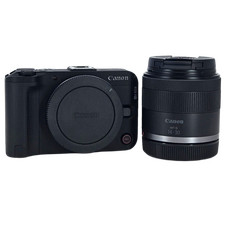
The Canon EOS R50 V costs $649, making it far more accessible for budget-conscious creators. It weighs just 370 g and measures 119.3 mm wide, fitting easily into small bags for daily travel.
In contrast, the Nikon Z6III costs $2,499.95 and weighs 760 g. That extra heft brings robust dust and drip resistance, dual memory card slots, and a larger 3.2-inch screen for serious field work.
Video Capabilities
The Nikon Z6III dominates video production by shooting in 6K and reaching up to 120 fps in 4K. It also records raw video internally and supports multiple professional codecs like ProRes RAW and N-RAW.
The Canon EOS R50 V caps video at 4K and tops out at 59.94 fps, which requires a crop of the sensor. Both models support log profiles and 10-bit color depth for advanced color grading.
Handling and Viewfinder
Shooting with the Nikon Z6III feels traditional thanks to its sharp 5.76 M-dot electronic viewfinder. It also features a full-size HDMI port for reliable cable connections during external recording.
The Canon EOS R50 V omits an electronic viewfinder entirely, forcing you to frame every shot on its rear screen. However, it delivers exceptional battery life, reaching 480 shots on a single charge.
The Verdict
Buy the Canon EOS R50 V if you want a lightweight, affordable travel camera with great battery life. Buy the Nikon Z6III if you need professional video codecs, robust weather sealing, and a built-in viewfinder.
Where to buy
Canon EOS R50 V
Best for Budget-conscious travelers and lightweight creators
Nikon Z6III
Best for Professional videographers and advanced hybrid shooters
FAQ
Does the Canon EOS R50 V have a built-in electronic viewfinder?
No, the Canon EOS R50 V has no built-in electronic viewfinder, so framing must be done entirely on the rear screen.
Can the Nikon Z6III record raw video internally?
Yes, the Nikon Z6III supports internal raw video recording alongside codecs like ProRes RAW and N-RAW.
Which camera is better for shooting fast action?
The Nikon Z6III handles fast action better with an electronic burst rate of up to 60 fps and a mechanical shutter speed reaching 1/8,000s.
Spotted something wrong? Tap the next to any section or spec group to let us know. Every report is read.