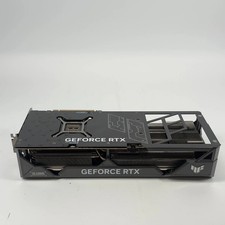
Compare · 2 products compared
AMD Radeon RX 9070 XTvsNVIDIA GeForce RTX 4080 Super Spec Comparison
The AMD Radeon RX 9070 XT and NVIDIA GeForce RTX 4080 Super both feature 16 GB of video memory and require a 750 W power supply. Choosing between them depends on whether you prioritize raw boost clock speeds and modern interface connections or higher shader core counts and memory bandwidth.
eBay prices refresh hourly — check the listing before you buy. We may earn a commission.
- MOST WINS
 AMD
AMDBest for Buyers seeking PCIe 5.0 and higher boost clocks
6of 11 specs better - NVIDIA
Best for Users needing Gddr6x bandwidth and more shader cores
5of 11 specs better
Biggest differences
Shader cores
NVIDIA GeForce RTX 4080 Super leads
2.5×
higher is better
- AMD Radeon RX 9070 XT4,096 cores
- NVIDIA GeForce RTX 4080 Super10,240 cores
Launch price
AMD Radeon RX 9070 XT leads
−40%
lower is better
- AMD Radeon RX 9070 XT599 USD
- NVIDIA GeForce RTX 4080 Super999 USD
Memory bandwidth
NVIDIA GeForce RTX 4080 Super leads
+15%
higher is better
- AMD Radeon RX 9070 XT640 GB/s
- NVIDIA GeForce RTX 4080 Super736 GB/s
Boost clock
AMD Radeon RX 9070 XT leads
+16%
higher is better
- AMD Radeon RX 9070 XT2,970 MHz
- NVIDIA GeForce RTX 4080 Super2,550 MHz
Where each one wins
AMD Radeon RX 9070 XT
- Launch price
- Boost clock
- Board power
- PCIe version
- HDMI version
- DisplayPort version
NVIDIA GeForce RTX 4080 Super
- Shader cores
- FP32 compute
- Memory type
- Memory bandwidth
- Memory speed
What both have
- Video memory16 GB
- Memory bus width256 bit
- Last-level cache64 MB
- Recommended PSU750 W
- HDMI outputs1 ports
- DisplayPort outputs3 ports
Every spec
Red marks the better value in each row.
| Spec | AMD Radeon RX 9070 XT | NVIDIA GeForce RTX 4080 Super |
|---|---|---|
| Overview | ||
| Release date | 2025-03 | 2024-01 |
| Launch price | 599 USD1 | 999 USD |
| Graphics chip | ||
| Architecture | Rdna 4 | Ada lovelace |
| Shader cores | 4,096 cores | 10,240 cores |
| Boost clock | 2,970 MHz2 | 2,550 MHz |
| Base clock | Not published | 2,290 MHz |
| FP32 compute | 48.7 TFLOPS | 52 TFLOPS |
| Memory | ||
| Video memory | 16 GB | 16 GB |
| Memory type | Gddr6 | Gddr6x |
| Memory bus width | 256 bit | 256 bit |
| Memory bandwidth | 640 GB/s | 736 GB/s |
| Memory speed | 20 Gbps | 23 Gbps |
| Last-level cache | 64 MB | 64 MB |
| Power | ||
| Board power | 304 W | 320 W |
| Recommended PSU | 750 W | 750 W3 |
| Power connectors | 8-pin4 | 12V-2x65 |
| Interface | ||
| PCIe version | 5.0 | 4.0 |
| PCIe lanes | 16 lanes | Not published |
| Display outputs | ||
| HDMI version | 2.1b | 2.1a |
| DisplayPort version | 2.1a6 | 1.4a |
| HDMI outputs | 1 ports | 1 ports |
| DisplayPort outputs | 3 ports | 3 ports |
| Max displays | Not published | 4 displays |
| Video engine | ||
| Hardware encode | H.264, HEVC, AV1 | AV1 |
| Video encoders | Not published | 2 encoders |
| Size | ||
| Card length | Not published | 304 mm |
| Card height | Not published | 137 mm |
| Slot width | Not published | 3 slots |
Notes on 6 values — test conditions and caveats
- 1AMD Radeon RX 9070 XT, Launch price: TechSpot reports AMD subsidizes this MSRP with a $50 retailer rebate, so street prices often run higher.
- 2AMD Radeon RX 9070 XT, Boost clock: TechSpot's 2400 MHz figure is AMD's 'game' clock; the boost rating is 2970 MHz.
- 3NVIDIA GeForce RTX 4080 Super, Recommended PSU: NVIDIA's 750 W minimum assumes a PC with a Ryzen 9 5900X; needs vary by configuration.
- 4AMD Radeon RX 9070 XT, Power connectors: Corsair notes a few partner 90-series cards use 12V-2x6; the vast majority use 2x 8-pin.
- 5NVIDIA GeForce RTX 4080 Super, Power connectors: Card takes a 16-pin 12V-2x6 connector; a 3x PCIe 8-pin adapter ships in the box for PSUs without a PCIe Gen 5 cable.
- 6AMD Radeon RX 9070 XT, DisplayPort version: TechPowerUp specifies the DisplayPort outputs as UHBR13.5.
Performance and Architecture
The GeForce RTX 4080 Super utilizes the Ada Lovelace architecture with 10,240 shader cores and delivers 52 TFLOPS of FP32 compute performance. This setup provides strong processing power for heavy workloads.
In contrast, the Radeon RX 9070 XT runs on Rdna 4 with 4,096 cores and reaches a 2,970 MHz boost clock, coming out ahead in clock speed and consuming less power at 304 W compared to the competitor's 320 W.
Memory and Interface
While both cards pack 16 GB of video memory, the GeForce RTX 4080 Super uses Gddr6x memory achieving a 736 GB/s bandwidth and 23 Gbps speed. The Radeon RX 9070 XT relies on standard Gddr6 memory operating at 640 GB/s and 20 Gbps.
For motherboard connectivity, the Radeon RX 9070 XT takes the lead with PCIe 5.0 support, whereas the competitor stays on PCIe 4.0.
Display and Video Features
The Radeon RX 9070 XT includes HDMI 2.1b and DisplayPort 2.1a outputs, offering updated connection standards for modern displays. It also expands hardware encode support to include H.264, HEVC, and AV1 formats.
Meanwhile, the GeForce RTX 4080 Super features two video encoders and supports AV1 hardware encoding, handling up to four displays simultaneously.
The Verdict
Buy the AMD Radeon RX 9070 XT if you want modern PCIe 5.0 support, faster boost clocks, and advanced display outputs at a lower launch price. Buy the NVIDIA GeForce RTX 4080 Super if you need higher shader core counts, Gddr6x memory bandwidth, and dual encoders.
Where to buy
AMD Radeon RX 9070 XT
Best for Buyers seeking PCIe 5.0 and higher boost clocks
NVIDIA GeForce RTX 4080 Super
Best for Users needing Gddr6x bandwidth and more shader cores
FAQ
What power supply do these graphics cards require?
Both graphics cards recommend a 750 W power supply, though requirements vary by your overall system configuration.
What type of power connectors do they use?
The Radeon RX 9070 XT typically uses 8-pin connectors, while the GeForce RTX 4080 Super takes a 16-pin 12V-2x6 connector.
Do both cards support AV1 video encoding?
Yes, both graphics cards feature hardware AV1 encoding support.
Spotted something wrong? Tap the next to any section or spec group to let us know. Every report is read.