Compare · 2 products compared
Canon EOS R6 Mark IIIvsSony RX100 VII: Systemvspocket
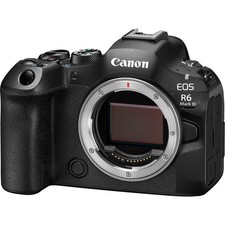
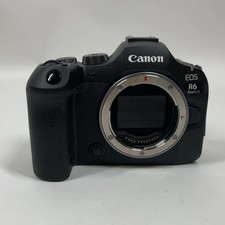
The Canon EOS R6 Mark III and Sony RX100 VII both record log video and charge over USB, but they answer opposite briefs. The Canon is a full-frame interchangeable-lens camera; the Sony fixes one lens onto a much smaller sensor inside a pocket body. Capability versus carryability is the whole contest.
eBay prices refresh hourly — check the listing before you buy. We may earn a commission.
- MOST WINS
 Canon
CanonBest for Creators and action shooters who want full-frame image quality and serious video
17of 22 specs better - Sony
Best for Travelers and everyday shooters who want real capability in a pocket camera
5of 22 specs better
Biggest differences
Battery life
Canon EOS R6 Mark III leads
2.38×
higher is better
- Canon EOS R6 Mark III620 shots
- Sony RX100 VII260 shots
Weight
Sony RX100 VII leads
2.31×
lower is better
- Canon EOS R6 Mark III699 g
- Sony RX100 VII302 g
Native ISO maximum
Canon EOS R6 Mark III leads
5×
higher is better
- Canon EOS R6 Mark III64,000 ISO
- Sony RX100 VII12,800 ISO
In-body image stabilization
Canon EOS R6 Mark III leads
2.13×
higher is better
- Canon EOS R6 Mark III8.5 stops
- Sony RX100 VII4 stops
Where each one wins
Canon EOS R6 Mark III
- Effective pixels
- Sensor format
- Native ISO maximum
- In-body image stabilization
- Continuous shooting (mechanical)
- Continuous shooting (electronic)
- Max mechanical shutter speed
- Max video resolution
- 4K max frame rate
- 4K max frame rate (full width)
- Raw video recording
- Viewfinder resolution
- Viewfinder magnification
- Screen articulation
- Rear screen resolution
- Battery life
- HDMI port type
Sony RX100 VII
- Sensor type
- Weight
- Width
- Height
- Depth
What both have
- Log profile support✓
- Screen size3 in
- USB charging & power delivery✓
- Minimum operating temperature0 °C
Every spec
Red marks the better value in each row.
| Spec | Canon EOS R6 Mark III | Sony RX100 VII |
|---|---|---|
| Overview | ||
| Release date | 2025-11 | Not published |
| Launch price | 2,799 USD | Not published |
| Lens mount | Canon RF | Fixed lens |
| High resolution pixel-shift mode | No | Not published |
| Sensor & Image | ||
| Effective pixels | 32.5 MP | 20.1 MP |
| Sensor format | Full-frame | 1-inch |
| Native ISO maximum | 64,000 ISO | 12,800 ISO |
| In-body image stabilization | 8.5 stops1 | 4 stops2 |
| Sensor readout speed | 13.2 ms | Not published |
| Sensor type | CMOS | Stacked CMOS |
| Aspect ratios | 3:2 | 3:2, 4:3, 1:1, 16:93 |
| Lens & Autofocus | ||
| Continuous shooting (mechanical) | 12 fps | 10 fps4 |
| Continuous shooting (electronic) | 40 fps | 20 fps5 |
| Max mechanical shutter speed | 8,000 1/s | 2,000 1/s |
| Pre-burst capture duration | 0.5 s6 | Not published |
| AF subject detection | Human, animal, bird, car, train, airplane, motorcycle7 | Human, animal8 |
| Video | ||
| Max video resolution | 7K9 | 4K |
| 4K max frame rate | 119.9 fps | 30 fps |
| Video codecs | H.264, HEVC, XF-AVC, XF-HEVC | H.26410 |
| 4K max frame rate (full width) | 120 fps11 | 30 fps |
| Raw video recording | Internal | None12 |
| Video bit depth | 10 bit | Not published |
| Log profile support | Yes | Yes13 |
| Video dynamic range (log) | 15 stops14 | Not published |
| Viewfinder & Screen | ||
| Viewfinder resolution | 3.69 M dots | 2.36 M dots |
| Viewfinder magnification | 0.76 x | 0.59 x |
| Screen size | 3 in | 3 in |
| Screen articulation | Fully articulated | Tilting15 |
| Rear screen resolution | 1.6 M dots | 0.92 M dots |
| Handling & Power | ||
| Battery life | 620 shots16 | 260 shots17 |
| Memory card slots | 2 slots | Not published |
| Weather sealing | Dust and drip resistant | Not published |
| Weight | 699 g | 302 g |
| Width | 138.4 mm | 101.6 mm |
| Height | 98.4 mm | 58.1 mm |
| Depth | 88.4 mm | 42.8 mm |
| USB charging & power delivery | Yes18 | Yes19 |
| Minimum operating temperature | 0 °C | 0 °C |
| Headphone port | Yes | Not published |
| HDMI port type | Full-size | Micro |
Notes on 19 values — test conditions and caveats
- 1Canon EOS R6 Mark III, In-body image stabilization: 8.5 stops is Canon's best-case center rating with certain RF lenses; peripheral and other lenses see less, down to 7.5 stops.
- 2Sony RX100 VII, In-body image stabilization: Sony rates the optical (lens-shift) SteadyShot at 4.0 stops at the 200 mm telephoto end, not a body-only CIPA figure.
- 3Sony RX100 VII, Aspect ratios: 4:3, 16:9 and 1:1 sizes are in-camera crop modes over the native 3:2 sensor area.
- 4Sony RX100 VII, Continuous shooting (mechanical): The 'Hi' burst setting is electronic-shutter only; 10 fps ('Mid') is the fastest mechanical-shutter continuous rate.
- 5Sony RX100 VII, Continuous shooting (electronic): Blackout-free 20 fps continuous includes AF/AE tracking; the separate 'Single Burst' mode takes 7 shots at up to 90 fps.
- 6Canon EOS R6 Mark III, Pre-burst capture duration: Works only in the 40 fps electronic-shutter mode; Canon states it as up to 20 frames.
- 7Canon EOS R6 Mark III, AF subject detection: Car detection is tuned for racing cars, per Canon.
- 8Sony RX100 VII, AF subject detection: Maker names only human and animal recognition (Eye AF / Real-time Tracking); no bird or vehicle categories are listed.
- 9Canon EOS R6 Mark III, Max video resolution: 7K is available only in RAW Video mode; standard MP4 recording tops out at 4K.
- 10Sony RX100 VII, Video codecs: Both XAVC S and AVCHD recording use MPEG-4 AVC/H.264; there is no HEVC/H.265 option.
- 11Canon EOS R6 Mark III, 4K max frame rate (full width): 4K 120p uses the full width but is not oversampled; oversampled 4K tops out at 60p.
- 12Sony RX100 VII, Raw video recording: Sony's movie-format list contains only XAVC S (H.264) and AVCHD; no raw video output is offered.
- 13Sony RX100 VII, Log profile support: S-Log2, S-Log3 and HLG log gammas are selectable via Picture Profile presets PP1–PP10.
- 14Canon EOS R6 Mark III, Video dynamic range (log): Canon's claim of 15+ stops in its Canon Log profiles, not a lab measurement.
- 15Sony RX100 VII, Screen articulation: Screen tilts up about 180° for selfies and down about 90°; it does not swing outward like a fully articulated display.
- 16Canon EOS R6 Mark III, Battery life: 620 shots is CIPA's rating using the rear LCD (not the viewfinder) at 23°C; real-world results vary.
- 17Sony RX100 VII, Battery life: 260 shots assume default monitor settings; Sony also lists 310 shots when 'Auto Monitor Off' is set to 2 s.
- 18Canon EOS R6 Mark III, USB charging & power delivery: USB-C charging and power need a capable USB-PD source such as Canon's PD-E2; not every power bank works.
- 19Sony RX100 VII, USB charging & power delivery: In-body USB charging and power supply work over the Multi/Micro-USB (USB 2.0) terminal — not USB-C.
Image quality and low light
The Canon's full-frame sensor gathers far more light than the Sony's 1-inch chip, and its 32.5MP count leaves more room to crop than 20.1MP. Native ISO runs to 64,000 against 12,800, which is exactly the range after-dark shooting calls for. Dim restaurants, blue-hour streets and indoor sports are the Canon's territory; in daylight the Sony is entirely serviceable.
Framing flexibility quietly goes to the Sony: it offers 4:3, 1:1 and 16:9 aspect ratios in camera, all crop modes over the native 3:2 area. The Canon records 3:2 only, so squares and verticals happen in post. That's a small advantage, but social-first shooters feel it every day.
Size and travel
This one is the Sony's, and it isn't close. At 302 g it weighs less than half the Canon's 699 g, and its 101.6 × 58.1 × 42.8 mm body slips into a jacket pocket; the Canon's 138.4 × 98.4 × 88.4 mm frame needs a bag and a strap. If a camera stays home, it takes no pictures — that logic alone settles purchases.
Pocketable comes with a fixed hand. The Canon's RF mount accepts interchangeable lenses, so the system can grow with the work, while the Sony's lens is permanently attached. Canon also rates the R6 Mark III dust and drip resistant, reassuring on hikes and in rain, where Sony's specification pages list no comparable sealing.
Video
Video is the Canon's widest margin. It records internal raw up to 7K — a raw-mode-only figure, since standard MP4 recording caps at 4K — and shoots 4K up to 119.9 fps, with the full-width 120p mode line-skipped rather than oversampled. The Sony records 4K at 30 fps and offers no raw video output at all. Slow motion, log grading and reframing room in the edit all point Canon's way.
The format list backs that up. The Canon records 10-bit files with a choice of H.264, HEVC, XF-AVC and XF-HEVC, plus a headphone jack and full-size HDMI; the Sony relies on H.264 across its XAVC S and AVCHD modes and outputs over micro HDMI. Both support log gammas for grading, but only the Canon's sheet confirms the 10-bit depth a serious grade wants.
Sports and action
Autofocus is where the Canon buys real keepers: it recognizes people, animals, birds, cars, trains, airplanes and motorcycles, where the Sony names only people and animals. Burst rates sit closer than that gap — 12 fps mechanically and 40 fps electronically on the Canon, against 10 fps mechanical and a blackout-free 20 fps with AF/AE tracking on the Sony. For birds in flight or passing vehicles, the recognition list decides between keepers and blanks.
The small specs matter at the edges. The Canon's mechanical shutter tops out at 1/8000 s against the Sony's 1/2000 s, welcome headroom for fast glass in full sun. Each has a moment-rescue trick: the Canon buffers up to half a second — about 20 frames — in its fastest electronic mode, while the Sony's Single Burst grabs a seven-shot run at up to 90 fps. Neither misses often, but the Canon covers more situations.
Viewfinder, screen and battery
Composition gear favors the Canon everywhere you look. Its viewfinder shows 3.69M dots at 0.76x magnification against the Sony's 2.36M dots at 0.59x, and the rear screen is sharper too, at 1.6M dots versus 0.92M. Both panels measure 3 inches, yet the Canon's swings fully outward for high, low and self-shot angles while the Sony tilts up for selfies and down about 90 degrees and stops. For waist-level framing and vlogging, that's a daily difference.
Endurance leans the same way. CIPA rates the Canon at 620 shots per charge on the rear screen, against 260 for the Sony with default monitor settings — a number that reaches 310 only with auto monitor-off set to two seconds. Real-world mileage varies, but planning a full day around one battery is far easier with the Canon.
The Verdict
Buy the Canon EOS R6 Mark III if you regularly shoot low light, fast action or serious video and can live with the size. Buy the Sony RX100 VII if the camera actually in your pocket beats the technically better one left at home.
Where to buy
Canon EOS R6 Mark III
Best for Creators and action shooters who want full-frame image quality and serious video
Sony RX100 VII
Best for Travelers and everyday shooters who want real capability in a pocket camera
FAQ
How much does the Canon EOS R6 Mark III cost?
It launched at $2,799. Sony has not published a USD launch price for the RX100 VII on its specification pages, so check current retail listings for that one.
Can I charge both cameras over USB?
Yes — both support USB charging and power delivery. The Canon needs a capable USB-PD source such as Canon's PD-E2, and not every power bank works, while the Sony charges over its Multi/Micro-USB (USB 2.0) terminal rather than USB-C.
Does the Sony RX100 VII have in-body stabilization?
No — its SteadyShot is optical, shifting the lens rather than the sensor, and Sony rates it at 4.0 stops at the 200 mm telephoto end. The Canon stabilizes the sensor itself and claims up to 8.5 stops in its best case, with less toward the frame edges and on some lenses.
Can either camera be used in freezing weather?
Both are rated down to 0 °C, so neither maker supports proper sub-zero use — plan for battery warmth and protection in deep winter.
Spotted something wrong? Tap the next to any section or spec group to let us know. Every report is read.