Compare · 2 products compared
Canon EOS R50 VvsSony ZV-E10 II: Which to Buy?
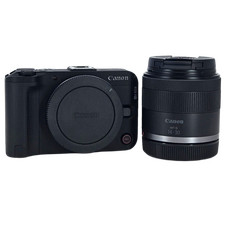
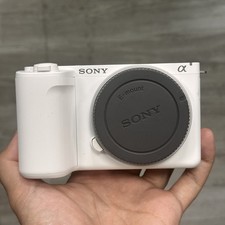
Both are compact APS-C mirrorless bodies that lean toward video, with fully articulated 3-inch screens, 10-bit log recording, headphone jacks and no built-in viewfinder. The Canon EOS R50 V is the cheaper, lighter stills-and-video all-rounder; the Sony ZV-E10 II is the stronger video tool, thanks to full-width 4K 60p and better battery life.
eBay prices refresh hourly — check the listing before you buy. We may earn a commission.
 Canon
CanonBest for Budget-conscious hybrid shooters who want fast bursts and vehicle AF
5of 12 specs better- MOST WINSSony
Best for Video-first creators who need uncropped 4K 60p and long battery life
7of 12 specs better
Biggest differences
Launch price
Canon EOS R50 V leads
−35%
lower is better
- Canon EOS R50 V649 USD
- Sony ZV-E10 II999 USD
4K max frame rate (full width)
Sony ZV-E10 II leads
2×
higher is better
- Canon EOS R50 V29.97 fps
- Sony ZV-E10 II60 fps
Max mechanical shutter speed
Sony ZV-E10 II leads
2×
higher is better
- Canon EOS R50 V4,000 1/s
- Sony ZV-E10 II8,000 1/s
Continuous shooting (electronic)
Canon EOS R50 V leads
+36%
higher is better
- Canon EOS R50 V15 fps
- Sony ZV-E10 II11 fps
Where each one wins
Canon EOS R50 V
- Launch price
- Continuous shooting (electronic)
- Rear screen resolution
- Weight
- Depth
Sony ZV-E10 II
- Effective pixels
- Max mechanical shutter speed
- 4K max frame rate
- 4K max frame rate (full width)
- Battery life
- Width
- Height
What both have
- Sensor formatAPS-C
- Native ISO maximum32,000 ISO
- Sensor typeCMOS
- Max video resolution4K
- Video bit depth10 bit
- Log profile support✓
- Viewfinder resolution0 M dots
- Screen size3 in
- Screen articulationFully articulated
- Memory card slots1 slots
- USB charging & power delivery✓
- Minimum operating temperature0 °C
- Headphone port✓
- HDMI port typeMicro
Every spec
Red marks the better value in each row.
| Spec | Canon EOS R50 V | Sony ZV-E10 II |
|---|---|---|
| Overview | ||
| Release date | 2025-04 | 2024-07 |
| Launch price | 649 USD | 999 USD |
| Lens mount | Canon RF | Sony E |
| High resolution pixel-shift mode | Not published | No |
| Sensor & Image | ||
| Effective pixels | 24.2 MP | 26 MP |
| Sensor format | APS-C | APS-C |
| Native ISO maximum | 32,000 ISO | 32,000 ISO |
| In-body image stabilization | Not published | Not published |
| Sensor readout speed | Not published | Not published |
| Sensor type | CMOS | CMOS |
| Aspect ratios | 3:2, 4:3, 1:1, 16:9 | Not published |
| Lens & Autofocus | ||
| Continuous shooting (mechanical) | 12 fps | Not published |
| Continuous shooting (electronic) | 15 fps | 11 fps |
| Max mechanical shutter speed | 4,000 1/s | 8,000 1/s |
| Pre-burst capture duration | Not published | Not published |
| AF subject detection | Human, animal, vehicle | Human, animal, bird |
| Video | ||
| Max video resolution | 4K | 4K |
| 4K max frame rate | 59.94 fps | 60 fps |
| Video codecs | H.264, HEVC, XF-AVC, XF-HEVC | H.264, HEVC |
| 4K max frame rate (full width) | 29.97 fps1 | 60 fps |
| Raw video recording | Not published | None |
| Video bit depth | 10 bit | 10 bit |
| Log profile support | Yes | Yes |
| Video dynamic range (log) | Not published | Not published |
| Viewfinder & Screen | ||
| Viewfinder resolution | 0 M dots2 | 0 M dots |
| Viewfinder magnification | Not published | Not published |
| Screen size | 3 in | 3 in |
| Screen articulation | Fully articulated | Fully articulated |
| Rear screen resolution | 1.04 M dots | 1.037 M dots |
| Handling & Power | ||
| Battery life | 480 shots3 | 610 shots |
| Memory card slots | 1 slots | 1 slots |
| Weather sealing | None | Not published |
| Weight | 370 g | 377 g |
| Width | 119.3 mm | 114.8 mm |
| Height | 73.7 mm | 67.5 mm |
| Depth | 45.2 mm | 54.2 mm |
| USB charging & power delivery | Yes4 | Yes |
| Minimum operating temperature | 0 °C | 0 °C |
| Headphone port | Yes | Yes |
| HDMI port type | Micro | Micro |
Notes on 4 values — test conditions and caveats
- 1Canon EOS R50 V, 4K max frame rate (full width): Full-width 4K tops out at 29.97 fps; 4K 50p/60p uses a crop to 64% of the sensor's horizontal area.
- 2Canon EOS R50 V, Viewfinder resolution: The EOS R50 V has no built-in electronic viewfinder; framing is done on the rear screen only.
- 3Canon EOS R50 V, Battery life: Canon's CIPA rating uses the supplied LP-E17 battery with the LCD in power-saving mode.
- 4Canon EOS R50 V, USB charging & power delivery: USB charging requires a genuine (authenticated) Canon battery; unauthenticated batteries will not charge over USB.
Video: crop or no crop?
Both cameras top out at 4K, but they get there differently. The Sony ZV-E10 II records 4K up to 60 fps using the full sensor width, so every frame keeps the same field of view. The Canon EOS R50 V also hits 59.94 fps at 4K, yet only in a cropped mode that uses 64% of the sensor's horizontal area; full-width 4K stops at 29.97 fps.
That matters most for anyone shooting handheld 4K 60p. On the Canon you either accept a tighter, noisier-looking crop or drop to 30p for the wide shot. The Canon does offer more codecs — XF-AVC and XF-HEVC on top of H.264 and HEVC — which gives editors more flexibility in post.
Autofocus and burst shooting
Both cameras use subject-detection autofocus, but they recognize different things. The Canon EOS R50 V detects humans, animals and vehicles; the Sony ZV-E10 II detects humans, animals and birds. Bird photographers get a real advantage from the Sony; drivers and cyclists get one from the Canon.
Burst speed favors the Canon: 15 fps electronically versus 11 fps on the Sony. It also shoots 12 fps with the mechanical shutter, something Sony doesn't publish figures for. For fast action in good light, the Canon fires more frames per second.
Battery, weight and size
The Sony ZV-E10 II is rated for 610 shots per charge, against 480 for the Canon EOS R50 V. That's roughly a quarter more shooting time, which matters on a full day out without a spare battery.
Physically the two are close. The Canon is marginally lighter (370 g against 377 g) and slightly thinner, but the Sony is narrower and shorter — a hair easier to slip into a small bag. Neither figure is dramatic enough to decide on its own.
Shutter, screen and controls
The Sony ZV-E10 II reaches 1/8,000 s with its mechanical shutter, while the Canon EOS R50 V stops at 1/4,000 s. That higher ceiling helps in bright light when you want a wide aperture for shallow depth of field without overexposing.
Both use fully articulated 3-inch touchscreens with effectively identical resolution, so framing and self-recording feel the same. Neither camera has a built-in viewfinder: the Canon's is absent by design, and Sony doesn't publish EVF figures for the ZV-E10 II.
Price and ecosystem
The Canon EOS R50 V launched at $649 body-only, versus $999 for the Sony ZV-E10 II. That $350 gap buys a spare battery, a memory card and change — or goes straight into a lens.
Lens choice is the other long-term factor. The Canon takes RF-mount glass; the Sony takes E-mount, which has a wider range of first- and third-party options. Buyers already invested in either system will find that the deciding argument.
The Verdict
Buy the Canon EOS R50 V if you want the lower price, faster bursts and vehicle detection. Buy the Sony ZV-E10 II if full-width 4K 60p and longer battery life are non-negotiable. Buy the Canon if you already own RF lenses. Buy the Sony if you already own E-mount glass or shoot birds.
Where to buy
Canon EOS R50 V
Best for Budget-conscious hybrid shooters who want fast bursts and vehicle AF
Sony ZV-E10 II
Best for Video-first creators who need uncropped 4K 60p and long battery life
FAQ
Does the Canon EOS R50 V have a viewfinder?
No. It has no built-in electronic viewfinder — framing is done entirely on the rear screen, same as the Sony ZV-E10 II.
Which camera is better for low light?
Both cap at ISO 32,000 natively and use APS-C CMOS sensors, so low-light performance is broadly similar. The Sony's slightly higher pixel count doesn't change that.
Can I charge these cameras over USB?
Yes, both support USB charging and power delivery. The Canon requires a genuine authenticated Canon battery to charge over USB; unauthenticated batteries won't.
Do these cameras have in-body image stabilization?
Neither manufacturer publishes IBIS specs for these models. Stabilization relies on the lens, so check your chosen lens for IS or OSS.
Which has more memory card slots?
Both have a single card slot, so there's no redundancy in either camera.
Spotted something wrong? Tap the next to any section or spec group to let us know. Every report is read.