
Compare · 2 products compared
AMD Radeon RX 9060 XT 16GBvsAMD Radeon RX 7800 XT
These graphics cards both offer 16 GB of video memory and hardware support for H.264, HEVC, and AV1. The choice between them comes down to a trade-off between power efficiency and raw compute power.
eBay prices refresh hourly — check the listing before you buy. We may earn a commission.
- MOST WINS
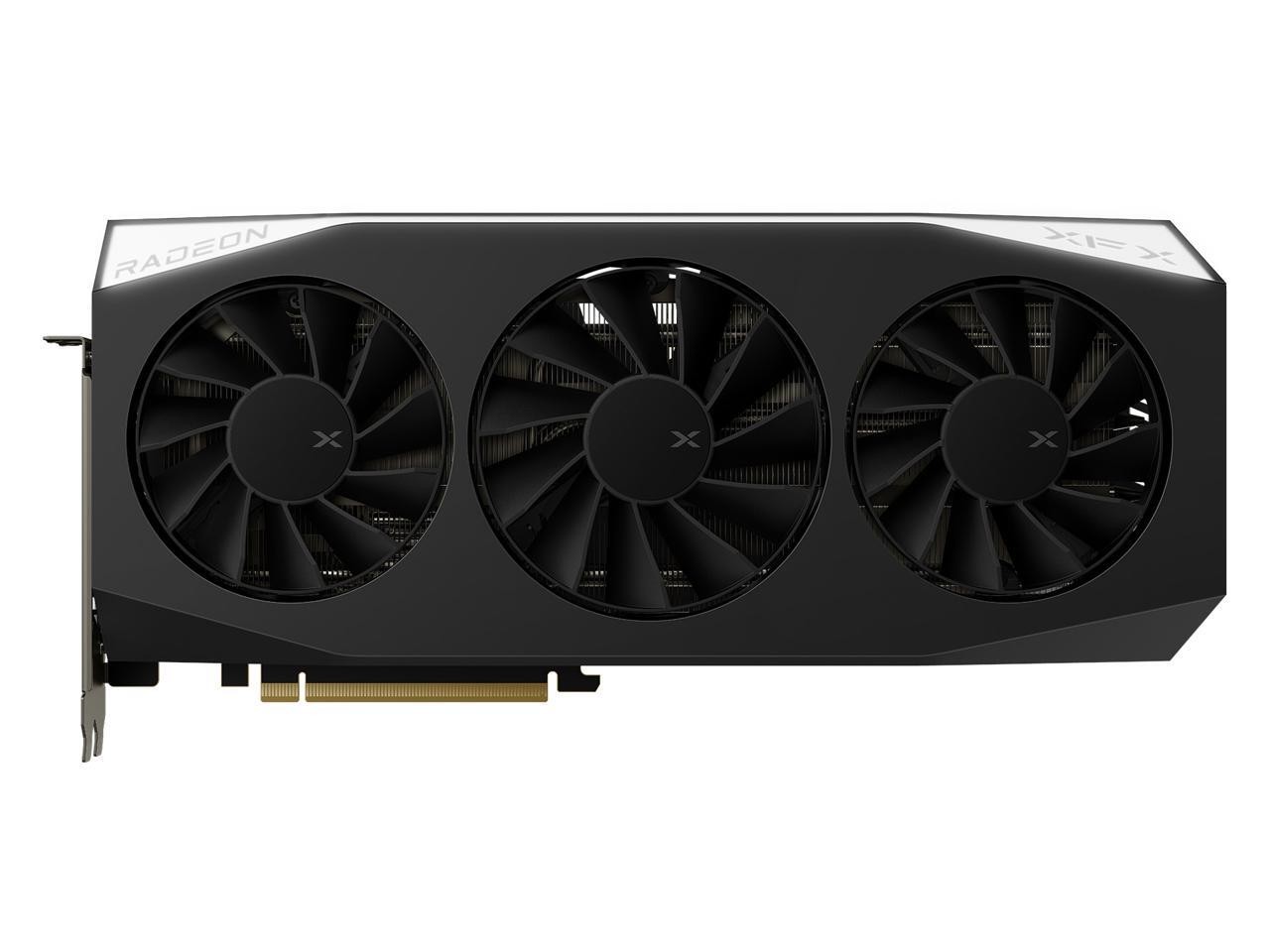
Best for Energy-conscious system builders wanting PCIe 5.0
Wins8 / 15 
Best for Users prioritizing higher compute power and memory bandwidth
Wins7 / 15
Biggest differences
Memory bus width
AMD Radeon RX 7800 XT leads
2×
higher is better
- AMD Radeon RX 9060 XT 16GB128 bit
- AMD Radeon RX 7800 XT256 bit
Memory bandwidth
AMD Radeon RX 7800 XT leads
1.95×
higher is better
- AMD Radeon RX 9060 XT 16GB320 GB/s
- AMD Radeon RX 7800 XT624 GB/s
Shader cores
AMD Radeon RX 7800 XT leads
+88%
higher is better
- AMD Radeon RX 9060 XT 16GB2,048 cores
- AMD Radeon RX 7800 XT3,840 cores
Board power
AMD Radeon RX 9060 XT 16GB leads
−39%
lower is better
- AMD Radeon RX 9060 XT 16GB160 W
- AMD Radeon RX 7800 XT263 W
Where each one wins
AMD Radeon RX 9060 XT 16GB
- Launch price
- Boost clock
- Memory speed
- Board power
- Recommended PSU
- PCIe version
- HDMI version
- DisplayPort version
AMD Radeon RX 7800 XT
- Shader cores
- FP32 compute
- Memory bus width
- Memory bandwidth
- Last-level cache
- DisplayPort outputs
- Max displays
What both have
- Video memory16 GB
- Memory typeGddr6
- Power connectors8-pin
- PCIe lanes16 lanes
- HDMI outputs1 ports
- Hardware encodeH.264, HEVC, AV1
Every spec
Red marks the better value in each row.
| Spec | AMD Radeon RX 9060 XT 16GB | AMD Radeon RX 7800 XT |
|---|---|---|
| Overview | ||
| Release date | 2025-06 | 2023-09 |
| Launch price | 349 USD1 | 499 USD |
| Graphics chip | ||
| Architecture | Rdna 4 | Rdna 3 |
| Shader cores | 2,048 cores | 3,840 cores |
| Boost clock | 3,130 MHz | 2,430 MHz |
| Base clock | Not published | 1,295 MHz |
| FP32 compute | 25.6 TFLOPS | 37.3 TFLOPS |
| Memory | ||
| Video memory | 16 GB | 16 GB |
| Memory type | Gddr6 | Gddr6 |
| Memory bus width | 128 bit | 256 bit |
| Memory bandwidth | 320 GB/s | 624 GB/s |
| Memory speed | 20 Gbps | 19.5 Gbps |
| Last-level cache | 32 MB | 64 MB |
| Power | ||
| Board power | 160 W | 263 W |
| Recommended PSU | 450 W | 700 W |
| Power connectors | 8-pin | 8-pin |
| Interface | ||
| PCIe version | 5.0 | 4.0 |
| PCIe lanes | 16 lanes | 16 lanes |
| Display outputs | ||
| HDMI version | 2.1b | 2.1a2 |
| DisplayPort version | 2.1a | 2.13 |
| HDMI outputs | 1 ports4 | 1 ports |
| DisplayPort outputs | 2 ports5 | 3 ports |
| Max displays | 3 displays | 4 displays |
| Video engine | ||
| Hardware encode | H.264, HEVC, AV1 | H.264, HEVC, AV1 |
| Video encoders | Not published | Not published |
| Size | ||
| Card length | Not published | 267 mm |
| Card height | Not published | Not published |
| Slot width | Not published | 2.5 slots |
Notes on 5 values — test conditions and caveats
- 1AMD Radeon RX 9060 XT 16GB, Launch price: Launch MSRP was $349, but most 16GB models initially sold higher; Tom's Hardware saw them starting at $389.
- 2AMD Radeon RX 7800 XT, HDMI version: AMD's spec page lists HDMI 2.1; its own press release and Notebookcheck state HDMI 2.1a.
- 3AMD Radeon RX 7800 XT, DisplayPort version: Notebookcheck lists the DisplayPort 2.1 link rate as UHBR13.5; AMD notes DP 2.1 support depends on AIB designs.
- 4AMD Radeon RX 9060 XT 16GB, HDMI outputs: AMD sells no reference card; this is the reference-design I/O. Partner cards can differ (Sapphire Pulse: 2 HDMI, 1 DP).
- 5AMD Radeon RX 9060 XT 16GB, DisplayPort outputs: AMD sells no reference card; this is the reference-design I/O. Partner cards can differ (Sapphire Pulse: 2 HDMI, 1 DP).
Performance and Compute
The RX 7800 XT features 3,840 shader cores and delivers 37.3 TFLOPS of FP32 compute power, coming out ahead in raw processing capability. Meanwhile, the newer 9060 XT counters with a much higher boost clock of 3,130 MHz.
Buyers focused on raw multi-core compute numbers will find the older card stronger, while the newer model relies on clock speed advantages within its Rdna 4 architecture.
Memory and Interface
While both cards pack 16 GB of GDDR6 memory, the RX 7800 XT utilizes a wider 256-bit memory bus to deliver 624 GB/s of bandwidth and features 64 MB of last-level cache. The 9060 XT uses a narrower 128-bit bus with 32 MB of cache, though it achieves a slightly faster memory speed of 20 Gbps.
The older card wins out on memory bandwidth and cache size, which helps maintain high-resolution performance, but the newer model introduces PCIe 5.0 support.
Power and System Requirements
The RX 9060 XT 16GB requires a board power of just 160 W and a recommended power supply unit of 450 W, making it far easier on your system. By comparison, the RX 7800 XT draws 263 W and calls for a 700 W power supply.
Lower power draw means less heat and lower electricity costs, allowing builders to use a more modest power supply and simpler cooling setups.
The Verdict
Buy the AMD Radeon RX 9060 XT 16GB if you want lower power consumption and a modern PCIe 5.0 interface. Buy the AMD Radeon RX 7800 XT if you need higher raw compute performance and a wider memory bus.
Where to buy
AMD Radeon RX 9060 XT 16GB
Best for Energy-conscious system builders wanting PCIe 5.0
AMD Radeon RX 7800 XT
Best for Users prioritizing higher compute power and memory bandwidth
FAQ
What are the power supply requirements for these cards?
The RX 9060 XT 16GB requires a 450 W power supply, whereas the RX 7800 XT requires a 700 W power supply.
Do both graphics cards support AV1 hardware encoding?
Yes, both models feature hardware encode support for H.264, HEVC, and AV1.
How do their memory capacities compare?
Both cards are equipped with 16 GB of GDDR6 video memory.
Which card has a wider memory bus?
The RX 7800 XT features a 256-bit memory bus, while the RX 9060 XT 16GB uses a 128-bit bus.
Spotted something wrong? Tap the next to any section or spec group to let us know. Every report is read.


