Compare · 2 products compared
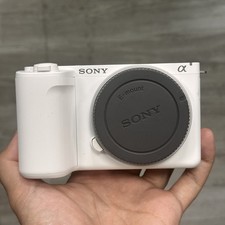
Sony ZV-E10 IIvsNikon ZR: Full-FramevsAPS-C
Both are mirrorless cameras with 10-bit log video, a fully articulated screen and no viewfinder. The Nikon ZR's full-frame sensor and 6K raw recording pull it ahead for serious video, while the Sony ZV-E10 II wins on weight and reach for the money. Sensor format is the real fork in the road.
eBay prices refresh hourly — check the listing before you buy. We may earn a commission.
 Sony
SonyBest for Travel and vlog shooters who want a small, light APS-C body
4of 15 specs better- MOST WINSNikon
Best for Full-frame video shooters who need 6K, raw and dual card slots
11of 15 specs better
Biggest differences
Memory card slots
Nikon ZR leads
2×
higher is better
- Sony ZV-E10 II1 slots
- Nikon ZR2 slots
Continuous shooting (electronic)
Nikon ZR leads
+82%
higher is better
- Sony ZV-E10 II11 fps
- Nikon ZR20 fps
Rear screen resolution
Nikon ZR leads
2.96×
higher is better
- Sony ZV-E10 II1.037 M dots
- Nikon ZR3.07 M dots
Weight
Sony ZV-E10 II leads
−40%
lower is better
- Sony ZV-E10 II377 g
- Nikon ZR630 g
Features not all of them have
High resolution pixel-shift mode
- Sony ZV-E10 II✕
- Nikon ZR✓
Where each one wins
Sony ZV-E10 II
- Effective pixels
- Weight
- Width
- Height
Nikon ZR
- High resolution pixel-shift mode
- Sensor format
- Native ISO maximum
- Continuous shooting (electronic)
- Max video resolution
- 4K max frame rate
- Raw video recording
- Screen size
- Rear screen resolution
- Memory card slots
- Depth
What both have
- Sensor typeCMOS
- Video bit depth10 bit
- Log profile support✓
- Viewfinder resolution0 M dots
- Screen articulationFully articulated
- USB charging & power delivery✓
- Minimum operating temperature0 °C
- Headphone port✓
- HDMI port typeMicro
Every spec
Red marks the better value in each row.
| Spec | Sony ZV-E10 II | Nikon ZR |
|---|---|---|
| Overview | ||
| Release date | 2024-07 | Not published |
| Launch price | 999 USD | Not published |
| Lens mount | Sony E | Nikon Z |
| High resolution pixel-shift mode | No | Yes |
| Sensor & Image | ||
| Effective pixels | 26 MP | 24.5 MP |
| Sensor format | APS-C | Full-frame |
| Native ISO maximum | 32,000 ISO | 51,200 ISO |
| In-body image stabilization | Not published | Not published |
| Sensor readout speed | Not published | Not published |
| Sensor type | CMOS | CMOS |
| Aspect ratios | Not published | 3:2, 4:3, 1:1, 16:9 |
| Lens & Autofocus | ||
| Continuous shooting (mechanical) | Not published | Not published |
| Continuous shooting (electronic) | 11 fps | 20 fps |
| Max mechanical shutter speed | 8,000 1/s | Not published |
| Pre-burst capture duration | Not published | 0 s |
| AF subject detection | Human, animal, bird | Human, animal, bird, car, train, airplane, motorcycle |
| Video | ||
| Max video resolution | 4K | 6K |
| 4K max frame rate | 60 fps | 119.88 fps |
| Video codecs | H.264, HEVC | HEVC, ProRes 422 HQ, ProRes RAW, N-RAW |
| 4K max frame rate (full width) | 60 fps | Not published |
| Raw video recording | None | Internal |
| Video bit depth | 10 bit | 10 bit |
| Log profile support | Yes | Yes |
| Video dynamic range (log) | Not published | 15 stops |
| Viewfinder & Screen | ||
| Viewfinder resolution | 0 M dots | 0 M dots |
| Viewfinder magnification | Not published | Not published |
| Screen size | 3 in | 4 in |
| Screen articulation | Fully articulated | Fully articulated |
| Rear screen resolution | 1.037 M dots | 3.07 M dots |
| Handling & Power | ||
| Battery life | 610 shots | Not published |
| Memory card slots | 1 slots | 2 slots |
| Weather sealing | Not published | Dust and drip resistant |
| Weight | 377 g | 630 g |
| Width | 114.8 mm | 134 mm |
| Height | 67.5 mm | 80.5 mm |
| Depth | 54.2 mm | 49 mm |
| USB charging & power delivery | Yes | Yes |
| Minimum operating temperature | 0 °C | 0 °C |
| Headphone port | Yes | Yes |
| HDMI port type | Micro | Micro |
Video
The Nikon ZR records 6K and pushes 4K to 119.88 fps, and it writes ProRes 422 HQ, ProRes RAW and N-RAW internally. That means raw footage straight off the card with more room to fix exposure and white balance in post, plus slow motion that holds up at 4K.
The Sony ZV-E10 II tops out at 4K 60p in H.264 and HEVC, and it cannot record raw at all. For interviews, events or anything you grade hard, the Nikon gives you footage the Sony simply cannot produce. The Sony's 10-bit log capture is still solid for straightforward 4K delivery.
Sensor and low light
The Nikon ZR uses a full-frame 24.5 MP sensor, and the Sony ZV-E10 II is APS-C at 26 MP. Full-frame gathers more light, so the Nikon holds cleaner images in dim rooms and gives shallower depth of field for that blurred-background look without a fast lens.
The Sony's smaller sensor is not a downgrade for everyone. APS-C crops tighter, which stretches the reach of any telephoto you own, and the extra megapixels leave slightly more room to crop stills. The Nikon also reaches 51,200 ISO natively against the Sony's 32,000.
Autofocus and speed
Both cameras detect people, animals and birds, but the Nikon ZR adds cars, trains, airplanes and motorcycles. If you shoot motorsport, aviation or cycling, that subject list is the difference between the camera tracking the right thing automatically and you fighting it.
The Nikon also bursts at 20 fps electronically, nearly double the Sony's 11 fps. That matters when a moment is short: more frames per second means a better chance the peak action lands on a frame.
Handling, cards and power
The Sony ZV-E10 II weighs 377 g and measures 114.8 x 67.5 x 54.2 mm, making it the one you can carry all day or hang off a small gimbal without thinking about it. The Nikon ZR is 630 g and noticeably wider at 134 mm, so it handles bigger lenses better but asks more of your bag.
The Nikon counters with two card slots and dust and drip resistance, and its 4-inch screen shows 3.07 M dots against the Sony's 3-inch, 1.037 M dot panel. Two cards give you backup or separate photo and video storage, and the bigger, sharper screen makes manual focus and framing easier outdoors.
Which is best for stills?
Neither camera is aimed at photographers first. Both have a 0 M dot viewfinder, which means no electronic viewfinder at all — you compose on the rear screen in every situation, including bright sun.
If stills are the priority, the Nikon ZR's full-frame sensor, higher native ISO and dual card slots serve a working photographer better, while the Sony ZV-E10 II's 8,000 1/s maximum mechanical shutter speed is listed and the Nikon's is not published. The Sony's lower weight makes it the easier camera to actually have with you.
The Verdict
Buy the Nikon ZR if you shoot video seriously and want full-frame low light, 6K, internal raw and dual card slots. Buy the Sony ZV-E10 II if you want a light, affordable APS-C body that still delivers 4K 60p 10-bit log footage. Choose the Nikon when image quality and footage flexibility come first. Choose the Sony when you carry the camera all day and value reach and size over sensor area.
Where to buy
Sony ZV-E10 II
Best for Travel and vlog shooters who want a small, light APS-C body
Nikon ZR
Best for Full-frame video shooters who need 6K, raw and dual card slots
FAQ
Does the Nikon ZR have a viewfinder?
No. Its viewfinder resolution is listed as 0 M dots, the same as the Sony ZV-E10 II, so both cameras are composed on the rear screen.
Can the Sony ZV-E10 II record raw video?
No. Raw video recording is listed as none on the Sony, while the Nikon ZR records raw internally.
Which camera is lighter?
The Sony ZV-E10 II at 377 g, against 630 g for the Nikon ZR.
What lenses does each camera take?
The Sony ZV-E10 II uses the Sony E mount and the Nikon ZR uses the Nikon Z mount, so the two do not share lenses.
Does the Nikon ZR have in-body image stabilization?
That figure is not published for either camera, so it cannot be compared from the specs here.
Spotted something wrong? Tap the next to any section or spec group to let us know. Every report is read.