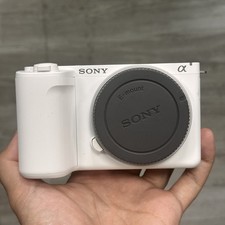
Compare · 2 products compared
Sony ZV-E10 IIvsNikon Z8: Two Very Different Cameras
Both shoot 10-bit log video with subject-detection autofocus, a headphone jack and USB-C charging, so each can anchor a small production kit. The deciding differences are the sensor and price: the Nikon Z8 pairs a full-frame stacked sensor with 8K capture, while the Sony ZV-E10 II delivers 4K in a body you can carry all day for a fraction of the cost.
eBay prices refresh hourly — check the listing before you buy. We may earn a commission.
 Sony
SonyBest for Vloggers and solo creators who want light, affordable 4K video
6of 22 specs better- MOST WINSNikon
Best for Pros shooting action, wildlife, paid stills or raw 8K video
16of 22 specs better
Biggest differences
Launch price
Sony ZV-E10 II leads
4×
lower is better
- Sony ZV-E10 II999 USD
- Nikon Z83,999.95 USD
Continuous shooting (electronic)
Nikon Z8 leads
2.73×
higher is better
- Sony ZV-E10 II11 fps
- Nikon Z830 fps
Weight
Sony ZV-E10 II leads
2.41×
lower is better
- Sony ZV-E10 II377 g
- Nikon Z8910 g
Memory card slots
Nikon Z8 leads
2×
higher is better
- Sony ZV-E10 II1 slots
- Nikon Z82 slots
Features not all of them have
High resolution pixel-shift mode
- Sony ZV-E10 II✕
- Nikon Z8✓
Where each one wins
Sony ZV-E10 II
- Launch price
- Native ISO maximum
- Weight
- Width
- Height
- Depth
Nikon Z8
- High resolution pixel-shift mode
- Effective pixels
- Sensor format
- Sensor type
- Continuous shooting (electronic)
- Max video resolution
- 4K max frame rate
- 4K max frame rate (full width)
- Raw video recording
- Viewfinder resolution
- Screen size
- Screen articulation
- Rear screen resolution
- Memory card slots
- Minimum operating temperature
- HDMI port type
What both have
- Video bit depth10 bit
- Log profile support✓
- USB charging & power delivery✓
- Headphone port✓
Every spec
Red marks the better value in each row.
| Spec | Sony ZV-E10 II | Nikon Z8 |
|---|---|---|
| Overview | ||
| Release date | 2024-07 | 2023-05 |
| Launch price | 999 USD | 3,999.95 USD |
| Lens mount | Sony E | Nikon Z |
| High resolution pixel-shift mode | No | Yes |
| Sensor & Image | ||
| Effective pixels | 26 MP | 45.7 MP |
| Sensor format | APS-C | Full-frame |
| Native ISO maximum | 32,000 ISO | 25,600 ISO |
| In-body image stabilization | Not published | 5.5 stops1 |
| Sensor readout speed | Not published | Not published |
| Sensor type | CMOS | Stacked CMOS |
| Aspect ratios | Not published | 3:2, 1:1, 16:9 |
| Lens & Autofocus | ||
| Continuous shooting (mechanical) | Not published | Not published |
| Continuous shooting (electronic) | 11 fps | 30 fps2 |
| Max mechanical shutter speed | 8,000 1/s | Not published |
| Pre-burst capture duration | Not published | 300 s3 |
| AF subject detection | Human, animal, bird | Human, animal, bird, train, airplane, motorcycle, vehicle |
| Video | ||
| Max video resolution | 4K | 8K |
| 4K max frame rate | 60 fps | 120 fps |
| Video codecs | H.264, HEVC | H.264, HEVC, ProRes 422 HQ, ProRes RAW, N-RAW |
| 4K max frame rate (full width) | 60 fps | 120 fps |
| Raw video recording | None | Internal |
| Video bit depth | 10 bit | 10 bit |
| Log profile support | Yes | Yes |
| Video dynamic range (log) | Not published | Not published |
| Viewfinder & Screen | ||
| Viewfinder resolution | 0 M dots | 3.69 M dots |
| Viewfinder magnification | Not published | 0.8 x |
| Screen size | 3 in | 3.2 in |
| Screen articulation | Fully articulated | Multi-angle4 |
| Rear screen resolution | 1.037 M dots | 2.1 M dots |
| Handling & Power | ||
| Battery life | 610 shots | Not published |
| Memory card slots | 1 slots | 2 slots |
| Weather sealing | Not published | Dust and drip resistant |
| Weight | 377 g | 910 g |
| Width | 114.8 mm | 144 mm |
| Height | 67.5 mm | 118.5 mm |
| Depth | 54.2 mm | 83 mm |
| USB charging & power delivery | Yes | Yes |
| Minimum operating temperature | 0 °C | -10 °C |
| Headphone port | Yes | Yes |
| HDMI port type | Micro | Full-size |
Notes on 4 values — test conditions and caveats
- 1Nikon Z8, In-body image stabilization: The 6.0-stop figure applies only with Synchro VR-compatible Nikkor Z lenses; the standard body rating is 5.5 stops.
- 2Nikon Z8, Continuous shooting (electronic): Full-resolution JPEG bursts reach 30 fps; 14-bit RAW bursts top out at 20 fps.
- 3Nikon Z8, Pre-burst capture duration: The 300 s Pre-Release Capture buffer arrived with firmware 2.0; launch firmware allowed 30 s.
- 4Nikon Z8, Screen articulation: Nikon's 4-axis monitor tilts both vertically and horizontally but does not swing out like a fully articulated screen.
Sensor and stills
The Nikon Z8's 45.7 MP full-frame stacked sensor is the bigger, faster chip, and it shows in three places: more cropping room, cleaner low-light files, and a sensor that reads out fast enough to make an electronic shutter practical for moving subjects. The Sony ZV-E10 II's 26 MP APS-C sensor is smaller, so its field of view is tighter with the same lens and it collects less light.
That gap matters most for prints, heavy cropping and paid stills work. If you mostly shoot handheld, the Sony's lighter body and higher 32,000 ISO ceiling soften the disadvantage, but the Z8's in-body stabilization (5.5 stops, or 6.0 stops with Synchro VR-compatible Nikkor Z lenses) keeps more handheld frames sharp.
Video
The Nikon Z8 records 8K and 4K at up to 120 fps, including internal raw in ProRes RAW and N-RAW. That is what makes it a serious cinema-adjacent tool: raw footage and high frame rates hold up through color grading and slow motion in a way the Sony cannot match. The Sony ZV-E10 II tops out at 4K 60p with no raw option, so it is best treated as a finished-delivery camera.
For most solo creators, the Sony's 4K 60p 10-bit S-Log3 footage is still more than enough for YouTube, social and client web work. The Z8's extra resolution and raw capture only pay off if your workflow already finishes in DaVinci or Premiere and you need the latitude.
Autofocus and burst
Both cameras detect humans, animals and birds. The Nikon Z8 adds trains, airplanes, motorcycles and vehicles, and bursts at 30 fps full-resolution JPEG, dropping to 20 fps for 14-bit RAW. The Sony ZV-E10 II shoots 11 fps electronically with no published mechanical figure.
That makes the Z8 the only real action and wildlife option here. The Sony is fine for portraits, product, vlogging and casual pets. Also note the Z8's pre-burst capture holds 300 seconds with firmware 2.0 (30 seconds at launch), which is genuinely useful when waiting on unpredictable movement.
Body, controls and power
This is where the Sony ZV-E10 II wins on paper and in a bag. At 377 g it is less than half the Nikon Z8's 910 g, and it is noticeably smaller in every dimension. It also publishes a 610-shot battery figure, while the Z8's CIPA rating is not published, so a Z8 owner should plan on spare batteries for long days.
The Z8 answers with two card slots, dust and drip resistance, a full-size HDMI port and operation down to -10 °C. The Sony has one slot, no published sealing and stops at 0 °C. For rain, dust, cold or paid shoots needing instant backup, only the Nikon is the safe pick.
Which is best for sports and wildlife?
The Nikon Z8. Stacked sensor, 30 fps bursts, vehicle and aircraft subject detection, pre-burst capture and weather sealing all point the same direction. The Sony ZV-E10 II simply is not built for that workload.
If your subjects sit still or move slowly, the Sony does the job and saves you thousands. Buying the Z8 for portraits would be spending on capability you would rarely touch.
Viewfinder and screen
The Sony ZV-E10 II has no viewfinder, so you compose on a 3-inch fully articulated screen. The Nikon Z8 offers a 3.69 M-dot EVF and a larger 3.2-inch multi-angle monitor with four times the dot count. The Z8's screen tilts vertically and horizontally but does not swing out; the Sony's does.
For bright outdoor shooting, the EVF on the Z8 is the difference between guessing and seeing. For vlogging and self-recording, the Sony's swing-out screen is the more natural fit.
The Verdict
Buy the Sony ZV-E10 II if you are a solo creator or vlogger who needs lightweight 4K 10-bit footage and does not need an EVF or weather sealing. Buy the Nikon Z8 if you shoot action, wildlife, cinema-style video or paid stills and need raw capture, dual cards and a sealed body. The cost gap is enormous, so buy only the capability you will actually use.
Where to buy
Sony ZV-E10 II
Best for Vloggers and solo creators who want light, affordable 4K video
Nikon Z8
Best for Pros shooting action, wildlife, paid stills or raw 8K video
FAQ
Does the Sony ZV-E10 II have in-body stabilization?
It is not published. The Nikon Z8 does have it, rated 5.5 stops (6.0 with Synchro VR-compatible Nikkor Z lenses). If handheld stability matters, that favors the Z8.
Can the Sony ZV-E10 II record 8K or raw video?
No. It tops out at 4K and has no raw recording. The Nikon Z8 records 8K and internal raw in ProRes RAW and N-RAW.
Which has better autofocus for fast subjects?
The Nikon Z8. It detects trains, airplanes, motorcycles and vehicles on top of human, animal and bird subjects, and bursts at 30 fps full-resolution JPEG.
How much does each camera cost at launch?
The Sony ZV-E10 II launched at $999 and the Nikon Z8 at $3,999.95. That roughly four-times difference is the biggest single factor in choosing between them.
Does the Nikon Z8 have a fully articulated screen?
No, its 3.2-inch display is multi-angle: it tilts vertically and horizontally but does not swing out. The Sony ZV-E10 II does have a fully articulated screen.
Spotted something wrong? Tap the next to any section or spec group to let us know. Every report is read.