Compare · 2 products compared
Sony ZV-E10 IIvsFujifilm X100VI: Which to Buy
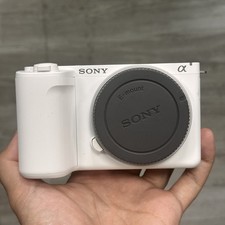
Both are compact APS-C cameras with 10-bit log video, USB-C charging and a single card slot. The split comes down to lenses: the Sony ZV-E10 II takes E-mount glass and shoots 4K at 60p, while the Fujifilm X100VI is a fixed-lens, 40.2 MP stills machine with in-body stabilization and a viewfinder.
eBay prices refresh hourly — check the listing before you buy. We may earn a commission.
- MOST WINS
 Sony
SonyBest for Video-first shooters who want E-mount lens choices, a headphone jack and long battery life
10of 15 specs better - Fujifilm
Best for Stills-focused buyers who want 40.2 MP, IBIS and a viewfinder in a fixed-lens camera
5of 15 specs better
Biggest differences
Battery life
Sony ZV-E10 II leads
+91%
higher is better
- Sony ZV-E10 II610 shots
- Fujifilm X100VI320 shots
Native ISO maximum
Sony ZV-E10 II leads
2.5×
higher is better
- Sony ZV-E10 II32,000 ISO
- Fujifilm X100VI12,800 ISO
Effective pixels
Fujifilm X100VI leads
+55%
higher is better
- Sony ZV-E10 II26 MP
- Fujifilm X100VI40.2 MP
Max mechanical shutter speed
Sony ZV-E10 II leads
2×
higher is better
- Sony ZV-E10 II8,000 1/s
- Fujifilm X100VI4,000 1/s
Features not all of them have
Headphone port
- Sony ZV-E10 II✓
- Fujifilm X100VI✕
Where each one wins
Sony ZV-E10 II
- Native ISO maximum
- Max mechanical shutter speed
- 4K max frame rate
- Screen articulation
- Battery life
- Weight
- Width
- Height
- Depth
- Headphone port
Fujifilm X100VI
- Effective pixels
- Continuous shooting (electronic)
- Max video resolution
- Viewfinder resolution
- Rear screen resolution
What both have
- Sensor formatAPS-C
- Sensor typeCMOS
- Video codecsH.264, HEVC
- Video bit depth10 bit
- Log profile support✓
- Screen size3 in
- Memory card slots1 slots
- USB charging & power delivery✓
- Minimum operating temperature0 °C
- HDMI port typeMicro
Every spec
Red marks the better value in each row.
| Spec | Sony ZV-E10 II | Fujifilm X100VI |
|---|---|---|
| Overview | ||
| Release date | 2024-07 | Not published |
| Launch price | 999 USD | Not published |
| Lens mount | Sony E | Fixed lens |
| High resolution pixel-shift mode | No | — |
| Sensor & Image | ||
| Effective pixels | 26 MP | 40.2 MP |
| Sensor format | APS-C | APS-C |
| Native ISO maximum | 32,000 ISO | 12,800 ISO |
| In-body image stabilization | Not published | 6 stops1 |
| Sensor readout speed | Not published | Not published |
| Sensor type | CMOS | CMOS |
| Aspect ratios | Not published | 3:2, 4:3, 1:1, 16:9 |
| Lens & Autofocus | ||
| Continuous shooting (mechanical) | Not published | 11 fps |
| Continuous shooting (electronic) | 11 fps | 13 fps |
| Max mechanical shutter speed | 8,000 1/s | 4,000 1/s |
| Pre-burst capture duration | Not published | 0 s2 |
| AF subject detection | Human, animal, bird | Human, animal, bird, car, train, airplane, motorcycle |
| Video | ||
| Max video resolution | 4K | 6K |
| 4K max frame rate | 60 fps | 59.94 fps |
| Video codecs | H.264, HEVC | H.264, HEVC |
| 4K max frame rate (full width) | 60 fps | — |
| Raw video recording | None | — |
| Video bit depth | 10 bit | 10 bit |
| Log profile support | Yes | Yes |
| Video dynamic range (log) | Not published | Not published |
| Viewfinder & Screen | ||
| Viewfinder resolution | 0 M dots | 3.69 M dots |
| Viewfinder magnification | Not published | 0.66 x |
| Screen size | 3 in | 3 in |
| Screen articulation | Fully articulated | Tilting |
| Rear screen resolution | 1.037 M dots | 1.62 M dots |
| Handling & Power | ||
| Battery life | 610 shots | 320 shots |
| Memory card slots | 1 slots | 1 slots |
| Weather sealing | Not published | None3 |
| Weight | 377 g | 521 g |
| Width | 114.8 mm | 128 mm |
| Height | 67.5 mm | 74.8 mm |
| Depth | 54.2 mm | 55.3 mm |
| USB charging & power delivery | Yes | Yes |
| Minimum operating temperature | 0 °C | 0 °C |
| Headphone port | Yes | No |
| HDMI port type | Micro | Micro |
Notes on 3 values — test conditions and caveats
- 1Fujifilm X100VI, In-body image stabilization: 6.0 stops of shake compensation is achieved when using the LCD or EVF.
- 2Fujifilm X100VI, Pre-burst capture duration: Pre-shot buffers frames while the shutter is half-pressed (e.g., 20 frames at 20fps = 1 second), not a fixed seconds setting.
- 3Fujifilm X100VI, Weather sealing: The camera body itself isn't weather-sealed; weather resistance requires the optional AR-X100 adapter ring and PRF-49 filter.
Stills and detail
The Fujifilm X100VI resolves 40.2 MP against the Sony ZV-E10 II's 26 MP. That extra resolution matters if you crop hard or print large, and it is the main reason a stills-first buyer picks the X100VI.
The Sony counters with a higher native ISO ceiling of 32,000, which helps in dim rooms where you would rather not push exposure in editing. If most of your shooting happens after dark without a tripod or flash, that headroom is a real advantage.
Video
The Sony ZV-E10 II shoots 4K at 60 fps and holds that 60 fps across the full sensor width, so slow-motion 4K keeps the whole frame. The X100VI reaches 6K resolution but tops out at 59.94 fps in 4K. For frame-rate consistency at 4K, the Sony is the simpler tool.
The X100VI's 6K mode wins on pure resolution, which suits buyers who deliver detail-rich footage or want to reframe in post. Both cameras record 10-bit video and support log profiles, so grades hold up similarly.
Stabilization and the lens question
The X100VI has in-body image stabilization rated at 6 stops, which is the bigger deal for handheld work: it steadies stills and video alike. Sony does not publish an IBIS figure for the ZV-E10 II, so handheld shooters should not assume comparable support.
The Sony's E-mount is the counterweight. You can change lenses, which the X100VI's fixed lens forbids. If your work spans wide, telephoto or specialty glass, that flexibility decides it. The X100VI wins the reverse case: one lens, stabilized, done.
Viewfinder, screen and controls
The Fujifilm X100VI has a 3.69 M-dot electronic viewfinder at 0.66x magnification. The Sony ZV-E10 II has no viewfinder at all. If you compose at eye level, shoot in bright sun, or prefer the stability of a camera against your face, only the X100VI gives you that.
The Sony answers with a fully articulated screen, which flips to face forward. That is the video-first layout: vlogging, self-recording and awkward angles. The X100VI's tilting screen helps for low and high shots but will not face the subject.
Battery, size and ports
The Sony ZV-E10 II is rated for 610 shots against the X100VI's 320, and it is lighter and smaller on every dimension. Those two facts compound: less weight in the bag, fewer spare batteries. For travel or all-day events, the Sony lasts longer and carries easier.
The Sony also includes a headphone port, which the X100VI lacks. If you monitor audio while recording, that alone can be decisive. Both charge and run over USB-C, and both use micro HDMI.
Autofocus and subject tracking
Both cameras detect humans, animals and birds. The Fujifilm X100VI adds cars, trains, airplanes and motorcycles, so it covers more subject types without changing settings.
If your subjects are people, pets or wildlife, the two are effectively level here. If you shoot motorsport or aviation, the X100VI's extra detection modes save fiddling in the moment.
The Verdict
Buy the Sony ZV-E10 II if you shoot video, want to change lenses, need a headphone jack, or want a long battery and a forward-facing screen. Buy the Fujifilm X100VI if you want maximum stills resolution, in-body stabilization and a real viewfinder in one fixed-lens body. Buy the Sony if handheld video at 4K 60p and portability decide it. Buy the X100VI if you shoot stills first and will not miss interchangeable glass.
Where to buy
Sony ZV-E10 II
Best for Video-first shooters who want E-mount lens choices, a headphone jack and long battery life
Fujifilm X100VI
Best for Stills-focused buyers who want 40.2 MP, IBIS and a viewfinder in a fixed-lens camera
FAQ
Does the Sony ZV-E10 II have a viewfinder?
No. Its viewfinder resolution is listed as 0 M dots, so you compose on the 3-inch screen. The Fujifilm X100VI has a 3.69 M-dot EVF at 0.66x.
Which camera is better for low light?
The Sony ZV-E10 II, on paper, with a native ISO ceiling of 32,000 versus 12,800 on the X100VI. The X100VI's 6-stop IBIS can offset that for stationary subjects.
Can the Fujifilm X100VI use different lenses?
No. It has a fixed lens, while the Sony ZV-E10 II uses the Sony E mount. That is the single biggest functional difference between them.
Is the Fujifilm X100VI weather-sealed?
Not by itself. Weather resistance requires the optional AR-X100 adapter ring and PRF-49 filter. Sony does not publish a weather-sealing spec for the ZV-E10 II.
Which has the better burst rate?
The X100VI is slightly faster electronically at 13 fps versus 11 fps on the Sony. The Sony's mechanical shutter tops out at 8,000 1/s against 4,000 1/s on the X100VI.
Spotted something wrong? Tap the next to any section or spec group to let us know. Every report is read.