Compare · 4 of 4 products
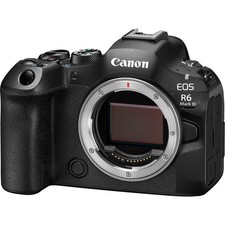
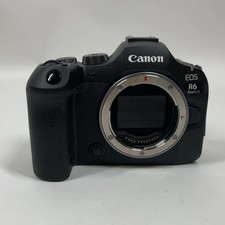
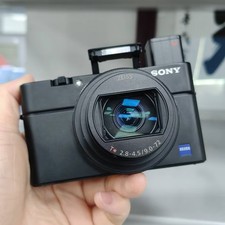
Canon EOS R6 Mark IIIvsPanasonic LUMIX S1IIvsNikon Z8vsSony RX100 VII
eBay prices refresh hourly — check the listing before you buy. We may earn a commission.
- ×
 Canon11of 28 specs better
 - ×Panasonic9of 28 specs better
- MOST WINS×Nikon15of 28 specs better
- ×Sony5of 28 specs better
Biggest differences
Continuous shooting (electronic)
Panasonic LUMIX S1II leads
3.5×
higher is better
- Canon EOS R6 Mark III40 fps
- Panasonic LUMIX S1II70 fps
- Nikon Z830 fps
- Sony RX100 VII20 fps
Weight
Sony RX100 VII leads
3.01×
lower is better
- Canon EOS R6 Mark III699 g
- Panasonic LUMIX S1II800 g
- Nikon Z8910 g
- Sony RX100 VII302 g
Pre-burst capture duration
Nikon Z8 leads
600×
higher is better
- Canon EOS R6 Mark III0.5 s
- Panasonic LUMIX S1II1.5 s
- Nikon Z8300 s
- Sony RX100 VIINot published
Viewfinder resolution
Panasonic LUMIX S1II leads
2.44×
higher is better
- Canon EOS R6 Mark III3.69 M dots
- Panasonic LUMIX S1II5.76 M dots
- Nikon Z83.69 M dots
- Sony RX100 VII2.36 M dots
Features not all of them have
High resolution pixel-shift mode
- ✕
- ✓
- ✓
- ?
Where each one wins
Canon EOS R6 Mark III
- Launch price
- Sensor format
- Native ISO maximum
- In-body image stabilization
- Sensor readout speed
- Continuous shooting (mechanical)
- Max mechanical shutter speed
- 4K max frame rate (full width)
- Raw video recording
- Battery life
- HDMI port type
Panasonic LUMIX S1II
- High resolution pixel-shift mode
- Sensor format
- Continuous shooting (electronic)
- Max mechanical shutter speed
- 4K max frame rate
- Raw video recording
- Viewfinder resolution
- Minimum operating temperature
- HDMI port type
Nikon Z8
- High resolution pixel-shift mode
- Effective pixels
- Sensor format
- Sensor type
- Pre-burst capture duration
- Max video resolution
- 4K max frame rate
- 4K max frame rate (full width)
- Raw video recording
- Viewfinder magnification
- Screen size
- Screen articulation
- Rear screen resolution
- Minimum operating temperature
- HDMI port type
Sony RX100 VII
- Sensor type
- Weight
- Width
- Height
- Depth
What all 4 have
- Log profile support✓
- USB charging & power delivery✓
Every spec
Red marks the better value in each row.
Overview
Release date
- 2025-11
- 2025-05
- 2023-05
- Not published
Launch price
- 2,799 USD
- 3,199 USD
- 3,999.95 USD
- Not published
Lens mount
- Canon RF
- L-Mount
- Nikon Z
- Fixed lens
High resolution pixel-shift mode
- No
- Yes1
- Yes
- Not published
Sensor & Image
Effective pixels
- 32.5 MP
- 24.1 MP
- 45.7 MP
- 20.1 MP
Sensor format
- Full-frame
- Full-frame
- Full-frame
- 1-inch
Native ISO maximum
- 64,000 ISO
- 51,200 ISO
- 25,600 ISO
- 12,800 ISO
Sensor readout speed
- 13.2 ms
- 14.6 ms5
- Not published
- Not published
Sensor type
- CMOS
- Partially-stacked CMOS
- Stacked CMOS
- Stacked CMOS
Aspect ratios
- 3:2
- 3:2, 4:3, 1:1, 16:9, 2:1, 65:24
- 3:2, 1:1, 16:9
- 3:2, 4:3, 1:1, 16:96
Lens & Autofocus
Continuous shooting (mechanical)
- 12 fps
- 10 fps
- Not published
- 10 fps7
Max mechanical shutter speed
- 8,000 1/s
- 8,000 1/s
- Not published
- 2,000 1/s
Video
Max video resolution
- 7K14
- 6K
- 8K
- 4K
4K max frame rate
- 119.9 fps
- 120 fps15
- 120 fps
- 30 fps
Video codecs
- H.264, HEVC, XF-AVC, XF-HEVC
- H.264, HEVC, ProRes 422, ProRes RAW
- H.264, HEVC, ProRes 422 HQ, ProRes RAW, N-RAW
- H.26416
Raw video recording
- Internal
- Internal
- Internal
- None19
Video bit depth
- 10 bit
- 10 bit
- 10 bit
- Not published
Log profile support
- Yes
- Yes
- Yes
- Yes20
Video dynamic range (log)
- 15 stops21
- 15 stops
- Not published
- Not published
Viewfinder & Screen
Handling & Power
Memory card slots
- 2 slots
- 2 slots
- 2 slots
- Not published
Weather sealing
- Dust and drip resistant
- Dust and drip resistant
- Dust and drip resistant
- Not published
Weight
- 699 g
- 800 g
- 910 g
- 302 g
Width
- 138.4 mm
- 134 mm
- 144 mm
- 101.6 mm
Height
- 98.4 mm
- 102 mm
- 118.5 mm
- 58.1 mm
Depth
- 88.4 mm
- 92 mm
- 83 mm
- 42.8 mm
Minimum operating temperature
- 0 °C
- -10 °C
- -10 °C
- 0 °C
Headphone port
- Yes
- Yes
- Yes
- Not published
HDMI port type
- Full-size
- Full-size
- Full-size
- Micro
Notes on 27 values — test conditions and caveats
- 1Panasonic LUMIX S1II, High resolution pixel-shift mode: The full 96MP composite needs a tripod; handheld shooting caps at 48MP.
- 2Canon EOS R6 Mark III, In-body image stabilization: 8.5 stops is Canon's best-case center rating with certain RF lenses; peripheral and other lenses see less, down to 7.5 stops.
- 3Nikon Z8, In-body image stabilization: The 6.0-stop figure applies only with Synchro VR-compatible Nikkor Z lenses; the standard body rating is 5.5 stops.
- 4Sony RX100 VII, In-body image stabilization: Sony rates the optical (lens-shift) SteadyShot at 4.0 stops at the 200 mm telephoto end, not a body-only CIPA figure.
- 5Panasonic LUMIX S1II, Sensor readout speed: Measured by DPReview using the electronic shutter in 14-bit stills mode.
- 6Sony RX100 VII, Aspect ratios: 4:3, 16:9 and 1:1 sizes are in-camera crop modes over the native 3:2 sensor area.
- 7Sony RX100 VII, Continuous shooting (mechanical): The 'Hi' burst setting is electronic-shutter only; 10 fps ('Mid') is the fastest mechanical-shutter continuous rate.
- 8Nikon Z8, Continuous shooting (electronic): Full-resolution JPEG bursts reach 30 fps; 14-bit RAW bursts top out at 20 fps.
- 9Sony RX100 VII, Continuous shooting (electronic): Blackout-free 20 fps continuous includes AF/AE tracking; the separate 'Single Burst' mode takes 7 shots at up to 90 fps.
- 10Canon EOS R6 Mark III, Pre-burst capture duration: Works only in the 40 fps electronic-shutter mode; Canon states it as up to 20 frames.
- 11Nikon Z8, Pre-burst capture duration: The 300 s Pre-Release Capture buffer arrived with firmware 2.0; launch firmware allowed 30 s.
- 12Canon EOS R6 Mark III, AF subject detection: Car detection is tuned for racing cars, per Canon.
- 13Sony RX100 VII, AF subject detection: Maker names only human and animal recognition (Eye AF / Real-time Tracking); no bird or vehicle categories are listed.
- 14Canon EOS R6 Mark III, Max video resolution: 7K is available only in RAW Video mode; standard MP4 recording tops out at 4K.
- 15Panasonic LUMIX S1II, 4K max frame rate: Maximum 120 fps in 4K requires recording in MOV format at a 24.00Hz system frequency.
- 16Sony RX100 VII, Video codecs: Both XAVC S and AVCHD recording use MPEG-4 AVC/H.264; there is no HEVC/H.265 option.
- 17Canon EOS R6 Mark III, 4K max frame rate (full width): 4K 120p uses the full width but is not oversampled; oversampled 4K tops out at 60p.
- 18Panasonic LUMIX S1II, 4K max frame rate (full width): 4K at 120fps requires an approximate 1.24x sensor crop; 60fps is the fastest at full sensor width.
- 19Sony RX100 VII, Raw video recording: Sony's movie-format list contains only XAVC S (H.264) and AVCHD; no raw video output is offered.
- 20Sony RX100 VII, Log profile support: S-Log2, S-Log3 and HLG log gammas are selectable via Picture Profile presets PP1–PP10.
- 21Canon EOS R6 Mark III, Video dynamic range (log): Canon's claim of 15+ stops in its Canon Log profiles, not a lab measurement.
- 22Nikon Z8, Screen articulation: Nikon's 4-axis monitor tilts both vertically and horizontally but does not swing out like a fully articulated screen.
- 23Sony RX100 VII, Screen articulation: Screen tilts up about 180° for selfies and down about 90°; it does not swing outward like a fully articulated display.
- 24Canon EOS R6 Mark III, Battery life: 620 shots is CIPA's rating using the rear LCD (not the viewfinder) at 23°C; real-world results vary.
- 25Sony RX100 VII, Battery life: 260 shots assume default monitor settings; Sony also lists 310 shots when 'Auto Monitor Off' is set to 2 s.
- 26Canon EOS R6 Mark III, USB charging & power delivery: USB-C charging and power need a capable USB-PD source such as Canon's PD-E2; not every power bank works.
- 27Sony RX100 VII, USB charging & power delivery: In-body USB charging and power supply work over the Multi/Micro-USB (USB 2.0) terminal — not USB-C.
Where to buy
Canon EOS R6 Mark III
Panasonic LUMIX S1II
Nikon Z8
Sony RX100 VII