Compare · 4 products compared
Canon EOS R6 Mark IIIvs3 rivals: specs compared
4 digital cameras lined up on the specs we could confirm from the makers' pages and independent reviews. Launch prices run from $2,500 (Nikon Z6III) to $2,899 (Sony a7 V).
eBay prices refresh hourly — check the listing before you buy. We may earn a commission.
- ×
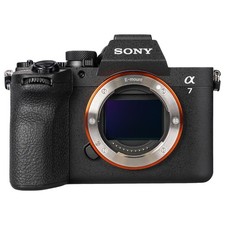
 Sony
SonyBest for Effective pixels and Battery life
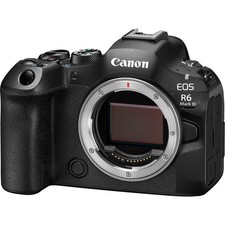
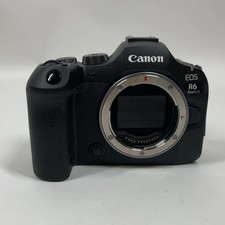
9of 26 specs better - ×Canon
Best for In-body image stabilization and Sensor readout speed
7of 26 specs better - MOST WINS×Nikon
Best for Continuous shooting (electronic) and Viewfinder resolution
14of 26 specs better - ×Sony
Best for Effective pixels and Weight
5of 26 specs better
Biggest differences
Continuous shooting (electronic)
Nikon Z6III leads
6×
higher is better
- Sony a7 V30 fps
- Canon EOS R6 Mark III40 fps
- Nikon Z6III60 fps
- Sony a7 IV10 fps
4K max frame rate (full width)
Canon EOS R6 Mark III leads
4×
higher is better
- Sony a7 V60 fps
- Canon EOS R6 Mark III120 fps
- Nikon Z6III60 fps
- Sony a7 IV30 fps
Battery life
Sony a7 V leads
+92%
higher is better
- Sony a7 V750 shots
- Canon EOS R6 Mark III620 shots
- Nikon Z6III390 shots
- Sony a7 IV580 shots
Viewfinder resolution
Nikon Z6III leads
+56%
higher is better
- Sony a7 V3.69 M dots
- Canon EOS R6 Mark III3.69 M dots
- Nikon Z6III5.76 M dots
- Sony a7 IV3.69 M dots
Features not all of them have
High resolution pixel-shift modeonly Nikon Z6III
- ✕
- ✕
- ✓
- ✕
Where each one wins
Sony a7 V
- Effective pixels
- Sensor type
- Pre-burst capture duration
- Screen size
- Screen articulation
- Rear screen resolution
- Battery life
- Width
- Height
Canon EOS R6 Mark III
- Native ISO maximum
- In-body image stabilization
- Sensor readout speed
- Max video resolution
- 4K max frame rate (full width)
- Raw video recording
- Video dynamic range (log)
Nikon Z6III
- Launch price
- High resolution pixel-shift mode
- Native ISO maximum
- Sensor type
- Continuous shooting (mechanical)
- Continuous shooting (electronic)
- Pre-burst capture duration
- 4K max frame rate
- Raw video recording
- Viewfinder resolution
- Viewfinder magnification
- Screen size
- Rear screen resolution
- Minimum operating temperature
Sony a7 IV
- Effective pixels
- Video dynamic range (log)
- Weight
- Height
- Depth
What all 4 have
- Sensor formatFull-frame
- Max mechanical shutter speed8,000 1/s
- Video bit depth10 bit
- Log profile support✓
- Memory card slots2 slots
- Weather sealingDust and drip resistant
- USB charging & power delivery✓
- Headphone port✓
- HDMI port typeFull-size
Every spec
Red marks the better value in each row.
Overview
Sensor & Image
Effective pixels
- 33 MP
- 32.5 MP
- 24.5 MP
- 33 MP
Sensor format
- Full-frame
- Full-frame
- Full-frame
- Full-frame
Sensor readout speed
- 15 ms
- 13.2 ms
- 14.3 ms
- Not published
Sensor type
- Partially-stacked CMOS
- CMOS
- Partially-stacked CMOS
- CMOS
Aspect ratios
- 3:2, 4:3, 1:1, 16:9
- 3:2
- 3:2, 1:1, 16:9
- 3:2
Lens & Autofocus
Max mechanical shutter speed
- 8,000 1/s
- 8,000 1/s
- 8,000 1/s
- 8,000 1/s
AF subject detection
- Human, animal, bird, insect, car, train, airplane
- Human, animal, bird, car, train, airplane, motorcycle15
- Human, animal, bird, car, train, airplane, motorcycle
- Human, animal, bird
Video
Viewfinder & Screen
Handling & Power
Memory card slots
- 2 slots
- 2 slots
- 2 slots
- 2 slots
Weather sealing
- Dust and drip resistant
- Dust and drip resistant
- Dust and drip resistant
- Dust and drip resistant32
Weight
- 695 g
- 699 g
- 760 g
- 658 g
Width
- 130.3 mm
- 138.4 mm
- 138.5 mm
- 131.3 mm
Height
- 96.4 mm
- 98.4 mm
- 101.5 mm
- 96.4 mm
Minimum operating temperature
- 0 °C
- 0 °C
- -10 °C
- 0 °C
Headphone port
- Yes
- Yes
- Yes
- Yes
HDMI port type
- Full-size
- Full-size
- Full-size
- Full-size
Notes on 37 values — test conditions and caveats
- 1Sony a7 V, High resolution pixel-shift mode: No in-camera pixel shift; Sony's Extended Hi-Res merges burst frames later in its desktop software.
- 2Nikon Z6III, High resolution pixel-shift mode: Pixel-shift frames are merged on a computer in NX Studio, not in the camera.
- 3Sony a7 V, Native ISO maximum: Refers to standard still image shooting prior to ISO expansion.
- 4Sony a7 IV, Native ISO maximum: Native range tops out at ISO 51200; 50-204800 requires expanded ISO settings.
- 5Sony a7 V, In-body image stabilization: Measured at the center with an FE 50mm F1.2 GM lens mounted per CIPA 2024 standards with long exposure NR off.
- 6Canon EOS R6 Mark III, In-body image stabilization: 8.5 stops is Canon's best-case center rating with certain RF lenses; peripheral and other lenses see less, down to 7.5 stops.
- 7Nikon Z6III, In-body image stabilization: CIPA figure measured with the non-VR NIKKOR Z 24-120mm f/4 S at 120mm.
- 8Sony a7 IV, In-body image stabilization: CIPA rating measured with the 50mm F1.4 ZA test lens attached.
- 9Sony a7 V, Continuous shooting (mechanical): Maximum continuous shooting speed achieved using mechanical shutter in Hi+ mode.
- 10Sony a7 IV, Continuous shooting (mechanical): 10 fps applies to compressed RAW/JPEG/HEIF; drops to 6 fps for lossless or uncompressed RAW.
- 11Sony a7 V, Continuous shooting (electronic): Maximum continuous shooting speed achieved using electronic shutter in Hi+ mode.
- 12Nikon Z6III, Continuous shooting (electronic): 60 fps is full-resolution JPEG only; Raw bursts top out at 20 fps, and 120 fps uses a DX crop.
- 13Canon EOS R6 Mark III, Pre-burst capture duration: Works only in the 40 fps electronic-shutter mode; Canon states it as up to 20 frames.
- 14Nikon Z6III, Pre-burst capture duration: Pre-Release Capture records JPEG only.
- 15Canon EOS R6 Mark III, AF subject detection: Car detection is tuned for racing cars, per Canon.
- 16Canon EOS R6 Mark III, Max video resolution: 7K is available only in RAW Video mode; standard MP4 recording tops out at 4K.
- 17Sony a7 V, 4K max frame rate: Maximum 4K frame rate is available in XAVC HS 4K 4:2:0 10-bit mode.
- 18Sony a7 IV, 4K max frame rate: 4K 60p is only available in Super35mm crop; full-frame 4K tops out at 30p.
- 19Sony a7 V, 4K max frame rate (full width): 4K 120p needs an APS-C/Super 35 crop; the full sensor width tops out at 4K 60p.
- 20Canon EOS R6 Mark III, 4K max frame rate (full width): 4K 120p uses the full width but is not oversampled; oversampled 4K tops out at 60p.
- 21Sony a7 IV, 4K max frame rate (full width): 4K 60p requires the Super35mm crop; full-width 4K is limited to 30p.
- 22Sony a7 IV, Raw video recording: No internal or external raw recording; HDMI output tops out at 10-bit 4:2:2.
- 23Canon EOS R6 Mark III, Video dynamic range (log): Canon's claim of 15+ stops in its Canon Log profiles, not a lab measurement.
- 24Nikon Z6III, Video dynamic range (log): Nikon states "13+ stops" for N-Log in H.265 10-bit at ISO 800.
- 25Sony a7 IV, Video dynamic range (log): Sony's claim for S-Log3 per internal tests; stated as 15+ stops.
- 26Sony a7 V, Viewfinder magnification: Measured with a 50mm lens focused at infinity at -1 m⁻¹.
- 27Sony a7 IV, Screen size: Sony rates the panel at 2.95in (3.0-type); most sources round to 3in.
- 28Sony a7 IV, Rear screen resolution: 1,036,800 dots; Sony's retail pages round this to 1.03 megadots.
- 29Sony a7 V, Battery life: Measured using the LCD monitor under standard CIPA test conditions.
- 30Canon EOS R6 Mark III, Battery life: 620 shots is CIPA's rating using the rear LCD (not the viewfinder) at 23°C; real-world results vary.
- 31Sony a7 IV, Battery life: 580 shots per charge with the rear LCD; 520 with the EVF.
- 32Sony a7 IV, Weather sealing: Dust and moisture resistant but not IP-rated; Sony does not guarantee 100% sealing.
- 33Sony a7 V, Depth: Overall maximum depth including the viewfinder eyepiece is 82.4 mm.
- 34Sony a7 IV, Depth: Sony lists 79.8mm total depth; 69.7mm is measured from front grip to rear monitor.
- 35Canon EOS R6 Mark III, USB charging & power delivery: USB-C charging and power need a capable USB-PD source such as Canon's PD-E2; not every power bank works.
- 36Nikon Z6III, USB charging & power delivery: In-camera charging and USB power need a USB-PD source such as Nikon's EH-8P.
- 37Sony a7 IV, USB charging & power delivery: Charging and USB power delivery work only through the USB Type-C port.
Continuous shooting (electronic)
Nikon Z6III leads here (6× between best and worst; higher is better).
Canon EOS R6 Mark III: 40 fps · Nikon Z6III: 60 fps · Sony a7 IV: 10 fps · Sony a7 V: 30 fps
4K max frame rate (full width)
Canon EOS R6 Mark III leads here (4× between best and worst; higher is better).
Canon EOS R6 Mark III: 120 fps · Nikon Z6III: 60 fps · Sony a7 IV: 30 fps · Sony a7 V: 60 fps
Battery life
Sony a7 V leads here (+92% between best and worst; higher is better).
Canon EOS R6 Mark III: 620 shots · Nikon Z6III: 390 shots · Sony a7 IV: 580 shots · Sony a7 V: 750 shots
Viewfinder resolution
Nikon Z6III leads here (+56% between best and worst; higher is better).
Canon EOS R6 Mark III: 3.69 M dots · Nikon Z6III: 5.76 M dots · Sony a7 IV: 3.69 M dots · Sony a7 V: 3.69 M dots
In-body image stabilization
Canon EOS R6 Mark III leads here (+55% between best and worst; higher is better).
Canon EOS R6 Mark III: 8.5 stops · Nikon Z6III: 8 stops · Sony a7 IV: 5.5 stops · Sony a7 V: 7.5 stops
Features not all of them have
High resolution pixel-shift mode: only Nikon Z6III.
Where each one wins
Canon EOS R6 Mark III wins on In-body image stabilization, Sensor readout speed, Max video resolution, Native ISO maximum and 4K max frame rate (full width).
Nikon Z6III wins on Continuous shooting (electronic), Viewfinder resolution, High resolution pixel-shift mode, Native ISO maximum and Sensor type.
Sony a7 IV wins on Effective pixels, Weight, Video dynamic range (log), Height and Depth.
Sony a7 V wins on Effective pixels, Battery life, Sensor type, Pre-burst capture duration and Screen size.
The Verdict
On the specs we can rank, Nikon Z6III wins most often (13). Pick Canon EOS R6 Mark III for In-body image stabilization, Sony a7 IV for Effective pixels and Sony a7 V for Effective pixels. Nikon Z6III had the lowest launch price.
Where to buy
Sony a7 V
Best for Effective pixels and Battery life
Canon EOS R6 Mark III
Best for In-body image stabilization and Sensor readout speed
Nikon Z6III
Best for Continuous shooting (electronic) and Viewfinder resolution
Sony a7 IV
Best for Effective pixels and Weight
FAQ
Which is the cheapest of the 4?
Nikon Z6III, at a launch price of $2,500; Sony a7 V was the most expensive at $2,899.
Which is best on Continuous shooting (electronic)?
Nikon Z6III (60 fps).
Which is best on 4K max frame rate (full width)?
Canon EOS R6 Mark III (120 fps).
Spotted something wrong? Tap the next to any section or spec group to let us know. Every report is read.