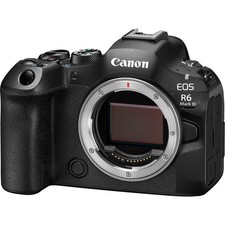
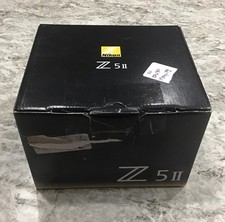
Compare · 2 products compared
Canon EOS R6 Mark IIIvsNikon Z5II: Which to Buy
Both are full-frame mirrorless bodies with in-body stabilization, dual card slots, weather sealing and the same subject-detection list. The R6 Mark III costs over $1,000 more and spends it on burst speed, video frame rates and battery life. The Z5II answers back with a larger screen and a high-resolution pixel-shift mode.
eBay prices refresh hourly — check the listing before you buy. We may earn a commission.
- MOST WINS
 Canon
CanonBest for Action, wildlife and hybrid video shooters who need speed and battery life
11of 19 specs better - Nikon
Best for Stills-focused buyers and pixel-shift shooters who want to spend less on the body
8of 19 specs better
Biggest differences
4K max frame rate (full width)
Canon EOS R6 Mark III leads
4×
higher is better
- Canon EOS R6 Mark III120 fps
- Nikon Z5II30 fps
Battery life
Canon EOS R6 Mark III leads
+77%
higher is better
- Canon EOS R6 Mark III620 shots
- Nikon Z5II350 shots
Launch price
Nikon Z5II leads
−39%
lower is better
- Canon EOS R6 Mark III2,799 USD
- Nikon Z5II1,696.95 USD
4K max frame rate
Canon EOS R6 Mark III leads
2×
higher is better
- Canon EOS R6 Mark III119.9 fps
- Nikon Z5II60 fps
Features not all of them have
High resolution pixel-shift mode
- Canon EOS R6 Mark III✕
- Nikon Z5II✓
Where each one wins
Canon EOS R6 Mark III
- Effective pixels
- In-body image stabilization
- Continuous shooting (mechanical)
- Continuous shooting (electronic)
- Max video resolution
- 4K max frame rate
- 4K max frame rate (full width)
- Battery life
- Weight
- Height
- HDMI port type
Nikon Z5II
- Launch price
- High resolution pixel-shift mode
- Sensor type
- Viewfinder magnification
- Screen size
- Rear screen resolution
- Width
- Depth
What both have
- Sensor formatFull-frame
- Native ISO maximum64,000 ISO
- Max mechanical shutter speed8,000 1/s
- AF subject detectionHuman, animal, bird, car, train, airplane, motorcycle
- Raw video recordingInternal
- Video bit depth10 bit
- Log profile support✓
- Viewfinder resolution3.69 M dots
- Screen articulationFully articulated
- Memory card slots2 slots
- Weather sealingDust and drip resistant
- USB charging & power delivery✓
- Minimum operating temperature0 °C
- Headphone port✓
Every spec
Red marks the better value in each row.
| Spec | Canon EOS R6 Mark III | Nikon Z5II |
|---|---|---|
| Overview | ||
| Release date | 2025-11 | 2025-04 |
| Launch price | 2,799 USD | 1,696.95 USD |
| Lens mount | Canon RF | Nikon Z |
| High resolution pixel-shift mode | No | Yes1 |
| Sensor & Image | ||
| Effective pixels | 32.5 MP | 24.5 MP |
| Sensor format | Full-frame | Full-frame |
| Native ISO maximum | 64,000 ISO | 64,000 ISO |
| In-body image stabilization | 8.5 stops2 | 7.5 stops |
| Sensor readout speed | 13.2 ms | Not published |
| Sensor type | CMOS | Partially-stacked CMOS |
| Aspect ratios | 3:2 | — |
| Lens & Autofocus | ||
| Continuous shooting (mechanical) | 12 fps | 7.8 fps |
| Continuous shooting (electronic) | 40 fps | 30 fps |
| Max mechanical shutter speed | 8,000 1/s | 8,000 1/s |
| Pre-burst capture duration | 0.5 s3 | Not published |
| AF subject detection | Human, animal, bird, car, train, airplane, motorcycle4 | Human, animal, bird, car, train, airplane, motorcycle |
| Video | ||
| Max video resolution | 7K5 | 4K |
| 4K max frame rate | 119.9 fps | 60 fps |
| Video codecs | H.264, HEVC, XF-AVC, XF-HEVC | H.264, HEVC, N-RAW |
| 4K max frame rate (full width) | 120 fps6 | 30 fps |
| Raw video recording | Internal | Internal |
| Video bit depth | 10 bit | 10 bit |
| Log profile support | Yes | Yes |
| Video dynamic range (log) | 15 stops7 | Not published |
| Viewfinder & Screen | ||
| Viewfinder resolution | 3.69 M dots | 3.69 M dots |
| Viewfinder magnification | 0.76 x | 0.8 x |
| Screen size | 3 in | 3.2 in |
| Screen articulation | Fully articulated | Fully articulated |
| Rear screen resolution | 1.6 M dots | 2.1 M dots |
| Handling & Power | ||
| Battery life | 620 shots8 | 350 shots |
| Memory card slots | 2 slots | 2 slots |
| Weather sealing | Dust and drip resistant | Dust and drip resistant |
| Weight | 699 g | 700 g |
| Width | 138.4 mm | 134 mm |
| Height | 98.4 mm | 100.5 mm |
| Depth | 88.4 mm | 72 mm |
| USB charging & power delivery | Yes9 | Yes |
| Minimum operating temperature | 0 °C | 0 °C |
| Headphone port | Yes | Yes |
| HDMI port type | Full-size | Micro |
Notes on 9 values — test conditions and caveats
- 1Nikon Z5II, High resolution pixel-shift mode: Pixel-shift composite raises resolution to 96MP, but images must be combined in NX Studio on a computer.
- 2Canon EOS R6 Mark III, In-body image stabilization: 8.5 stops is Canon's best-case center rating with certain RF lenses; peripheral and other lenses see less, down to 7.5 stops.
- 3Canon EOS R6 Mark III, Pre-burst capture duration: Works only in the 40 fps electronic-shutter mode; Canon states it as up to 20 frames.
- 4Canon EOS R6 Mark III, AF subject detection: Car detection is tuned for racing cars, per Canon.
- 5Canon EOS R6 Mark III, Max video resolution: 7K is available only in RAW Video mode; standard MP4 recording tops out at 4K.
- 6Canon EOS R6 Mark III, 4K max frame rate (full width): 4K 120p uses the full width but is not oversampled; oversampled 4K tops out at 60p.
- 7Canon EOS R6 Mark III, Video dynamic range (log): Canon's claim of 15+ stops in its Canon Log profiles, not a lab measurement.
- 8Canon EOS R6 Mark III, Battery life: 620 shots is CIPA's rating using the rear LCD (not the viewfinder) at 23°C; real-world results vary.
- 9Canon EOS R6 Mark III, USB charging & power delivery: USB-C charging and power need a capable USB-PD source such as Canon's PD-E2; not every power bank works.
Sensor and image quality
The Canon EOS R6 Mark III carries a 32.5 MP sensor against 24.5 MP in the Nikon Z5II, so the Canon leaves more room to crop and still print large. The Nikon's sensor is partially stacked, which generally means faster internal readout and less rolling distortion in silent shooting, though Nikon does not publish a readout figure to compare against Canon's 13.2 ms.
Stabilization favors the Canon at 8.5 stops, but only in its best-case center rating with certain RF lenses; other lenses and the edges of the frame drop to 7.5 stops, which is where the Nikon sits. The Z5II's pixel-shift mode builds a 96 MP composite, useful for still subjects like architecture and product work, but the frames have to be merged later in NX Studio on a computer rather than in camera.
Speed and autofocus
The R6 Mark III is the faster camera in every burst mode: 40 fps electronic versus 30 fps, and 12 fps mechanical versus 7.8 fps. It also adds a 0.5-second pre-burst, up to 20 frames, but only inside that 40 fps electronic mode. For anyone shooting birds, field sports or fast kids, that pre-capture is the difference between catching the launch and missing it, provided you are willing to shoot silently.
Both bodies detect the same subjects: people, animals, birds, cars, trains, airplanes and motorcycles. There is no autofocus advantage to pay for here, so the speed premium is really about frames per second and shutter response rather than recognition.
Video
The Canon records 7K, but only in RAW Video mode; ordinary MP4 tops out at 4K. In 4K the gap widens anyway, with 120 fps against the Nikon's 60 fps, and full-width 4K at 120 fps rather than a crop. That full-width 120p is not oversampled, so the oversampled image tops out at 60p, which matters if you want the sharpest possible 4K for interviews and scenery.
Both record raw internally at 10-bit and both offer log profiles. The Z5II adds N-RAW alongside H.264 and HEVC; the Canon uses its XF-AVC and XF-HEVC family. Canon claims up to 15 stops of dynamic range in its log profiles, which is a marketing figure rather than a measured one, and Nikon publishes no equivalent number.
Display and viewfinder
The Nikon Z5II has the better rear screen: 3.2 inches and 2.1 M dots versus 3 inches and 1.6 M dots on the Canon. Both flip out fully, so the difference is about how comfortably you can judge focus and framing, especially on a tripod or gimbal. The viewfinder magnification also tilts Nikon's way at 0.8x versus 0.76x, a modest but real gain for glasses wearers.
Battery, size and connectivity
Battery life is the starkest split on the page: 620 shots on the Canon against 350 on the Nikon under CIPA's rear-LCD test at 23°C. For a full day of event or travel shooting that is often the difference between one battery and two. The Canon is also marginally lighter and slightly shorter, while the Nikon is narrower and much slimmer front to back, which helps in a small bag.
Both charge and run over USB-C power delivery, but the Canon needs a capable USB-PD source such as Canon's PD-E2, so not every power bank will do. The Canon's full-size HDMI port is a practical win for tethered video work; the Nikon's micro HDMI is the more fragile connector to leave plugged in on set.
The Verdict
Buy the Canon EOS R6 Mark III if you shoot action, wildlife or video and want the faster bursts, full-width 4K120, pre-burst and longer battery life. Buy the Nikon Z5II if you shoot stills at a slower pace and would rather bank the price difference toward lenses. The Z5II also suits pixel-shift work and anyone who values a bigger, sharper screen. Neither is a compromise on autofocus, sealing or card slots.
Where to buy
Canon EOS R6 Mark III
Best for Action, wildlife and hybrid video shooters who need speed and battery life
Nikon Z5II
Best for Stills-focused buyers and pixel-shift shooters who want to spend less on the body
FAQ
Is the Canon EOS R6 Mark III worth the higher price over the Nikon Z5II?
Only if you need its speed and video ceiling: 40 fps electronic bursts, a 0.5-second pre-burst mode, full-width 4K at 120 fps and roughly double the battery life. If those are not on your shot list, the Z5II delivers the same sensor format and autofocus subjects for far less.
Which has better low-light image quality?
Both top out at 64,000 ISO natively, so the published numbers do not separate them. The Canon's extra 8 MP gives more room to crop rather than a claimed noise advantage.
Can the Nikon Z5II shoot 7K or 4K at 120 fps?
No. Its maximum resolution is 4K and its 4K ceiling is 60 fps, versus 7K in RAW Video mode and 4K at 119.9 fps on the Canon.
Do both cameras have dual card slots and weather sealing?
Yes. Both have two card slots and dust and drip resistant bodies, so neither forces a compromise there.
Does the Canon EOS R6 Mark III have a pixel-shift high-resolution mode?
No. Only the Nikon Z5II offers pixel shift, producing a 96 MP composite that must be combined in NX Studio on a computer rather than in camera.
Spotted something wrong? Tap the next to any section or spec group to let us know. Every report is read.