Compare · 2 products compared
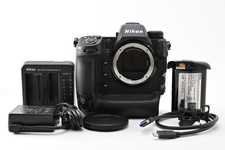
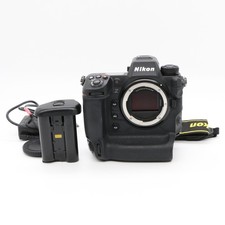
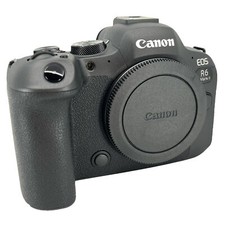
Nikon Z9vsCanon EOS R6 Mark II: Which to Buy
Both are full-frame mirrorless bodies with in-body stabilization, dual card slots, dust and drip resistance, and the same subject-detection list. The split is resolution and video ambition versus speed, stabilization and portability. One costs more than twice the other, and that gap frames every other trade-off.
eBay prices refresh hourly — check the listing before you buy. We may earn a commission.
- MOST WINS
 Nikon
NikonBest for High-resolution stills and 8K or raw video in one body
12of 23 specs better - Canon
Best for Fast action, handheld shooting and travel on a tighter budget
11of 23 specs better
Biggest differences
Launch price
Canon EOS R6 Mark II leads
2.2×
lower is better
- Nikon Z95,500 USD
- Canon EOS R6 Mark II2,499 USD
Native ISO maximum
Canon EOS R6 Mark II leads
4×
higher is better
- Nikon Z925,600 ISO
- Canon EOS R6 Mark II102,400 ISO
Continuous shooting (electronic)
Canon EOS R6 Mark II leads
2×
higher is better
- Nikon Z920 fps
- Canon EOS R6 Mark II40 fps
Max mechanical shutter speed
Nikon Z9 leads
4×
higher is better
- Nikon Z932,000 1/s
- Canon EOS R6 Mark II8,000 1/s
Where each one wins
Nikon Z9
- Effective pixels
- Sensor type
- Max mechanical shutter speed
- Pre-burst capture duration
- Max video resolution
- 4K max frame rate
- Raw video recording
- Viewfinder magnification
- Screen size
- Rear screen resolution
- Minimum operating temperature
- HDMI port type
Canon EOS R6 Mark II
- Launch price
- Native ISO maximum
- In-body image stabilization
- Continuous shooting (electronic)
- 4K max frame rate (full width)
- Screen articulation
- Battery life
- Weight
- Width
- Height
- Depth
What both have
- Sensor formatFull-frame
- AF subject detectionHuman, animal, bird, car, train, airplane, motorcycle
- Video bit depth10 bit
- Log profile support✓
- Viewfinder resolution3.69 M dots
- Memory card slots2 slots
- Weather sealingDust and drip resistant
- USB charging & power delivery✓
- Headphone port✓
Every spec
Red marks the better value in each row.
| Spec | Nikon Z9 | Canon EOS R6 Mark II |
|---|---|---|
| Overview | ||
| Release date | 2021-12 | Not published |
| Launch price | 5,500 USD | 2,499 USD |
| Lens mount | Nikon Z | Canon RF |
| High resolution pixel-shift mode | No | Not published |
| Sensor & Image | ||
| Effective pixels | 45.7 MP | 24.2 MP |
| Sensor format | Full-frame | Full-frame |
| Native ISO maximum | 25,600 ISO | 102,400 ISO1 |
| In-body image stabilization | 6 stops2 | 8 stops3 |
| Sensor readout speed | Not published | Not published |
| Sensor type | Stacked CMOS | CMOS |
| Aspect ratios | — | 3:2, 4:3, 1:1, 16:9 |
| Lens & Autofocus | ||
| Continuous shooting (mechanical) | Not published | 12 fps |
| Continuous shooting (electronic) | 20 fps | 40 fps |
| Max mechanical shutter speed | 32,000 1/s | 8,000 1/s |
| Pre-burst capture duration | 1 s4 | 0.5 s5 |
| AF subject detection | Human, animal, bird, car, train, airplane, motorcycle | Human, animal, bird, car, train, airplane, motorcycle |
| Video | ||
| Max video resolution | 8K | 4K |
| 4K max frame rate | 120 fps | 60 fps |
| Video codecs | H.264, HEVC, ProRes 422 HQ, ProRes RAW, N-RAW | H.264, HEVC6 |
| 4K max frame rate (full width) | 30 fps | 60 fps |
| Raw video recording | Internal | External7 |
| Video bit depth | 10 bit | 10 bit8 |
| Log profile support | Yes | Yes |
| Video dynamic range (log) | Not published | Not published |
| Viewfinder & Screen | ||
| Viewfinder resolution | 3.69 M dots | 3.69 M dots |
| Viewfinder magnification | 0.8 x | 0.76 x |
| Screen size | 3.2 in | 3 in |
| Screen articulation | Tilting | Fully articulated |
| Rear screen resolution | 2.1 M dots | 1.62 M dots |
| Handling & Power | ||
| Battery life | 740 shots | 760 shots9 |
| Memory card slots | 2 slots | 2 slots |
| Weather sealing | Dust and drip resistant | Dust and drip resistant10 |
| Weight | 1,340 g | 670 g |
| Width | 149 mm | 138.4 mm |
| Height | 149.5 mm | 98.4 mm |
| Depth | 90.5 mm | 88.4 mm |
| USB charging & power delivery | Yes | Yes11 |
| Minimum operating temperature | -10 °C | 0 °C12 |
| Headphone port | Yes | Yes |
| HDMI port type | Full-size | Micro |
Notes on 12 values — test conditions and caveats
- 1Canon EOS R6 Mark II, Native ISO maximum: ISO 204800 (H) is an expanded setting; the native range tops out at ISO 102400.
- 2Nikon Z9, In-body image stabilization: The 6.0-stop rating requires Synchro VR, combining in-body 5-axis VR with 2-axis lens VR on compatible lenses.
- 3Canon EOS R6 Mark II, In-body image stabilization: The 8-stop rating combines lens optical IS with in-body IS; results vary by lens.
- 4Nikon Z9, Pre-burst capture duration: Pre-Release Capture is only available in the C30 and C120 high-speed frame capture modes.
- 5Canon EOS R6 Mark II, Pre-burst capture duration: Pre-release capture works in RAW burst mode and buffers up to 0.5s of action before full shutter press.
- 6Canon EOS R6 Mark II, Video codecs: Movies record H.264 by default; H.265/HEVC is used when Canon Log 3 or HDR PQ is enabled.
- 7Canon EOS R6 Mark II, Raw video recording: 6K ProRes RAW requires an external Atomos Ninja V+ recorder connected over HDMI.
- 8Canon EOS R6 Mark II, Video bit depth: Standard profiles record 8-bit 4:2:0; 10-bit 4:2:2 requires Canon Log 3 or HDR PQ.
- 9Canon EOS R6 Mark II, Battery life: 760 shots is the CIPA power-saving rating with the rear LCD; Canon's smooth-mode rating is 580 shots.
- 10Canon EOS R6 Mark II, Weather sealing: Sealed dust- and water-resistant build, not IP-rated; Canon cautions ingress cannot be fully prevented.
- 11Canon EOS R6 Mark II, USB charging & power delivery: In-body USB charging and power supply require Canon's optional PD-E1 USB power adapter.
- 12Canon EOS R6 Mark II, Minimum operating temperature: Canon's product manual rates 0–40°C; regional Canon spec sheets list a 2°C minimum.
Resolution vs speed
The Nikon Z9's 45.7MP stacked sensor gives you nearly twice the pixels of the Canon EOS R6 Mark II's 24.2MP. That matters if you crop heavily or print large: a deep crop from the Z9 still holds up at sizes where the Canon would run out of room.
The Canon answers with speed. It shoots 40 fps electronically against 20 fps, and its mechanical shutter reaches 12 fps where Nikon publishes no mechanical figure at all. If you cover fast action and want more frames to choose from, the Canon delivers more of them per second.
Video
The Nikon is the video-forward body. It records 8K internally, hits 120 fps at 4K, and captures raw video without an external recorder. It also carries ProRes and N-RAW codecs, which shortens the gap between shooting and editing for working video shooters.
The Canon tops out at 4K, and only reaches 60 fps at full sensor width. Its raw video needs an Atomos Ninja V+ over HDMI, so the extra cost and bulk arrive with it. For stills-first buyers who shoot occasional clips, the Canon is plenty; for anyone delivering 8K or raw, the Nikon is the only one of the two that does it alone.
Stabilization, screen and handling
Canon claims 8 stops of stabilization when lens and body IS work together; Nikon claims 6 stops, and only with Synchro VR on compatible lenses. The Canon's advantage is real for handheld work, though it varies by lens.
The Canon is also far lighter and smaller, and its screen is fully articulated rather than tilting. That combination favors travel, hiking and handheld shooting. The Nikon counters with a larger rear screen, a higher-magnification viewfinder and a full-size HDMI port, all of which suit tripod and studio setups more than a walkaround kit.
Battery and durability
Battery life is effectively a tie, and the footnotes complicate both numbers. Canon's 760-shot figure is its power-saving rating; its smooth-mode rating drops to 580. Nikon's 740 shots is a single figure. Neither body is the obvious endurance pick.
The Nikon is better in the cold, rated to -10 °C against the Canon's 0 °C. It also costs $5,500 against $2,499, weighs 1,340 g against 670 g, and has no mechanical shutter at all. If you shoot in freezing conditions or need high shutter speeds, the Nikon's 32,000 1/s ceiling is unreachable for the Canon.
Which is best for sports and wildlife?
The Canon EOS R6 Mark II wins on frames per second and pre-burst duration, and that is what most sports and wildlife shooters feel first. Forty fps electronic plus a 0.5-second pre-burst buffer means fewer missed moments at the start of an action sequence.
The Nikon's case rests on pixels and light. Its 1-second pre-burst is longer, and its stacked sensor is built for fast readout, though Nikon does not publish the figure. Both bodies detect the same subjects. If your subjects are distant and small, the Z9's resolution helps more than burst rate; if they are close and fast, the Canon does.
The Verdict
Buy the Nikon Z9 if you need 45.7MP, 8K and internal raw video and will accept the price, the weight and the lack of a mechanical shutter. Buy the Canon EOS R6 Mark II if you want the fastest bursts, the strongest stabilization and a lighter body for roughly half the money.
Where to buy
Nikon Z9
Best for High-resolution stills and 8K or raw video in one body
Canon EOS R6 Mark II
Best for Fast action, handheld shooting and travel on a tighter budget
FAQ
Does the Nikon Z9 have a mechanical shutter?
No. Its top shutter speed is 32,000 1/s, which is an electronic figure, so there is no mechanical shutter to fall back on.
Can the Canon EOS R6 Mark II shoot 8K?
No. Its maximum video resolution is 4K, though it does reach 60 fps at full sensor width.
Which camera has better in-body stabilization?
The Canon, at a claimed 8 stops when lens and body IS combine, against Nikon's 6 stops with Synchro VR on compatible lenses. Canon's result varies by lens.
Do both cameras record 10-bit video?
Yes, but on the Canon only with Canon Log 3 or HDR PQ enabled; standard profiles are 8-bit. The Nikon records 10-bit.
Which is lighter to carry all day?
The Canon EOS R6 Mark II, at 670 g against the Nikon Z9's 1,340 g. It is also narrower, shorter and slightly thinner.
Spotted something wrong? Tap the next to any section or spec group to let us know. Every report is read.