Compare · 4 of 4 products
NVIDIA GeForce RTX 5060 Ti 8GBvsAMD Radeon RX 9070vsIntel Arc B570vsNVIDIA GeForce RTX 5090
eBay prices refresh hourly — check the listing before you buy. We may earn a commission.
- ×

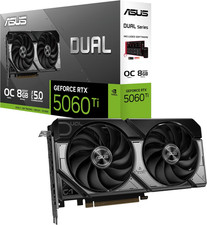
NVIDIA GeForce RTX 5060 Ti 8GB
Wins8 / 18 - ×
 Wins3 / 18
 - ×
 Wins2 / 18
 - MOST WINS×
 Wins13 / 18
Biggest differences
Shader cores
NVIDIA GeForce RTX 5090 leads
9.44×
higher is better
- NVIDIA GeForce RTX 5060 Ti 8GB4,608 cores
- AMD Radeon RX 90703,584 cores
- Intel Arc B5702,304 cores
- NVIDIA GeForce RTX 509021,760 cores
Launch price
Intel Arc B570 leads
9.13×
lower is better
- NVIDIA GeForce RTX 5060 Ti 8GB379 USD
- AMD Radeon RX 9070549 USD
- Intel Arc B570219 USD
- NVIDIA GeForce RTX 50901,999 USD
Memory bandwidth
NVIDIA GeForce RTX 5090 leads
4.72×
higher is better
- NVIDIA GeForce RTX 5060 Ti 8GB448 GB/s
- AMD Radeon RX 9070640 GB/s
- Intel Arc B570380 GB/s
- NVIDIA GeForce RTX 50901,792 GB/s
Video memory
NVIDIA GeForce RTX 5090 leads
4×
higher is better
- NVIDIA GeForce RTX 5060 Ti 8GB8 GB
- AMD Radeon RX 907016 GB
- Intel Arc B57010 GB
- NVIDIA GeForce RTX 509032 GB
Where each one wins
NVIDIA GeForce RTX 5060 Ti 8GB
- Boost clock
- Base clock
- Memory type
- Memory speed
- Recommended PSU
- PCIe version
- HDMI version
- DisplayPort version
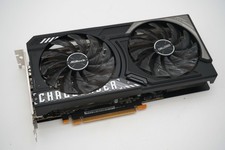
AMD Radeon RX 9070
- PCIe version
- PCIe lanes
- HDMI version
Intel Arc B570
- Launch price
- Board power
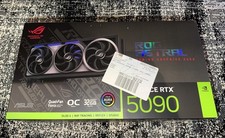
NVIDIA GeForce RTX 5090
- Shader cores
- FP32 compute
- Video memory
- Memory type
- Memory bus width
- Memory bandwidth
- Memory speed
- Last-level cache
- PCIe version
- PCIe lanes
- HDMI version
- DisplayPort version
- Video encoders
What all 4 have
- Max displays4 displays
- Hardware encodeH.264, HEVC, AV1
Every spec
Red marks the better value in each row.
Overview
Graphics chip
Memory
Video memory
- 8 GB
- 16 GB
- 10 GB
- 32 GB
Memory type
- Gddr7
- Gddr6
- Gddr6
- Gddr7
Memory bus width
- 128 bit
- 256 bit
- 160 bit
- 512 bit
Memory bandwidth
- 448 GB/s
- 640 GB/s
- 380 GB/s
- 1,792 GB/s
Memory speed
- 28 Gbps
- 20 Gbps
- 19 Gbps
- 28 Gbps
Last-level cache
- 32 MB
- 64 MB
- Not published
- 96 MB
Power
Interface
Display outputs
Video engine
Hardware encode
- H.264, HEVC, AV1
- H.264, HEVC, AV1
- H.264, HEVC, AV120
- H.264, HEVC, AV1
Video encoders
- 1 encoders
- Not published
- 2 encoders
- 3 encoders
Size
Card length
- Not published
- Not published
- Not published
- 304 mm
Card height
- Not published
- Not published
- Not published
- 137 mm
Slot width
- Not published
- Not published
- Not published
- 2 slots21
Notes on 21 values — test conditions and caveats
- 1Intel Arc B570, Release date: All three launch-day reviews are dated 16 Jan 2025; Intel's page gives only the quarter 'Q4'24.
- 2NVIDIA GeForce RTX 5060 Ti 8GB, Launch price: NVIDIA sells no Founders Edition of this card; $379 is the starting MSRP for partner cards.
- 3AMD Radeon RX 9070, Launch price: AMD's $549 starting MSRP at launch; AMD sells no reference card, so partner models may cost more.
- 4Intel Arc B570, Launch price: Launch MSRP; Ars Technica notes it only counts if you can actually get one at that price.
- 5Intel Arc B570, Shader cores: Derived per definition: 18 Xe-cores x 128 shading units = 2,304.
- 6AMD Radeon RX 9070, Boost clock: Peak 'up to' boost; AMD's game clock is 2070 MHz for typical gaming.
- 7Intel Arc B570, Boost clock: Intel publishes only a 'Graphics Clock'; per the key's definition it is recorded as the boost clock.
- 8AMD Radeon RX 9070, Board power: Partner overclocked cards can exceed 220 W; IGN measured 249 W peaks on a factory-OC card.
- 9NVIDIA GeForce RTX 5090, Recommended PSU: NVIDIA's minimum for a PC with a Ryzen 9 9950X; it recommends a PCIe CEM 5.1 compliant PSU.
- 10NVIDIA GeForce RTX 5060 Ti 8GB, Power connectors: No Founders Edition exists; most partner cards use one 8-pin socket, a few use a 16-pin 12V-2x6 instead.
- 11AMD Radeon RX 9070, Power connectors: Two 8-pin PCIe power connectors are required (2x 8-pin per AMD and Sapphire).
- 12Intel Arc B570, Power connectors: Intel sells no first-party card; partner B570 cards use a single 8-pin connector.
- 13NVIDIA GeForce RTX 5060 Ti 8GB, PCIe lanes: Only 8 lanes: on a PCIe 4.0 or 3.0 board it gets half or a quarter of the PCIe 5.0 bandwidth.
- 14Intel Arc B570, PCIe lanes: Eight electrical lanes; Ars Technica notes Arc relies on Resizable BAR to perform optimally.
- 15NVIDIA GeForce RTX 5060 Ti 8GB, DisplayPort version: DisplayPort 2.1b at the full UHBR20 rate.
- 16AMD Radeon RX 9070, DisplayPort version: Club386 lists the DP 2.1a link rate as UHBR13.5; UHBR20 is not supported.
- 17Intel Arc B570, DisplayPort version: Maker caps DisplayPort 2.1 at UHBR 13.5.
- 18NVIDIA GeForce RTX 5090, DisplayPort version: DisplayPort 2.1b at UHBR20 on all three DP outputs.
- 19Intel Arc B570, HDMI outputs: Intel sells no first-party B570; this is the standard partner-card port layout.
- 20Intel Arc B570, Hardware encode: Maker also lists 'H.265 (HEVC) Hardware Encode/Decode: Yes' and 'AV1 Encode/Decode: Yes'.
- 21NVIDIA GeForce RTX 5090, Slot width: The card is 2-slot, but NVIDIA's install guide asks for 3-slot (61 mm) case clearance.
Where to buy
NVIDIA GeForce RTX 5060 Ti 8GB
AMD Radeon RX 9070
Intel Arc B570
NVIDIA GeForce RTX 5090