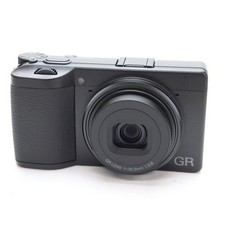
Compare · 2 products compared
Ricoh GR IVvsSony a6700: Compact or All-Rounder?
Both put an APS-C sensor in a small body and both stabilize it in-body. The split is philosophy: the Ricoh GR IV is a fixed-lens pocket camera built for stills on the move, while the Sony a6700 is an interchangeable-lens body built for speed, long lenses and serious video.
eBay prices refresh hourly — check the listing before you buy. We may earn a commission.
 Ricoh
RicohBest for Street and travel shooters who want the smallest possible APS-C stills camera
6of 15 specs better- MOST WINSSony
Best for Hybrid shooters who need interchangeable lenses, fast autofocus and 4K video
9of 15 specs better
Biggest differences
Native ISO maximum
Ricoh GR IV leads
6.4×
higher is better
- Ricoh GR IV204,800 ISO
- Sony a670032,000 ISO
Battery life
Sony a6700 leads
2.28×
higher is better
- Ricoh GR IV250 shots
- Sony a6700570 shots
Weight
Ricoh GR IV leads
−47%
lower is better
- Ricoh GR IV262 g
- Sony a6700493 g
Continuous shooting (mechanical)
Sony a6700 leads
2.75×
higher is better
- Ricoh GR IV4 fps
- Sony a670011 fps
Features not all of them have
Headphone port
- Ricoh GR IV✕
- Sony a6700✓
Where each one wins
Ricoh GR IV
- Native ISO maximum
- In-body image stabilization
- Weight
- Width
- Height
- Depth
Sony a6700
- Effective pixels
- Continuous shooting (mechanical)
- Max video resolution
- Viewfinder resolution
- Screen articulation
- Rear screen resolution
- Battery life
- Headphone port
- HDMI port type
What both have
- Sensor formatAPS-C
- Sensor typeCMOS
- Max mechanical shutter speed4,000 1/s
- Raw video recordingNone
- Screen size3 in
- Memory card slots1 slots
- USB charging & power delivery✓
Every spec
Red marks the better value in each row.
| Spec | Ricoh GR IV | Sony a6700 |
|---|---|---|
| Overview | ||
| Release date | Not published | Not published |
| Launch price | 1,499 USD1 | Not published |
| Lens mount | Fixed lens | Sony E |
| High resolution pixel-shift mode | Not published | No |
| Sensor & Image | ||
| Effective pixels | 25.74 MP | 26 MP |
| Sensor format | APS-C | APS-C |
| Native ISO maximum | 204,800 ISO | 32,000 ISO |
| In-body image stabilization | 6 stops2 | 5 stops |
| Sensor readout speed | Not published | Not published |
| Sensor type | CMOS3 | CMOS |
| Aspect ratios | 3:2, 4:3, 1:1, 16:94 | Not published |
| Lens & Autofocus | ||
| Continuous shooting (mechanical) | 4 fps5 | 11 fps |
| Continuous shooting (electronic) | Not published | 11 fps |
| Max mechanical shutter speed | 4,000 1/s6 | 4,000 1/s |
| Pre-burst capture duration | Not published | Not published |
| AF subject detection | Human7 | Human, animal, bird, insect, car, train, airplane |
| Video | ||
| Max video resolution | 1080p | 4K |
| 4K max frame rate | Not published | 120 fps |
| Video codecs | H.264 | H.264, HEVC |
| 4K max frame rate (full width) | Not published | 60 fps8 |
| Raw video recording | None | None |
| Video bit depth | Not published | 10 bit |
| Log profile support | Not published | Yes |
| Video dynamic range (log) | Not published | 14 stops |
| Viewfinder & Screen | ||
| Viewfinder resolution | 0 M dots | 2.36 M dots |
| Viewfinder magnification | Not published | 0.7 x |
| Screen size | 3 in | 3 in |
| Screen articulation | Fixed | Fully articulated |
| Rear screen resolution | 1.037 M dots | 1.04 M dots |
| Handling & Power | ||
| Battery life | 250 shots9 | 570 shots |
| Memory card slots | 1 slots10 | 1 slots |
| Weather sealing | Not published | Not published |
| Weight | 262 g | 493 g |
| Width | 109.4 mm | 122 mm |
| Height | 61.1 mm | 69 mm |
| Depth | 32.7 mm | 75.1 mm |
| USB charging & power delivery | Yes11 | Yes |
| Minimum operating temperature | Not published | 0 °C |
| Headphone port | No | Yes |
| HDMI port type | None12 | Micro |
Notes on 12 values — test conditions and caveats
- 1Ricoh GR IV, Launch price: Launch MSRP per the review; Ricoh's US store currently lists $1,599.95.
- 2Ricoh GR IV, In-body image stabilization: Ricoh's 6.0-stop rating applies at frame centre; periphery is rated 4.0 stops (CIPA 2024).
- 3Ricoh GR IV, Sensor type: The sensor is a back-illuminated (BSI) CMOS type; mapped to 'cmos' as no BSI option is listed.
- 4Ricoh GR IV, Aspect ratios: 3:2 is native to the 23.3 x 15.5 mm sensor; 4:3, 1:1 and 16:9 are in-camera crop modes.
- 5Ricoh GR IV, Continuous shooting (mechanical): The review cites 4 fps continuous without specifying shutter type.
- 6Ricoh GR IV, Max mechanical shutter speed: 1/4000 s requires F5.6 or a smaller aperture; at F2.8 the limit is 1/2500 s.
- 7Ricoh GR IV, AF subject detection: Only face/eye detection is offered; no animal or vehicle subject recognition is listed.
- 8Sony a6700, 4K max frame rate (full width): Full-width 4K tops out at 60p; 120p 4K uses a crop.
- 9Ricoh GR IV, Battery life: CIPA-rated at 23°C with a fully charged DB-120 battery.
- 10Ricoh GR IV, Memory card slots: Single microSD slot, plus 53 GB internal memory that cannot record to both at once.
- 11Ricoh GR IV, USB charging & power delivery: Battery charges and camera draws power in-body over USB-C; fast charging needs a USB-PD adapter.
- 12Ricoh GR IV, HDMI port type: Video output is DisplayPort over USB-C; there is no HDMI connector.
Everyday carry vs. a kit
The Ricoh GR IV is the one you actually have with you. At 262 g and 32.7 mm deep it slides into a jacket pocket, and because the lens is fixed there is no mount, no lens choice and nothing to decide before you leave. That single 23.3 x 15.5 mm sensor sits behind one prime, tuned for that pairing.
The Sony a6700 asks you to commit to a bag. It measures 122 mm wide and 75.1 mm deep before a lens goes on, and at 493 g the body alone weighs nearly twice the Ricoh. In return you get the Sony E mount, which is the whole point: one body, any focal length. Pick the Ricoh if the camera would otherwise stay home; pick the Sony if you need reach or a fast portrait lens.
Low light and stabilization
The Ricoh's native ISO ceiling reaches 204,800, far above the Sony's 32,000. On a small-sensor camera that headroom mostly buys you a usable handheld shot at dusk rather than clean detail, but it means the GR IV can keep shooting when the Sony owner is reaching for a tripod.
Stabilization is close, and the fine print matters. Ricoh rates the GR IV at 6 stops at frame centre but only 4 stops at the periphery, so the corners of a handheld night frame benefit less than the middle. The Sony's 5-stop rating is spread across the frame. In practice the Ricoh is still the better handheld low-light camera because it is the one you can brace against anything.
Speed and autofocus
The a6700 is the action camera here by a wide margin. It shoots 11 fps and recognizes people, animals, birds, insects, cars, trains and planes, so a moving subject tends to stay locked even when it leaves the centre of the frame. The GR IV manages 4 fps and only detects human faces and eyes, with nothing for wildlife or motorsport.
That gap decides a lot of genres. If you photograph kids, dogs, birds or anything on a track, the Sony's subject recognition is the difference between a keeper and a blur. The Ricoh is fine for street scenes and slow portraits where you place the focus point yourself.
Video
This is not close. The Ricoh GR IV tops out at 1080p in H.264 with no log profile and no dedicated headphone or HDMI port, so audio monitoring and external recording are off the table. It is a stills camera that happens to record clips.
The Sony a6700 records 4K up to 120 fps, with full-width 4K reaching 60p before the 120p mode drops to a crop. It adds HEVC, 10-bit depth and a log profile rated at 14 stops of dynamic range, plus a micro HDMI port and a headphone jack. If video is more than an afterthought, the Sony is the only real answer of the two.
Battery, cards and framing
Sony rates the a6700 at 570 shots per charge against 250 for the Ricoh GR IV, so the Sony covers more than twice the shooting day on one battery. Both charge over USB-C, though the Ricoh wants a USB-PD adapter for fast charging. The Ricoh carries a single microSD slot plus 53 GB of internal memory, but cannot write to both at once, so plan on one card.
Framing differs too. The Ricoh has no viewfinder at all and a fixed 3-inch screen; the Sony gives you a 2.36 M-dot finder and a fully articulated screen that flips for self-recording or low angles. The Sony's finder is steadier for long lenses; the Ricoh's fixed screen keeps the body thin enough to pocket.
The Verdict
Buy the Ricoh GR IV if you want a genuinely pocketable APS-C camera for street, travel and everyday stills, and can live with one focal length and 1080p video. Buy the Sony a6700 if you need interchangeable lenses, confident subject-tracking autofocus, 4K120 recording or a viewfinder. The Ricoh wins on size, weight and low-light reach; the Sony wins on speed, video, battery and flexibility.
Where to buy
Ricoh GR IV
Best for Street and travel shooters who want the smallest possible APS-C stills camera
Sony a6700
Best for Hybrid shooters who need interchangeable lenses, fast autofocus and 4K video
FAQ
Can the Ricoh GR IV use different lenses?
No. It has a fixed lens, so the focal length you buy is the focal length you keep. The Sony a6700 uses the Sony E mount and takes interchangeable lenses.
Does the Sony a6700 have a viewfinder and the Ricoh not?
Correct. The a6700 has a 2.36 M-dot electronic viewfinder with 0.7x magnification, while the GR IV has no viewfinder and relies entirely on its 3-inch rear screen.
Which one is better for handheld night shooting?
The Ricoh GR IV, mainly because of size. It reaches a native ISO of 204,800 and rates 6 stops of stabilization at frame centre, and its compact body is easier to brace. Note the periphery is only rated 4 stops.
Can either camera record raw video?
No. Neither the Ricoh GR IV nor the Sony a6700 offers raw video recording, so you are working with compressed codecs on both.
Which has the longer battery life?
The Sony a6700, rated at 570 shots versus 250 for the Ricoh GR IV. Both can charge and run from USB-C power.
Spotted something wrong? Tap the next to any section or spec group to let us know. Every report is read.