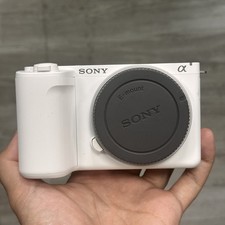
Compare · 2 products compared
Panasonic LUMIX S1IIvsSony ZV-E10 II: Spec Comparison
These two mirrorless cameras both shoot 10-bit 4K, offer log profiles and a fully articulated screen. Everything else splits them: the Panasonic LUMIX S1II carries a full-frame sensor, a viewfinder and internal raw video, while the Sony ZV-E10 II stays small, light and roughly a third of the price.
eBay prices refresh hourly — check the listing before you buy. We may earn a commission.
- MOST WINS
 Panasonic
Best for Working photographers and hybrid shooters who need full-frame image quality, a viewfinder and pro video formats
13of 20 specs better - Sony
Best for Vloggers and casual creators who want light, affordable 4K with strong battery life
7of 20 specs better
Biggest differences
Continuous shooting (electronic)
Panasonic LUMIX S1II leads
6.36×
higher is better
- Panasonic LUMIX S1II70 fps
- Sony ZV-E10 II11 fps
Launch price
Sony ZV-E10 II leads
3.2×
lower is better
- Panasonic LUMIX S1II3,199 USD
- Sony ZV-E10 II999 USD
Weight
Sony ZV-E10 II leads
2.12×
lower is better
- Panasonic LUMIX S1II800 g
- Sony ZV-E10 II377 g
Memory card slots
Panasonic LUMIX S1II leads
2×
higher is better
- Panasonic LUMIX S1II2 slots
- Sony ZV-E10 II1 slots
Features not all of them have
High resolution pixel-shift mode
- Panasonic LUMIX S1II✓
- Sony ZV-E10 II✕
Where each one wins
Panasonic LUMIX S1II
- High resolution pixel-shift mode
- Sensor format
- Native ISO maximum
- Sensor type
- Continuous shooting (electronic)
- Max video resolution
- 4K max frame rate
- Raw video recording
- Viewfinder resolution
- Rear screen resolution
- Memory card slots
- Minimum operating temperature
- HDMI port type
Sony ZV-E10 II
- Launch price
- Effective pixels
- Battery life
- Weight
- Width
- Height
- Depth
What both have
- Max mechanical shutter speed8,000 1/s
- 4K max frame rate (full width)60 fps
- Video bit depth10 bit
- Log profile support✓
- Screen size3 in
- Screen articulationFully articulated
- USB charging & power delivery✓
- Headphone port✓
Every spec
Red marks the better value in each row.
| Spec | Panasonic LUMIX S1II | Sony ZV-E10 II |
|---|---|---|
| Overview | ||
| Release date | 2025-05 | 2024-07 |
| Launch price | 3,199 USD | 999 USD |
| Lens mount | L-Mount | Sony E |
| High resolution pixel-shift mode | Yes1 | No |
| Sensor & Image | ||
| Effective pixels | 24.1 MP | 26 MP |
| Sensor format | Full-frame | APS-C |
| Native ISO maximum | 51,200 ISO | 32,000 ISO |
| In-body image stabilization | 8 stops | Not published |
| Sensor readout speed | 14.6 ms2 | Not published |
| Sensor type | Partially-stacked CMOS | CMOS |
| Aspect ratios | 3:2, 4:3, 1:1, 16:9, 2:1, 65:24 | Not published |
| Lens & Autofocus | ||
| Continuous shooting (mechanical) | 10 fps | Not published |
| Continuous shooting (electronic) | 70 fps | 11 fps |
| Max mechanical shutter speed | 8,000 1/s | 8,000 1/s |
| Pre-burst capture duration | 1.5 s | Not published |
| AF subject detection | Human, animal, car, train, airplane, motorcycle | Human, animal, bird |
| Video | ||
| Max video resolution | 6K | 4K |
| 4K max frame rate | 120 fps3 | 60 fps |
| Video codecs | H.264, HEVC, ProRes 422, ProRes RAW | H.264, HEVC |
| 4K max frame rate (full width) | 60 fps4 | 60 fps |
| Raw video recording | Internal | None |
| Video bit depth | 10 bit | 10 bit |
| Log profile support | Yes | Yes |
| Video dynamic range (log) | 15 stops | Not published |
| Viewfinder & Screen | ||
| Viewfinder resolution | 5.76 M dots | 0 M dots |
| Viewfinder magnification | 0.78 x | Not published |
| Screen size | 3 in | 3 in |
| Screen articulation | Fully articulated | Fully articulated |
| Rear screen resolution | 1.84 M dots | 1.037 M dots |
| Handling & Power | ||
| Battery life | 360 shots | 610 shots |
| Memory card slots | 2 slots | 1 slots |
| Weather sealing | Dust and drip resistant | Not published |
| Weight | 800 g | 377 g |
| Width | 134 mm | 114.8 mm |
| Height | 102 mm | 67.5 mm |
| Depth | 92 mm | 54.2 mm |
| USB charging & power delivery | Yes | Yes |
| Minimum operating temperature | -10 °C | 0 °C |
| Headphone port | Yes | Yes |
| HDMI port type | Full-size | Micro |
Notes on 4 values — test conditions and caveats
- 1Panasonic LUMIX S1II, High resolution pixel-shift mode: The full 96MP composite needs a tripod; handheld shooting caps at 48MP.
- 2Panasonic LUMIX S1II, Sensor readout speed: Measured by DPReview using the electronic shutter in 14-bit stills mode.
- 3Panasonic LUMIX S1II, 4K max frame rate: Maximum 120 fps in 4K requires recording in MOV format at a 24.00Hz system frequency.
- 4Panasonic LUMIX S1II, 4K max frame rate (full width): 4K at 120fps requires an approximate 1.24x sensor crop; 60fps is the fastest at full sensor width.
Sensor and image quality
The LUMIX S1II's full-frame sensor is the single biggest reason to pay more. It gathers more light, which means cleaner files in dim rooms and more control over shallow depth of field for portraits. It also reaches a higher native ISO ceiling, useful when you cannot add light.
The Sony ZV-E10 II's APS-C chip actually packs slightly more pixels, so it resolves a touch more fine detail in good light. Low light and subject separation still favor the Panasonic, and its pixel-shift mode can build a 96MP file when you have a tripod. Handheld, that mode drops to 48MP.
Video
The LUMIX S1II shoots 6K and can hit 120 fps in 4K, though that top rate requires MOV format and a specific system frequency, and it applies an approximate 1.24x crop. At full sensor width it tops out at 60 fps. It records ProRes 422 and ProRes RAW internally, which matters if you grade footage or want the most latitude in post.
The Sony ZV-E10 II stops at 4K 60p and offers no internal raw. For everyday vlogging, interviews and social edits, its 10-bit HEVC footage and log profile are still plenty. The Panasonic is the tool for commercial work and heavy color grading.
Handling, viewfinder and build
The LUMIX S1II has a 5.76M-dot electronic viewfinder, which the Sony lacks entirely. If you shoot outdoors in bright sun or prefer eye-level framing, that alone can decide it. The Panasonic also has two card slots, a full-size HDMI port, weather sealing and an 8-stop stabilization system for steadier handheld shots.
The Sony ZV-E10 II is a screen-only camera, so you compose off the rear panel. That suits vloggers and solo shooters who face the camera anyway. It keeps a headphone port, which is rare at this size and price.
Battery and size
The Sony ZV-E10 II runs about 610 shots per charge against 360 for the Panasonic, so you will swap batteries far less often on a day shoot. It is also less than half the weight and noticeably smaller in every dimension, which makes it the easier camera to carry all day or mount on a small gimbal.
The LUMIX S1II's bulk buys you the weather sealing and the larger grip that heavy full-frame lenses need. It also keeps working down to -10°C, where the Sony is rated only to 0°C.
Autofocus and speed
The LUMIX S1II fires at up to 70 fps with the electronic shutter, well ahead of the Sony's 11 fps, and adds a 1.5-second pre-burst that captures frames before you press the button. For fast action and unpredictable moments, that head start is real.
Subject detection is broader on the Panasonic too, covering cars, trains, planes and motorcycles alongside people and animals. The Sony recognizes people, animals and birds. Sports and wildlife shooters get more help from the Panasonic; casual shooters will not miss it.
The Verdict
Buy the Panasonic LUMIX S1II if you shoot professionally or seriously, need full-frame low light, a viewfinder, internal raw video and fast burst speeds. Buy the Sony ZV-E10 II if you want a light, inexpensive camera for vlogging and everyday video and do not need full-frame depth or pro codecs.
Where to buy
Panasonic LUMIX S1II
Best for Working photographers and hybrid shooters who need full-frame image quality, a viewfinder and pro video formats
Sony ZV-E10 II
Best for Vloggers and casual creators who want light, affordable 4K with strong battery life
FAQ
Does the Sony ZV-E10 II have a viewfinder?
No. It has no electronic viewfinder at all, so you frame everything on the rear screen. The LUMIX S1II includes a 5.76M-dot EVF.
Can the Panasonic LUMIX S1II record raw video internally?
Yes. It records ProRes RAW internally, while the Sony ZV-E10 II offers no raw video recording.
Which camera is better in low light?
The LUMIX S1II. Its full-frame sensor and higher native ISO ceiling of 51,200 ISO give it an edge over the Sony's APS-C sensor at 32,000 ISO.
How many memory card slots does each camera have?
The LUMIX S1II has two slots, which lets you back up as you shoot or separate photo and video cards. The ZV-E10 II has one.
Which has longer battery life?
The Sony ZV-E10 II, at roughly 610 shots per charge versus 360 for the Panasonic. That is close to double the runtime.
Spotted something wrong? Tap the next to any section or spec group to let us know. Every report is read.