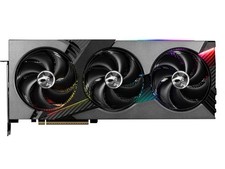
Compare · 2 products compared
NVIDIA GeForce RTX 5060 Ti 16GBvsNVIDIA GeForce RTX 4060
These mid-range graphics cards both feature 8 PCIe lanes and similar physical footprints, yet they target entirely different performance brackets. The decision ultimately comes down to a significant leap in graphics power, memory capacity, and price.
eBay prices refresh hourly — check the listing before you buy. We may earn a commission.
- MOST WINS
 NVIDIA
NVIDIA GeForce RTX 5060 Ti 16GB
Best for High-performance gaming and content creation with advanced memory
11of 15 specs better - NVIDIA
Best for Budget-conscious systems needing efficient 1080p performance
4of 15 specs better
+ Add a product to compare
Biggest differences
Video memory
NVIDIA GeForce RTX 5060 Ti 16GB leads
2×
higher is better
- NVIDIA GeForce RTX 5060 Ti 16GB16 GB
- NVIDIA GeForce RTX 40608 GB
Memory bandwidth
NVIDIA GeForce RTX 5060 Ti 16GB leads
+65%
higher is better
- NVIDIA GeForce RTX 5060 Ti 16GB448 GB/s
- NVIDIA GeForce RTX 4060272 GB/s
Board power
NVIDIA GeForce RTX 4060 leads
−36%
lower is better
- NVIDIA GeForce RTX 5060 Ti 16GB180 W
- NVIDIA GeForce RTX 4060115 W
Shader cores
NVIDIA GeForce RTX 5060 Ti 16GB leads
+50%
higher is better
- NVIDIA GeForce RTX 5060 Ti 16GB4,608 cores
- NVIDIA GeForce RTX 40603,072 cores
Where each one wins
NVIDIA GeForce RTX 5060 Ti 16GB
- Shader cores
- Boost clock
- Base clock
- FP32 compute
- Video memory
- Memory type
- Memory bandwidth
- Memory speed
- Recommended PSU
- PCIe version
- DisplayPort version
NVIDIA GeForce RTX 4060
- Launch price
- Board power
- HDMI version
- HDMI outputs
What both have
- Memory bus width128 bit
- Power connectors8-pin
- PCIe lanes8 lanes
- DisplayPort outputs3 ports
- Max displays4 displays
- Video encoders1 encoders
- Slot width2 slots
Every spec
Red marks the better value in each row.
| Spec | NVIDIA GeForce RTX 5060 Ti 16GB | NVIDIA GeForce RTX 4060 |
|---|---|---|
| Overview | ||
| Release date | 2025-04 | 2023-06 |
| Launch price | 429 USD | 299 USD |
| Graphics chip | ||
| Architecture | Blackwell | Ada lovelace |
| Shader cores | 4,608 cores | 3,072 cores |
| Boost clock | 2,572 MHz | 2,460 MHz |
| Base clock | 2,407 MHz | 1,830 MHz |
| FP32 compute | 23.7 TFLOPS | 15 TFLOPS |
| Memory | ||
| Video memory | 16 GB | 8 GB |
| Memory type | Gddr7 | Gddr6 |
| Memory bus width | 128 bit | 128 bit |
| Memory bandwidth | 448 GB/s | 272 GB/s |
| Memory speed | 28 Gbps | 17 Gbps |
| Last-level cache | — | 24 MB |
| Power | ||
| Board power | 180 W | 115 W |
| Recommended PSU | 500 W | 550 W |
| Power connectors | 8-pin | 8-pin1 |
| Interface | ||
| PCIe version | 5.0 | 4.0 |
| PCIe lanes | 8 lanes | 8 lanes |
| Display outputs | ||
| HDMI version | 2.1 | 2.1a |
| DisplayPort version | 2.1 | 1.4a |
| HDMI outputs | 1 ports | 2 ports |
| DisplayPort outputs | 3 ports | 3 ports |
| Max displays | 4 displays2 | 4 displays |
| Video engine | ||
| Hardware encode | H.264, HEVC, AV1 | AV13 |
| Video encoders | 1 encoders | 1 encoders |
| Size | ||
| Card length | 241 mm | Not published |
| Card height | 111 mm | Not published |
| Slot width | 2 slots4 | 2 slots |
Notes on 4 values — test conditions and caveats
- 1NVIDIA GeForce RTX 4060, Power connectors: Reference card takes one 8-pin (adapter in the box); some partner models use a 6-pin instead.
- 2NVIDIA GeForce RTX 5060 Ti 16GB, Max displays: Standard configuration supports up to 4 simultaneous displays based on the 3 DisplayPort and 1 HDMI port count.
- 3NVIDIA GeForce RTX 4060, Hardware encode: Checked pages only confirm AV1 encode; H.264/HEVC encode is not stated.
- 4NVIDIA GeForce RTX 5060 Ti 16GB, Slot width: Calculated from the published 40 mm width (thickness), typically corresponding to a dual-slot form factor.
Performance and Architecture
The NVIDIA GeForce RTX 5060 Ti 16GB relies on the newer Blackwell architecture to deliver 23.7 TFLOPS of FP32 compute. This massive generational jump easily outpaces the 15 TFLOPS offered by the NVIDIA GeForce RTX 4060.
Buyers investing in the newer card also gain superior shader counts and higher clock speeds, translating to noticeably smoother rendering in demanding modern workloads and games.
Memory and Video Engine
Equipped with 16 GB of Gddr7 memory and a bandwidth of 448 GB/s, the RTX 5060 Ti 16GB handles high-resolution textures and heavy data loads far more comfortably than its rival. The RTX 4060 sticks with 8 GB of Gddr6 and a 24 MB last-level cache.
Content creators editing high-end video will also appreciate that the RTX 5060 Ti 16GB expands hardware encode support to include H.264 and HEVC alongside AV1.
Power and Value
Power consumption rises with the performance tier, requiring a 180 W board power for the RTX 5060 Ti 16GB paired with a recommended 500 W PSU. Meanwhile, the RTX 4060 keeps power draws lower at 115 W and requires a 550 W PSU.
Budget-focused shoppers will find that the RTX 4060 holds a major advantage with its $299 launch price compared to the $429 price tag of the newer card.
The Verdict
Buy the NVIDIA GeForce RTX 5060 Ti 16GB if you need maximum rendering speed and ample video memory. Buy the NVIDIA GeForce RTX 4060 if you want a lower entry price and efficient power usage.
Where to buy
NVIDIA GeForce RTX 5060 Ti 16GB
Best for High-performance gaming and content creation with advanced memory
NVIDIA GeForce RTX 4060
Best for Budget-conscious systems needing efficient 1080p performance
FAQ
Which card has better display output options?
The RTX 5060 Ti 16GB includes a DisplayPort 2.1 output, whereas the RTX 4060 features HDMI 2.1a and two HDMI ports.
Do both cards use the same PCIe version?
No, the RTX 5060 Ti 16GB supports PCIe 5.0, while the RTX 4060 runs on PCIe 4.0.
What power connectors do these GPUs require?
Both models use an 8-pin power connector, though reference and partner cards may vary with adapters.
Spotted something wrong? Tap the next to any section or spec group to let us know. Every report is read.