Compare · 4 of 4 products
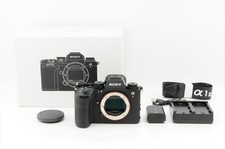
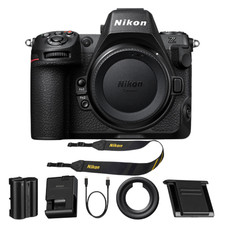
Panasonic LUMIX S1IIvsSony a1 IIvsNikon Z8vsCanon EOS R50
eBay prices refresh hourly — check the listing before you buy. We may earn a commission.


Biggest differences
Launch price
Canon EOS R50 leads
9.56×
lower is better
- Panasonic LUMIX S1II3,199 USD
- Sony a1 II6,499.99 USD
- Nikon Z83,999.95 USD
- Canon EOS R50679.99 USD
Continuous shooting (electronic)
Panasonic LUMIX S1II leads
4.67×
higher is better
- Panasonic LUMIX S1II70 fps
- Sony a1 II30 fps
- Nikon Z830 fps
- Canon EOS R5015 fps
Viewfinder resolution
Sony a1 II leads
4×
higher is better
- Panasonic LUMIX S1II5.76 M dots
- Sony a1 II9.44 M dots
- Nikon Z83.69 M dots
- Canon EOS R502.36 M dots
Weight
Canon EOS R50 leads
2.43×
lower is better
- Panasonic LUMIX S1II800 g
- Sony a1 II743 g
- Nikon Z8910 g
- Canon EOS R50375 g
Features not all of them have
Log profile support
- ✓
- ✓
- ✓
- ✕
Headphone port
- ✓
- ✓
- ✓
- ✕
Where each one wins
Panasonic LUMIX S1II
- Sensor format
- Native ISO maximum
- Continuous shooting (electronic)
- Max mechanical shutter speed
- 4K max frame rate
- Raw video recording
- Log profile support
- Memory card slots
- Weather sealing
- Minimum operating temperature
- Headphone port
- HDMI port type
Sony a1 II
- Effective pixels
- Sensor format
- In-body image stabilization
- Max mechanical shutter speed
- Max video resolution
- Log profile support
- Viewfinder resolution
- Screen size
- Screen articulation
- Rear screen resolution
- Battery life
- Memory card slots
- Weather sealing
- Headphone port
- HDMI port type
Nikon Z8
- Sensor format
- Sensor type
- Pre-burst capture duration
- Max video resolution
- 4K max frame rate
- 4K max frame rate (full width)
- Raw video recording
- Log profile support
- Screen size
- Screen articulation
- Rear screen resolution
- Memory card slots
- Weather sealing
- Minimum operating temperature
- Headphone port
- HDMI port type
Canon EOS R50
- Launch price
- Continuous shooting (mechanical)
- Viewfinder magnification
- Weight
- Width
- Height
- Depth
What all 4 have
- Video bit depth10 bit
- USB charging & power delivery✓
Every spec
Red marks the better value in each row.
Overview
Sensor & Image
Effective pixels
- 24.1 MP
- 50.1 MP
- 45.7 MP
- 24.2 MP
Sensor format
- Full-frame
- Full-frame
- Full-frame
- APS-C
Native ISO maximum
- 51,200 ISO
- 32,000 ISO
- 25,600 ISO
- 32,000 ISO
Sensor readout speed
- 14.6 ms8
- Not published
- Not published
- Not published
Sensor type
- Partially-stacked CMOS
- —
- Stacked CMOS
- CMOS
Aspect ratios
- 3:2, 4:3, 1:1, 16:9, 2:1, 65:24
- 3:2
- 3:2, 1:1, 16:9
- 3:2, 4:3, 1:1, 16:9
Lens & Autofocus
Continuous shooting (mechanical)
- 10 fps
- 10 fps
- Not published
- 12 fps
Continuous shooting (electronic)
- 70 fps
- 30 fps
- 30 fps9
- 15 fps
Max mechanical shutter speed
- 8,000 1/s
- 8,000 1/s
- Not published
- 4,000 1/s
AF subject detection
- Human, animal, car, train, airplane, motorcycle
- Human, animal, bird, insect, car, train, airplane
- Human, animal, bird, train, airplane, motorcycle, vehicle
- Human, animal, bird, vehicle
Video
Viewfinder & Screen
Viewfinder resolution
- 5.76 M dots
- 9.44 M dots
- 3.69 M dots
- 2.36 M dots
Viewfinder magnification
- 0.78 x
- 0.9 x
- 0.8 x
- 0.95 x
Screen size
- 3 in
- 3.2 in
- 3.2 in
- 2.95 in
Screen articulation
- Fully articulated
- Multi-angle
- Multi-angle21
- Fully articulated
Rear screen resolution
- 1.84 M dots
- 2.1 M dots
- 2.1 M dots
- 1.62 M dots
Handling & Power
Memory card slots
- 2 slots
- 2 slots
- 2 slots
- 1 slots
Weight
- 800 g
- 743 g
- 910 g
- 375 g26
Width
- 134 mm
- 136.1 mm
- 144 mm
- 116.3 mm
Height
- 102 mm
- 96.9 mm
- 118.5 mm
- 85.5 mm
Depth
- 92 mm
- 82.9 mm27
- 83 mm
- 68.8 mm
USB charging & power delivery
- Yes
- Yes
- Yes
- Yes28
Minimum operating temperature
- -10 °C
- 0 °C
- -10 °C
- 0 °C29
Headphone port
- Yes
- Yes
- Yes
- No30
HDMI port type
- Full-size
- Full-size
- Full-size
- Micro
Notes on 30 values — test conditions and caveats
- 1Sony a1 II, Release date: Announced 19 November 2024; first retail availability was December 2024.
- 2Canon EOS R50, Launch price: US RRP at launch as listed by Trusted Reviews; the page does not state whether it is body-only.
- 3Panasonic LUMIX S1II, High resolution pixel-shift mode: The full 96MP composite needs a tripod; handheld shooting caps at 48MP.
- 4Sony a1 II, High resolution pixel-shift mode: 4- or 16-shot pixel shift composites are merged with Sony's Imaging Edge Desktop PC software.
- 5Sony a1 II, In-body image stabilization: 8.5 stops is the CIPA centre rating; 7.0 stops at the periphery.
- 6Nikon Z8, In-body image stabilization: The 6.0-stop figure applies only with Synchro VR-compatible Nikkor Z lenses; the standard body rating is 5.5 stops.
- 7Canon EOS R50, In-body image stabilization: No in-body stabilisation; shake control relies on lens IS or Movie Digital IS.
- 8Panasonic LUMIX S1II, Sensor readout speed: Measured by DPReview using the electronic shutter in 14-bit stills mode.
- 9Nikon Z8, Continuous shooting (electronic): Full-resolution JPEG bursts reach 30 fps; 14-bit RAW bursts top out at 20 fps.
- 10Sony a1 II, Pre-burst capture duration: Pre-capture buffers between 0.03 s and 1 s of frames before full shutter press.
- 11Nikon Z8, Pre-burst capture duration: The 300 s Pre-Release Capture buffer arrived with firmware 2.0; launch firmware allowed 30 s.
- 12Canon EOS R50, Pre-burst capture duration: No pre-capture mode appears anywhere in Canon's official R50 specifications, so it is treated as absent.
- 13Panasonic LUMIX S1II, 4K max frame rate: Maximum 120 fps in 4K requires recording in MOV format at a 24.00Hz system frequency.
- 14Sony a1 II, 4K max frame rate: 4K 100p/120p recording uses a 1.1x crop.
- 15Panasonic LUMIX S1II, 4K max frame rate (full width): 4K at 120fps requires an approximate 1.24x sensor crop; 60fps is the fastest at full sensor width.
- 16Sony a1 II, 4K max frame rate (full width): Full-width 4K tops out at 59.94p; 4K 100/120p requires a 1.1x crop.
- 17Sony a1 II, Raw video recording: 16-bit RAW video can only be output over HDMI to an external recorder; no internal RAW recording.
- 18Canon EOS R50, Raw video recording: Canon lists only MP4 recording with H.264 or HEVC; no raw video is offered internally or externally.
- 19Canon EOS R50, Video bit depth: Standard Rec.709 recording is 8-bit; 10-bit output requires HDR PQ to be switched on.
- 20Canon EOS R50, Log profile support: No Canon Log profile; HDR PQ (a PQ gamma curve) is available instead, which is not a log curve.
- 21Nikon Z8, Screen articulation: Nikon's 4-axis monitor tilts both vertically and horizontally but does not swing out like a fully articulated screen.
- 22Sony a1 II, Battery life: CIPA rating is 520 shots per charge on the rear LCD; 420 shots with the viewfinder.
- 23Canon EOS R50, Battery life: CIPA test with the supplied LP-E17 in power-saving mode; viewfinder shooting is rated at about 310 shots.
- 24Sony a1 II, Weather sealing: Sony specifies dust- and moisture-resistant sealing; no formal IP rating is published.
- 25Canon EOS R50, Weather sealing: Canon's own spec sheet also lists water/dust resistance as not provided, so treat the body as unsealed.
- 26Canon EOS R50, Weight: Black body with battery and card per CIPA; the white version is 376 g with battery and card.
- 27Sony a1 II, Depth: Sony also lists 72.8 mm depth measured from grip to monitor, excluding the grip protrusion.
- 28Canon EOS R50, USB charging & power delivery: USB-C charging works with the supplied LP-E17; unauthenticated third-party batteries may not charge.
- 29Canon EOS R50, Minimum operating temperature: Rated operating range is 0–40 °C at up to 85% humidity.
- 30Canon EOS R50, Headphone port: Canon's full port list covers USB-C, mic-in, HDMI micro and the shoe only — no headphone jack.
Where to buy
Panasonic LUMIX S1II
Sony a1 II
Nikon Z8
Canon EOS R50