Compare · 2 products compared
Canon EOS R100vsNikon Z 30: Which APS-C Camera Wins?
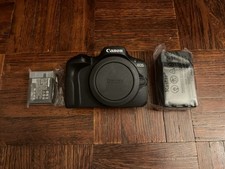
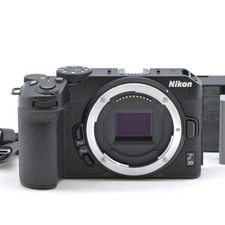
The Canon EOS R100 and Nikon Z 30 are both compact APS-C mirrorless cameras built for everyday shooters. While both shoot 4K video, they take very different paths: the Canon emphasizes a traditional built-in viewfinder and higher-resolution sensor, whereas the Nikon focuses on vlogging flexibility with a fully articulated screen and faster burst shooting.
eBay prices refresh hourly — check the listing before you buy. We may earn a commission.
 Canon
CanonBest for Still shooters wanting a traditional viewfinder and lightweight body
5of 14 specs better- MOST WINSNikon
Best for Vloggers and video creators needing an articulating screen and 4K 30 fps
9of 14 specs better
Biggest differences
Native ISO maximum
Nikon Z 30 leads
4×
higher is better
- Canon EOS R10012,800 ISO
- Nikon Z 3051,200 ISO
Continuous shooting (mechanical)
Nikon Z 30 leads
+69%
higher is better
- Canon EOS R1006.5 fps
- Nikon Z 3011 fps
Battery life
Canon EOS R100 leads
+30%
higher is better
- Canon EOS R100430 shots
- Nikon Z 30330 shots
Viewfinder resolution
Canon EOS R100 leads
+2.36 M dots
higher is better
- Canon EOS R1002.36 M dots
- Nikon Z 300 M dots
Features not all of them have
USB charging & power delivery
- Canon EOS R100✕
- Nikon Z 30✓
Where each one wins
Canon EOS R100
- Effective pixels
- Viewfinder resolution
- Battery life
- Weight
- Width
Nikon Z 30
- Native ISO maximum
- Continuous shooting (mechanical)
- 4K max frame rate
- 4K max frame rate (full width)
- Screen articulation
- Height
- Depth
- USB charging & power delivery
- HDMI port type
What both have
- Sensor formatAPS-C
- Sensor typeCMOS
- Max mechanical shutter speed4,000 1/s
- Max video resolution4K
- Video codecsH.264
- Screen size3 in
- Rear screen resolution1.04 M dots
- Memory card slots1 slots
- Minimum operating temperature0 °C
Every spec
Red marks the better value in each row.
| Spec | Canon EOS R100 | Nikon Z 30 |
|---|---|---|
| Overview | ||
| Release date | Not published | Not published |
| Launch price | Not published | Not published |
| Lens mount | Canon RF | Nikon Z |
| High resolution pixel-shift mode | Not published | Not published |
| Sensor & Image | ||
| Effective pixels | 24.1 MP | 20.9 MP |
| Sensor format | APS-C | APS-C1 |
| Native ISO maximum | 12,800 ISO2 | 51,200 ISO3 |
| In-body image stabilization | 0 stops4 | Not published |
| Sensor readout speed | Not published | Not published |
| Sensor type | CMOS | CMOS |
| Aspect ratios | 3:2, 4:3, 1:1, 16:9 | 3:2, 1:1, 16:95 |
| Lens & Autofocus | ||
| Continuous shooting (mechanical) | 6.5 fps | 11 fps6 |
| Continuous shooting (electronic) | 0 fps7 | Not published |
| Max mechanical shutter speed | 4,000 1/s | 4,000 1/s |
| Pre-burst capture duration | Not published | Not published |
| AF subject detection | Human | — |
| Video | ||
| Max video resolution | 4K | 4K |
| 4K max frame rate | 25 fps | 30 fps |
| Video codecs | H.264 | H.264 |
| 4K max frame rate (full width) | 0 fps8 | 30 fps |
| Raw video recording | None | Not published |
| Video bit depth | 8 bit | Not published |
| Log profile support | No | Not published |
| Video dynamic range (log) | Not published | Not published |
| Viewfinder & Screen | ||
| Viewfinder resolution | 2.36 M dots | 0 M dots9 |
| Viewfinder magnification | 0.59 x10 | Not published |
| Screen size | 3 in | 3 in |
| Screen articulation | Fixed | Fully articulated |
| Rear screen resolution | 1.04 M dots | 1.04 M dots |
| Handling & Power | ||
| Battery life | 430 shots | 330 shots11 |
| Memory card slots | 1 slots | 1 slots |
| Weather sealing | None | Not published |
| Weight | 356 g12 | 405 g |
| Width | 116.3 mm | 128 mm |
| Height | 85.5 mm | 73.5 mm |
| Depth | 68.8 mm | 59.5 mm |
| USB charging & power delivery | No13 | Yes14 |
| Minimum operating temperature | 0 °C | 0 °C |
| Headphone port | No | Not published |
| HDMI port type | Micro | Mini |
Notes on 14 values — test conditions and caveats
- 1Nikon Z 30, Sensor format: DX format is Nikon's name for its APS-C-size sensor (23.5 x 15.7 mm).
- 2Canon EOS R100, Native ISO maximum: ISO 25600 (H) is an expanded setting, not a native sensitivity.
- 3Nikon Z 30, Native ISO maximum: Settings above ISO 51200 (102400, 204800) are expanded, not native.
- 4Canon EOS R100, In-body image stabilization: No in-body stabilization; shake correction relies on IS lenses or Movie Digital IS.
- 5Nikon Z 30, Aspect ratios: Native DX ratio is 3:2; 1:1 and 16:9 are in-camera crop modes.
- 6Nikon Z 30, Continuous shooting (mechanical): Nikon's in-house measured maximum; the rate is approximate.
- 7Canon EOS R100, Continuous shooting (electronic): The electronic (silent) shutter does not support continuous shooting on this camera.
- 8Canon EOS R100, 4K max frame rate (full width): All 4K recording uses a ~1.6x centre crop, so no full-width 4K mode exists.
- 9Nikon Z 30, Viewfinder resolution: The Z 30 has no electronic viewfinder; compose on the rear LCD.
- 10Canon EOS R100, Viewfinder magnification: Canon's 0.95x is quoted with a 50mm lens on APS-C; in 35mm-equivalent terms it is 0.59x.
- 11Nikon Z 30, Battery life: Figure is for the EN-EL25 battery; shot count differs with EN-EL25a.
- 12Canon EOS R100, Weight: CIPA weight: body with battery and memory card, without lens.
- 13Canon EOS R100, USB charging & power delivery: The battery must be charged in the external LC-E17E charger; no USB power delivery.
- 14Nikon Z 30, USB charging & power delivery: In-camera USB charging/power needs Nikon's optional EH-7P or EH-8P adapter.
Vlogging and Video
The Nikon Z 30 takes the lead for video creators by offering 4K recording at 30 fps, compared to the 25 fps limit on the Canon EOS R100. Furthermore, all 4K recording on the Canon uses a roughly 1.6x center crop, limiting your wide-angle options when shooting high-resolution clips.
For framing yourself, the Nikon features a fully articulated screen, whereas the Canon relies on a fixed display. The Nikon also provides a mini HDMI port, which is sturdier for external monitors than the micro HDMI port found on the Canon.
Viewfinder and Handling
Traditional photographers will appreciate that the Canon EOS R100 includes a built-in electronic viewfinder with 2.36 M dots. The Nikon Z 30 lacks an electronic viewfinder entirely, meaning you must compose all your shots using the rear screen.
When it comes to physical footprint, the Canon is lighter at 356 g and narrower at 116.3 mm compared to the Nikon's 405 g and 128 mm width. However, the Nikon pulls ahead by supporting in-camera USB charging and power delivery, while the Canon requires you to remove the battery and use an external charger.
Speed and Performance
Action shooters will find the Nikon Z 30 much more capable, pushing 11 fps in mechanical continuous shooting against the Canon EOS R100 and its 6.5 fps limit. The Nikon also boasts a native ISO maximum of 51,200, giving it more headroom in low-light environments than the Canon's native limit of 12,800.
For subjects, the Canon includes human subject detection for its autofocus system. The Nikon does not list dedicated subject detection specs in the same manner, but relies on its faster frame rates to help capture quick movement.
The Verdict
Buy the Canon EOS R100 if you want a traditional camera with a built-in viewfinder and higher pixel count for stills. Buy the Nikon Z 30 if you need a flexible vlogging setup with an articulating screen, faster burst rates, and smoother 4K video.
Where to buy
Canon EOS R100
Best for Still shooters wanting a traditional viewfinder and lightweight body
Nikon Z 30
Best for Vloggers and video creators needing an articulating screen and 4K 30 fps
FAQ
Does the Nikon Z 30 have a viewfinder?
No, the Nikon Z 30 has no electronic viewfinder; you must compose your shots entirely on the rear LCD screen.
Can I charge the Canon EOS R100 via USB?
No, the Canon EOS R100 does not support USB charging or power delivery, requiring you to charge the battery in an external charger instead.
What is the maximum 4K frame rate on the Canon EOS R100?
The Canon EOS R100 records 4K video at a maximum frame rate of 25 fps, and all 4K recording uses a ~1.6x center crop.
Which camera is lighter?
The Canon EOS R100 is lighter at 356 g, compared to the 405 g weight of the Nikon Z 30 with its battery and memory card.
Spotted something wrong? Tap the next to any section or spec group to let us know. Every report is read.