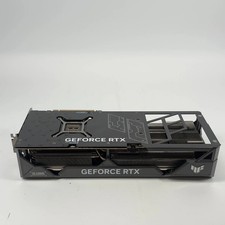
Compare · 2 products compared
NVIDIA GeForce RTX 4080 SupervsAMD Radeon RX 7700 XT: Compare Specs
These graphics cards both support PCIe 4.0 and drive up to four displays. The GeForce RTX 4080 Super commands a much higher price while delivering vastly superior compute performance and memory capacity.
eBay prices refresh hourly — check the listing before you buy. We may earn a commission.
- MOST WINS
 NVIDIA
Best for Maximum performance and 16 GB VRAM
11of 17 specs better - AMD
Best for Budget-conscious builds and smaller cases
6of 17 specs better
Biggest differences
Shader cores
NVIDIA GeForce RTX 4080 Super leads
2.96×
higher is better
- NVIDIA GeForce RTX 4080 Super10,240 cores
- AMD Radeon RX 7700 XT3,456 cores
Launch price
AMD Radeon RX 7700 XT leads
2.22×
lower is better
- NVIDIA GeForce RTX 4080 Super999 USD
- AMD Radeon RX 7700 XT449 USD
Memory bandwidth
NVIDIA GeForce RTX 4080 Super leads
+70%
higher is better
- NVIDIA GeForce RTX 4080 Super736 GB/s
- AMD Radeon RX 7700 XT432 GB/s
Video memory
NVIDIA GeForce RTX 4080 Super leads
+33%
higher is better
- NVIDIA GeForce RTX 4080 Super16 GB
- AMD Radeon RX 7700 XT12 GB
Where each one wins
NVIDIA GeForce RTX 4080 Super
- Shader cores
- Boost clock
- Base clock
- FP32 compute
- Video memory
- Memory type
- Memory bus width
- Memory bandwidth
- Memory speed
- Last-level cache
- HDMI version
AMD Radeon RX 7700 XT
- Launch price
- Board power
- Recommended PSU
- DisplayPort version
- Card length
- Slot width
What both have
- PCIe version4.0
- HDMI outputs1 ports
- DisplayPort outputs3 ports
- Max displays4 displays
Every spec
Red marks the better value in each row.
| Spec | NVIDIA GeForce RTX 4080 Super | AMD Radeon RX 7700 XT |
|---|---|---|
| Overview | ||
| Release date | 2024-01 | 2023-09 |
| Launch price | 999 USD | 449 USD |
| Graphics chip | ||
| Architecture | Ada lovelace | Rdna 3 |
| Shader cores | 10,240 cores | 3,456 cores |
| Boost clock | 2,550 MHz | 2,544 MHz |
| Base clock | 2,290 MHz | 1,435 MHz1 |
| FP32 compute | 52 TFLOPS | 35.2 TFLOPS |
| Memory | ||
| Video memory | 16 GB | 12 GB |
| Memory type | Gddr6x | Gddr6 |
| Memory bus width | 256 bit | 192 bit |
| Memory bandwidth | 736 GB/s | 432 GB/s2 |
| Memory speed | 23 Gbps | 18 Gbps |
| Last-level cache | 64 MB | 48 MB |
| Power | ||
| Board power | 320 W | 245 W |
| Recommended PSU | 750 W3 | 700 W4 |
| Power connectors | 12V-2x65 | 8-pin6 |
| Interface | ||
| PCIe version | 4.0 | 4.0 |
| PCIe lanes | Not published | 16 lanes |
| Display outputs | ||
| HDMI version | 2.1a | 2.1 |
| DisplayPort version | 1.4a | 2.17 |
| HDMI outputs | 1 ports | 1 ports |
| DisplayPort outputs | 3 ports | 3 ports |
| Max displays | 4 displays | 4 displays |
| Video engine | ||
| Hardware encode | AV1 | H.264, HEVC, AV1 |
| Video encoders | 2 encoders | Not published |
| Size | ||
| Card length | 304 mm | 267 mm |
| Card height | 137 mm | Not published |
| Slot width | 3 slots | 2.5 slots |
Notes on 7 values — test conditions and caveats
- 1AMD Radeon RX 7700 XT, Base clock: AMD publishes only Game (2171 MHz) and Boost clocks; no base clock appears on AMD's page.
- 2AMD Radeon RX 7700 XT, Memory bandwidth: AMD also lists 1995 GB/s 'effective' bandwidth including Infinity Cache; 432 GB/s is the raw VRAM figure.
- 3NVIDIA GeForce RTX 4080 Super, Recommended PSU: NVIDIA's 750 W minimum assumes a PC with a Ryzen 9 5900X; needs vary by configuration.
- 4AMD Radeon RX 7700 XT, Recommended PSU: AMD bases this rating on a Ryzen 9 7950X system; your needs may differ.
- 5NVIDIA GeForce RTX 4080 Super, Power connectors: Card takes a 16-pin 12V-2x6 connector; a 3x PCIe 8-pin adapter ships in the box for PSUs without a PCIe Gen 5 cable.
- 6AMD Radeon RX 7700 XT, Power connectors: Reference card uses two 8-pin PCIe power connectors.
- 7AMD Radeon RX 7700 XT, DisplayPort version: Notebookcheck specifies the DP 2.1 output at UHBR13.5 link rate.
Performance and power
The GeForce RTX 4080 Super relies on the Ada Lovelace architecture to reach 52 TFLOPS of FP32 compute power, outperforming the Radeon RX 7700 XT and its RDNA 3 architecture. That raw compute advantage demands more electricity, requiring a 320 W board power and a 750 W minimum power supply unit compared to 245 W and 700 W for the AMD card.
Buyers investing in the NVIDIA card must ensure their setup handles a 12V-2x6 power connector, whereas the AMD option uses standard 8-pin connections. Both power requirements vary based on the rest of the PC components.
Memory and rendering
The GeForce RTX 4080 Super packs 16 GB of GDDR6X video memory across a 256-bit bus, achieving a memory bandwidth of 736 GB/s. This configuration handles heavy loads far better than the AMD card, which relies on 12 GB of GDDR6 on a 192-bit bus.
With 64 MB of last-level cache on the NVIDIA card versus 48 MB on the competitor, texture streaming and complex frame rendering run with significantly more headroom on the high-end option.
Size and displays
The Radeon RX 7700 XT measures 267 mm in length and takes up 2.5 slots, making it easier to fit into compact chassis than the 304 mm long, 3-slot GeForce RTX 4080 Super.
For monitor connectivity, both cards provide three DisplayPort outputs and one HDMI port, but the NVIDIA card supports the slightly newer HDMI 2.1a specification.
The Verdict
Buy the NVIDIA GeForce RTX 4080 Super if you want maximum rendering power and memory bandwidth. Buy the AMD Radeon RX 7700 XT if you need a lower launch price and a more compact card.
Where to buy
NVIDIA GeForce RTX 4080 Super
Best for Maximum performance and 16 GB VRAM
AMD Radeon RX 7700 XT
Best for Budget-conscious builds and smaller cases
FAQ
What power supply do these cards need?
The GeForce RTX 4080 Super requires a 750 W minimum PSU, while the Radeon RX 7700 XT calls for a 700 W PSU, though actual needs vary by configuration.
How many displays can I connect at once?
Both cards support a maximum of four displays through their three DisplayPort outputs and single HDMI port.
What kind of video encoding do they support?
The GeForce RTX 4080 Super handles AV1 hardware encoding with two encoders, whereas the Radeon RX 7700 XT supports H.264, HEVC, and AV1.
Spotted something wrong? Tap the next to any section or spec group to let us know. Every report is read.